



Janitor: Interactive Stories review
 Analysis by Appsdrops
The first time I tried Janitor: Interactive Stories, the appeal was easy to understand: instead of sitting down to read a finished story, I could step into a scene and help steer what happened next. That makes it a different sort of reading companion—part fiction, part improvisation. I found it most enjoyable when I treated it as a low-pressure creative break, not as a replacement for a carefully edited novel.
Janitor is a free Books & Reference app from janitorai, built around interactive AI storytelling in genres such as romance, fantasy, and fanfiction. Its audience is already substantial, with over a million installs and an average rating of 4.3 from around 25,000 ratings. The app is rated Mature 17+, an important point for anyone choosing it for a younger reader or expecting strictly family-friendly material.
Why the first sessions feel inviting
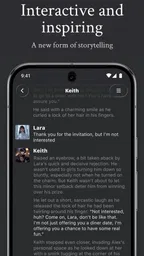
The basic attraction is participation. In conventional reading apps, the author has already chosen the dialogue and direction; here, the premise is that you can respond to a character and influence the exchange. That makes it especially appealing if you enjoy imagining alternate scenes, testing a character’s reactions, or taking a familiar story setup somewhere unexpected.
In my experience, the first session works best when I give the conversation a clear starting point. A broad prompt can lead to a broad, wandering story. A specific situation—who is present, what just happened, and what tone I want—gives the interaction more shape. I also find it helps to write replies that contain an action or a decision, rather than only a short reaction. That gives the next turn something useful to build on.
A realistic use case is a quiet evening when I want a little imaginative company but do not have the concentration for a long book. I can explore a scene for a few minutes, pause when the exchange runs out of steam, and return another time if it still interests me. That flexibility is a strength, though it is not the same as getting a polished chapter with a carefully planned ending.
The app’s appeal also depends on what kind of reader you are. If you like collaborative role-play and enjoy supplying details yourself, the open-ended format can feel liberating. If you prefer a writer to control pacing, maintain a consistent voice, and bring every thread to a satisfying conclusion, the same freedom may feel like extra work. Janitor asks you to help make the experience engaging rather than simply receive it.
Making a premise last beyond the opening
One useful habit is to establish the tone early. If I want a gentle romance, a tense fantasy encounter, or a playful fanfiction-style exchange, I make that clear in the opening instead of trying to redirect the conversation several turns later. It is a small change, but it can reduce the feeling that I am constantly correcting the story. When a scene does go off track, a concise reminder of the intended mood is usually more effective than adding several unrelated instructions.
I would also treat the first exchange as a test rather than a commitment. If a character or premise does not give me enough to respond to, I move on instead of trying to rescue it indefinitely. The format rewards curiosity, but it does not mean every setup will become a compelling story. Being willing to start fresh is part of using an open-ended library well.
What keeps it useful month to month
The lasting value is less about finishing a specific story and more about having a flexible way to explore ideas. I can use an interactive scene to try a character voice, sketch a relationship dynamic, or see how a fictional conflict might unfold. For someone who writes for fun, that can be a handy spark generator. For someone who mainly wants passive reading, a regular ebook or serialized-fiction app is likely to be a better fit: those products put the finished writing first, while Janitor puts the exchange first.
That difference matters after the novelty wears off. At first, simply being able to answer a character can feel fresh. Later, I need a reason to come back: a new premise, an unfinished scene I still care about, or a specific mood I want to explore. I would not build a reading routine around the expectation that every conversation will deliver a complete, coherent plot. Its recurring value is more reliable as a creative pastime than as a substitute for a well-edited book collection.
Janitor is free to install, while in-app purchases are listed from $8.99 to $99.00 per item. I would begin by deciding whether the free experience suits my habits before spending. Interactive storytelling can be absorbing, but enjoyment of a few early conversations does not automatically mean I will use it regularly. Purchases make most sense only after I know what I return for and what, if anything, I want to expand.
The current version is 2.8.3, and the stated minimum operating-system requirement is Android 7.0. Those details can help with basic compatibility planning, but they do not change the central decision: this is a conversational story app, not a conventional reader. If I want a dependable library of finished books, I would choose a different kind of app; if I want to participate in fiction, Janitor has a clearer reason to stay installed.
The upkeep behind an open-ended reading habit
Maintenance here is mostly personal rather than technical: I need to decide which conversations are worth continuing and which ones have already given me what I wanted. Without that small bit of selectiveness, an open-ended app can turn into a pile of half-started scenes. I get more from it by keeping a loose purpose in mind—perhaps one short role-play, a character experiment, or a particular genre—than by browsing without knowing what I want.
A practical workflow is to start with one scene, give it a clear emotional or plot direction, and check after a few exchanges whether it still feels alive. If I am repeating the same correction or struggling to make the conversation progress, I take that as a sign to change the premise or leave. This avoids turning leisure into a project. It also helps distinguish a promising story from one that was only interesting for its opening idea.
There is a trade-off between freedom and consistency. The more I shape the interaction, the more it can feel like my own story; the more I expect it to remember and maintain a complicated plot without my help, the more likely I am to become frustrated. I would keep a premise simple when I want a relaxing session, and reserve elaborate character relationships or layered plot ideas for times when I am willing to guide the exchange actively.
Because the app is rated Mature 17+, I would not hand it to a younger family member on the assumption that it is a general-purpose reading tool. Adults should also choose their own boundaries before entering emotionally intense or romantic scenarios. That is not a reason to avoid the app outright; it is a reminder that the subject matter and the degree of user participation make it different from a standard children’s reading app.
Where repetition and friction can set in
The main fatigue risk is that open-ended conversation can begin to feel repetitive. A scene may revisit the same emotional beat, or I may find myself doing more work to steer it than I want to do during a casual break. When that happens, changing the situation can help, but there is a point where restarting is more enjoyable than trying to preserve a scene that no longer has momentum.
Another source of friction is the gap between a vivid premise and a satisfying arc. A strong opening does not guarantee a strong middle or ending. Readers who value tight plotting, deliberate prose, or a fixed authorial voice may find this frustrating, especially if they have to keep supplying direction. For those tastes, a completed novel or a human-written fanfiction platform is a more dependable choice. Janitor is better approached as interactive play with narrative possibilities than as a guaranteed finished work.
Its large audience can be reassuring when deciding whether the concept has broad appeal, but popularity alone cannot tell me whether the conversational format will fit my routine. The app has around 1,400 written reviews as well as its broader ratings, yet I would still judge it by my own tolerance for improvisation. Some people enjoy shaping each turn; others want to open a book and simply read.
I would also avoid treating every session as something that must be saved, developed, or brought to a conclusion. That expectation can create unnecessary pressure. A short exchange can be worthwhile if it helps me unwind or sparks an idea, even if I never return to it. Conversely, if I repeatedly leave conversations feeling that I had to carry the entire story, that is a useful signal that a more structured reading app would serve me better.
Who should keep it installed
I would recommend Janitor to adults who enjoy interactive fiction, casual role-play, and experimenting with romance, fantasy, or fanfiction-style scenarios. It is particularly suited to people who like contributing dialogue and direction, and who are comfortable abandoning a scene when it stops being fun. As a free app with optional purchases, it is approachable to try, but I would set a personal spending limit and wait until I have a repeatable use for it before buying anything.
I would skip it if my priority were a reliable catalogue of polished books, a tightly controlled plot, or reading material appropriate for children. I would also be cautious if I dislike open-ended conversations or feel compelled to keep fixing a story once it loses direction. Those are not minor preferences in this case; they determine whether the app feels creative or tiring.
My long-term verdict is that Janitor: Interactive Stories can earn a place on a phone, but mainly as an occasional creative outlet rather than a daily reading essential. Its best moments come when I arrive with a simple idea, guide the scene lightly, and let myself stop when the fun fades. If that sounds more appealing than turning pages in a finished book, it is worth trying; if you want fiction that does all the storytelling work for you, a conventional reading app will likely remain the better companion.
What we like
- Choose from a variety of story genres and settings.
- Make choices that can influence how a story unfolds.
- Enjoy interactive fiction without needing gaming expertise.
- Explore stories at your own pace.
- A good fit for readers who like role-playing scenarios.
What could be better
- Some stories may rely on familiar romance and drama tropes.
- Choices may not always lead to noticeably different outcomes.
- Reading-heavy gameplay may not suit players seeking action.
- Certain content may be more suitable for mature audiences.
- Story availability and features may vary over time.





