




Inkitt Galatea: Audio & eBooks review
 Analysis by Appsdrops
I can see Inkitt Galatea fitting into a household routine more easily than a shared family library: it is a personal reading app, best enjoyed when each reader can choose their own stories and keep their reading session to themselves. I would use it for a quiet chapter before bed, a romance series during a commute, or an audiobook-style listening session while doing chores. Its mix of ebooks, stories, and listening gives it more than one way to fill a spare half-hour, though it is not a general-purpose book service for every member of a household.
Reading together without sharing one reading life
The app is published by Inkitt Inc and sits in the Books & Reference category. Its focus is fiction, particularly romance and serial-style stories, rather than reference material or a broad shelf of every kind of book. That focus is useful when someone wants an ongoing story to dip into regularly, but less compelling if the household is looking for school books, nonfiction, or a single shared reading list.
On a shared tablet, I would treat it as one person’s reading space, not a communal account. People can take turns using the device, but a reader’s place in a story and their personal choices are easier to manage when the device is not constantly being passed between people. I would avoid leaving an unfinished chapter open for the next person, especially when the app is used around younger family members.
A realistic use case is a parent reading on the sofa after dinner while another adult uses the same tablet later. The practical boundary is simple: agree on whose session is active, and close or switch away from the app when handing over the device. That is ordinary shared-device hygiene, not a special household feature. If everyone wants independent libraries, progress, and recommendations, separate devices or individual use is a better fit than trying to turn one installation into a family bookshelf.
Make the device handoff deliberate
Because the appeal lies in settling into a story, interruptions matter. Before lending the device, I would leave the reading screen and make sure the next person understands that the app is for the current reader’s session. This is especially worthwhile if the device is used in a common room, where a story may be visible to someone who did not choose it.
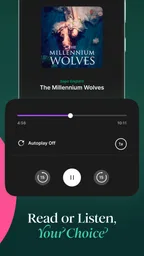
Listening can make the app convenient when hands are busy, but it also changes the household setting: audio is audible to others unless the listener uses headphones or chooses a private moment. I would save listening for a walk, a commute, or chores done alone rather than assuming it will work well in a room where people are having a conversation or sharing the same speaker space.
Set expectations before someone starts
The app is free to download, but it includes in-app purchases ranging from $0.49 to $399.99 per item. That is a broad enough range that I would make the purchase boundary clear before handing a shared device to someone else. In practical terms, the adult who manages app-store spending should decide whether purchases are allowed and ensure the device’s usual purchase protections match that decision. I would not treat “free” as a promise that every reading or listening choice will remain free.
This is also a useful distinction for readers who want to browse casually. You can approach the app as a free way to discover fiction, but if a particular story or listening option presents a purchase, pause and check what is being offered rather than tapping through automatically. In a household, that small habit prevents surprise charges and makes it easier to keep a child’s browsing separate from an adult’s payment choices.
Version 24.3.1 is the current version, and the minimum operating-system requirement is 8.0. Before setting it up on an older shared device, I would check that the system is compatible and that the app can be updated through the device’s store. A device that cannot run the current build is a poor choice for a reading routine, since friction at launch is likely to make the app less inviting for everyone.
Coordinate reading without turning it into a project
For two people who enjoy the same kind of fiction, the simplest coordination is conversational: mention a story, discuss a cliffhanger, or agree on a time when one person will use the tablet. I would not assume the app provides household scheduling or shared reading controls. Instead, treat it like any other personal entertainment app and coordinate around the device itself.
One useful approach is to keep listening and reading in different parts of the day. A person might read quietly before bed and listen during a solo walk, avoiding the common problem of audio competing with family conversation. If a device is shared, deciding who gets it for a particular period is more dependable than expecting everyone’s preferences to align spontaneously.
The serial-fiction format can also shape how I would use it. Rather than starting several stories during a short browsing session, I would pick one that matches my mood and give it a few sittings. That reduces the chance of losing track of characters across multiple ongoing plots. It is a personal workflow, not a promised app function, but it makes a story-first service easier to enjoy when reading time is fragmented.
Teen rating calls for thoughtful household judgment
The content rating is Teen, which gives a household a useful starting point but not a substitute for an individual decision. Fiction can vary in tone and subject matter, and “Teen” does not mean every story will suit every teenager or every family’s preferences. I would encourage a younger reader to choose deliberately and talk through any story that feels uncomfortable, rather than treating the age label as blanket approval for all content.
For adults, the age context is straightforward: the app is positioned for teen readers and up, while the main attraction is romance and other fiction. If you are looking for a children’s story collection or a tightly curated educational library, I would choose a service designed around that need instead. Likewise, anyone who wants a shared catalogue that a parent can confidently select for a young child should not assume this app provides that kind of household curation.
There is also a trust boundary around account use. I would not let different household members casually make choices under one person’s session and assume their preferences or purchases will remain neatly separated. Keep payment decisions with the person responsible for them, and keep the reader’s story choices personal. These are practical safeguards for a shared device, not claims about built-in family management tools.
What the app does well—and where another reader may be happier
Inkitt Galatea has earned an average rating of 4.6 from around 725,000 ratings, with roughly 54,000 written reviews and over 10 million installs. Those figures suggest a substantial audience, but I would use them as context rather than as a guarantee that its catalogue will match my taste. The more important question is whether I want fiction-led reading and listening, especially romance, instead of a broad digital library.
Compared with a conventional ebook reader, this app’s identity is more centered on discovering and following stories than on being a neutral container for books from many sources. That can be a strength if I want a fiction destination and a reason to return to an ongoing story. It is a limitation if I already have a large collection elsewhere, want to bring books from different retailers into one place, or mostly read nonfiction. In those cases, a general ebook app or library service is likely to be more practical.
Compared with a standard audiobook service, the listening option is appealing when it keeps a story accessible while my eyes and hands are occupied. Still, I would not choose it solely as an audio-first platform without first checking whether its story selection suits me. Readers who care most about a wide range of narrated books may prefer a dedicated audiobook alternative; people who move between reading and listening within a romance-focused fiction habit may find the combination more natural.
A useful browsing tip is to judge a story by the kind of reading experience you want, not only by its genre label. If I have ten minutes, I want a plot that can hold my attention in a short sitting; if I have a longer evening, I can commit to a story that rewards a more continuous stretch. Keeping that distinction in mind makes it easier to decide whether the app suits a particular moment rather than downloading it and expecting it to replace every book source I use.
Who I would recommend it to
I would recommend it to readers who enjoy romance and serialized fiction, like browsing for a story to follow, and value having reading and listening in one place. It is also a reasonable choice for someone who wants an approachable fiction app without paying just to install it, provided they understand that in-app purchases are available and manage them deliberately.
I would skip it if my main need were children’s books, reference material, a broad nonfiction collection, or a household-wide library with clear separation between several readers. I would also look elsewhere if I wanted a dedicated audiobook catalogue or a reader focused on importing and organizing books I already own. Those are not small differences: they change whether this app complements a person’s reading habits or simply adds another place to manage.
Overall, I see Inkitt Galatea as a focused fiction companion rather than a universal family reading hub. It can fit neatly into a household when each person’s session, purchases, and listening environment are handled thoughtfully. For a solo reader—or a teen with an adult’s guidance around age suitability and spending—it offers a straightforward way to spend spare moments inside a continuing story. On a shared device, the best experience comes from clear handoffs and realistic expectations, not from assuming that one app will organize everyone’s reading life.
What we like
- A personalized library makes it easier to find stories that match your tastes.
- Reading progress sync helps you continue across supported devices.
- The app offers both text and audio formats for select stories.
- Story updates can bring new chapters to ongoing series.
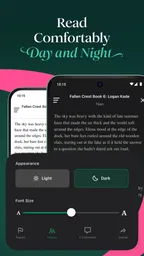
- Reading settings let you adjust the experience for comfort.
What could be better
- Some stories may require payment or a subscription to unlock chapters.
- Audio availability varies by title.
- New chapter releases can be spread out over time.
- The catalog may feel less familiar than mainstream book platforms.
- Access to some features may depend on account registration.





