







Holy Bible Launcher: KJV+Audio review
 Analysis by Appsdrops
Holy Bible Launcher: KJV+Audio makes sense for a particular kind of reader: someone who wants Scripture close at hand throughout the day, rather than tucked away in a book app they open only for planned study. I like that its focus brings reading, listening, and daily verses together. That convenience is the main reason to try it; the trade-off is that a KJV-centered, launcher-style experience may not suit everyone’s preferred translation or way of organizing Bible study.
Scripture within easy reach
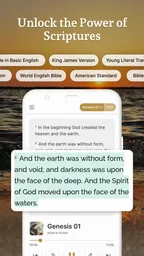
Published by AtomApplications, this free Books & Reference app is built around the King James Version, with audio and daily verses as part of its appeal. In practical terms, it aims to make a brief reading or listening session feel easy to start. Instead of needing to decide on a full study plan every time, you can use it for a small moment of reflection—a verse before work, a passage during a quiet break, or a listening session when reading is inconvenient.
That focus is useful because habits often depend on reducing small barriers. A Bible app that puts Scripture near the center of your phone experience can help you remember to engage with it. I would treat the daily-verse element as a prompt, not as a substitute for reading a whole passage. A single verse can offer a useful pause, but its meaning may depend on the surrounding chapter and context.
Where the format earns its place
The combination of text and audio gives the app more than one role. Reading suits deliberate study, while listening can fit moments when your eyes or hands are occupied. For instance, you might read a passage at breakfast and listen later while getting ready. That is a more realistic routine than expecting every session to happen in the same place, at the same time, and in the same format.
Audio is also a practical alternative for people who find long stretches of screen reading tiring. It can make Scripture easier to include in a walk or a household routine, provided listening is appropriate for the setting. I would not assume that audio automatically means a hands-free setup in every situation; users should check the controls and their device’s behavior before relying on it while doing something else.
A useful way to get more from the daily-verse approach is to pause before moving on. Read the verse in its surrounding passage, then note a phrase or question that stands out. This simple habit helps prevent a daily prompt from becoming a quick notification-like glance. It also turns a short session into a more thoughtful one without requiring a complicated study workflow.
A clear translation choice—and its limits
The KJV gives the app a distinct identity, and that will be a genuine advantage for readers who already know and prefer its language. It can also be a poor fit for someone who wants contemporary wording or frequently compares several translations. Older phrasing may feel meaningful and familiar to one person but slow comprehension for another, especially during a first read or when listening at normal speed.
If you are new to the Bible, I would not choose a translation solely because it is the one this app emphasizes. Try a sample passage and ask whether you can follow the sentence structure without repeatedly stopping to interpret it. If you already use the KJV in church, personal reading, or study, the app’s focused approach is more likely to feel natural. If you rely on side-by-side translation comparison, a broader Bible reader may serve you better as your main tool.
This distinction matters more than a long feature checklist. The best reading app is the one whose text you can understand and return to consistently. Here, the KJV focus is not a minor setting; it shapes the experience. Readers should decide whether that is a welcome anchor or an unnecessary constraint before building a daily routine around it.
How I would use it in an ordinary day
Imagine having a few minutes before leaving home. I would open the app, read the daily verse, and then look at its nearby context rather than treating the verse as a complete lesson. Later, if I had time during a quiet walk, I could switch to listening. The benefit is not that the app creates extra free time; it gives a familiar way to use small pockets of time for reflection.
For a more focused session, I would choose a passage in advance and set a modest goal: read a section, listen to it, or revisit a line that was unclear. Combining reading and listening can help some readers notice words they skim over on screen. On the other hand, moving between formats can interrupt concentration if you keep switching without a purpose. I would use one mode per session unless the change genuinely helps me understand the passage.
Another worthwhile practice is to keep a separate note of questions rather than expecting a daily-verse prompt to answer them. A verse may lead you to wonder about the speaker, audience, or wider chapter. Following that question into the passage is a better study habit than collecting isolated lines. This is especially useful for readers who want devotional access but also care about context.
Where it differs from broader Bible apps
Many Bible apps try to be broad study shelves, offering readers a way to explore different translations, study aids, and reading plans. A focused KJV-and-audio app has a simpler proposition: keep a familiar text accessible and make it available in more than one format. That can feel less demanding if your goal is regular reading rather than building a large digital study library.
The compromise is flexibility. If your usual workflow involves comparing translations, consulting reference material, or following a structured plan, you may prefer an app designed around those tasks. You can still use this one alongside another resource: keep it for quick KJV reading and listening, and use the broader tool when a passage calls for deeper comparison. I see that as a reasonable split rather than a flaw that every reader must work around.
It is also worth separating convenience from depth. Having Scripture readily available can encourage consistency, but an accessible verse is not the same as a guided study. Readers seeking commentary, extensive organization, or an academic research experience should choose a tool built for those priorities. This app is strongest when the desired action is straightforward: open, read, listen, and reflect.
Who is likely to appreciate it
I would recommend it first to readers who already enjoy the King James Version and want a convenient way to read and listen during the day. It also suits people who prefer short, repeatable sessions over a feature-heavy study environment. The daily-verse element can help establish a routine, while audio offers a useful change of format when sitting down with a screen is not practical.
It is less suitable as a first choice for readers who find KJV wording difficult, need multiple translations in one place, or expect extensive study tools. Parents should also make their own judgment about whether the app’s reading experience suits a child, even though its content rating is Everyone. An age label does not replace checking whether the language and presentation fit the reader.
For someone deciding whether to install it, the most useful test is simple: read a passage you already know in the KJV, then try listening to it. If the language feels comfortable and the two formats fit your routine, the app’s focused design may be exactly what you need. If you find yourself wishing for a different translation or a deeper reference setup, that is a strong sign to use a more flexible alternative instead.
What its track record suggests
The app has a 4.8 average from around 7,200 ratings, with roughly 2,600 written reviews, and it has passed one million installs. Those figures suggest that it has found an audience, though they cannot tell you whether its KJV-first approach matches your needs. I would use them as reassurance that the app is established, not as a substitute for checking the translation and workflow yourself.
It is free, rated Everyone, and was released on February 14, 2023. Version 3.23.0 is the current version, and the listed minimum operating system is 10. Those details make it easier to judge basic suitability, but the most important decision remains personal: whether a focused KJV reader is the right fit for how you actually read or listen.
My verdict
Holy Bible Launcher: KJV+Audio is most convincing as an everyday companion for readers who want the King James Version close by and appreciate having both text and audio available. Its clearest strength is the simple route from intention to a short Scripture session. Its most important limitation is equally clear: a KJV-centered experience will not be the best match for everyone, and convenient daily verses should not replace reading in context.
I would try it if you already like the KJV, want an easy way to build a modest reading habit, or sometimes prefer listening to reading. I would choose a broader Bible app if translation comparison and deeper study resources are central to your routine. For the right reader, this is a practical, focused option; for everyone else, its narrow emphasis is a good reason to look elsewhere rather than a detail to overlook.
What we like
- KJV text is easy to access from the home screen.
- Audio playback supports listening without reading.
- A familiar Bible translation suits traditional readers.
- Quick access can encourage regular scripture reading.
- Useful for users who prefer a faith-focused phone layout.
What could be better
- The KJV's older language may be difficult for some readers.
- Audio listening may use mobile data when offline files are unavailable.
- A launcher can change familiar home screen behavior.
- Compatibility may vary across Android devices and launchers.
- Users seeking multiple translations may find the selection limited.





