

Holy Bible, KJV Bible + Audio review
 Analysis by Appsdrops
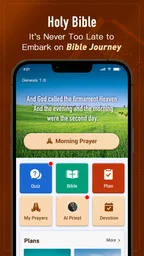
I’d consider Holy Bible, KJV Bible + Audio if I wanted a straightforward way to read the King James Bible on my phone, especially when I’m away from a dependable connection. Its appeal is not simply that it puts scripture on a screen: it brings offline reading together with prayer guidance, reading plans, quizzes, and an AI Priest feature. That combination makes it more of a personal study companion than a bare digital text, though the extra tools won’t suit everyone.
WOOMBIT’s Books & Reference app is free to install and use, with optional in-app purchases priced from $0.49 to $29.99 per item. The distinction matters: you can begin without paying, but the range of optional purchases means the free starting point shouldn’t be confused with an entirely paid-feature-free experience. I’d explore the app first and decide whether any additional offering is useful before spending.
What the free starting point is worth
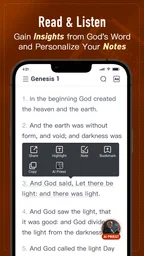
The core reason to download it is access to the King James Bible offline. That’s practical when you want to read during a commute, while travelling, or somewhere with weak reception. It also means the app can be useful in short gaps in the day, rather than requiring a quiet place, a physical book, or a connection before you can open scripture.
The app is free, and that lowers the barrier to trying its reading experience. Optional purchases are available, but I would treat them as a separate decision, not as a reason to assume the basic reading purpose requires an upfront payment. If your main need is a portable KJV text, start there and see whether it serves you before considering anything paid.
There is a real trade-off in the purchase range: individual items start at $0.49 and reach $29.99. That tells me optional spending can vary considerably, so it is sensible to check what a particular item offers and whether it solves a need you actually have. I wouldn’t buy something just because it appears alongside a devotional or study feature; first try the free experience and identify what is missing for your routine.
Beyond a text on a phone
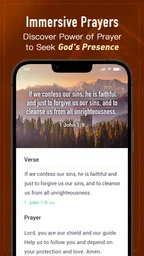
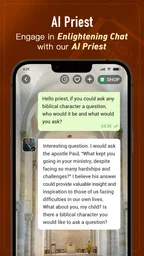
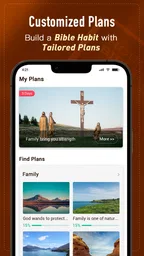
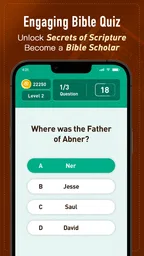
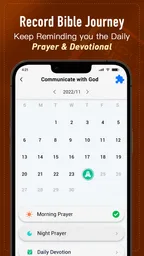
Reading is the foundation, but the surrounding tools give the app a different shape from a simple ebook or scripture reader. Guiding prayers can support a moment of reflection, plans offer a structure for returning to the text over time, and quizzes provide a more active way to revisit what you have read. The AI Priest adds another kind of interaction, though I’d approach it as a supplementary tool rather than a replacement for a trusted faith leader or careful study.
These options are most useful when they answer a specific habit problem. If I often intend to read but struggle to choose where to begin, a plan can give the session direction. If I want to pause and reflect rather than read several chapters, a prayer prompt may fit better. If I’m reviewing familiar passages, a quiz can make the experience less passive. The key is to use one feature at a time; trying to treat every tool as essential could turn a simple reading habit into another list of tasks.
One practical approach is to decide what you want from a session before opening the app. For example, I might choose a planned reading when I have a few minutes, use a prayer when I need a reflective pause, or try a quiz after reading to check what stayed with me. That small distinction helps the different features serve the text instead of competing for attention.
How it fits everyday routines
Picture a busy morning: you have a few quiet minutes before leaving home, but no time to set up a study space. An offline Bible makes it easy to read even if mobile service is unreliable, while a plan can help you avoid spending those minutes deciding what to open. Later, a quiz can offer a quick way to revisit the material. That is a more realistic benefit than expecting every session to become a long, uninterrupted study period.
Offline access is especially helpful for people who want scripture available in places where connectivity is inconvenient. It also changes how I’d prepare for travel: I would open the app while connected and make sure the reading material I expect to use is available before leaving. That is a useful habit for any offline reader, rather than something to discover only after arriving somewhere without service.
The app’s age rating is Everyone, which makes its intended audience broad. Still, whether it suits a household or a study group depends on the reading preferences of the people using it. The King James text has a traditional style that some readers value and others find less approachable than contemporary translations. If clarity in modern everyday language is your priority, a reader focused on another translation may be a better fit.
Where the trade-offs show
The King James translation is both the app’s defining choice and its clearest limitation. Readers who enjoy its familiar phrasing, literary rhythm, or traditional place in their faith practice may find the focus welcome. Someone new to Bible reading, or someone who regularly compares translations, may prefer an app that makes multiple versions central to its experience. I would choose this one for a KJV-first routine, not on the assumption that it is a universal replacement for every Bible app.
The extra features also introduce a question of focus. A prayer guide, a plan, a quiz, and an AI-based conversation tool can make an app feel more supportive, but they are not automatically better than a quiet reading session. If you prefer scripture without prompts or interactive add-ons, a simpler reader may feel calmer. Conversely, if you like a little structure, these tools may help you return consistently.
I’d be particularly measured about the AI Priest. A conversational feature can be convenient for reflection or for exploring a question, but religious interpretation can be personal and nuanced. I would not treat an AI response as definitive doctrine, pastoral care, or a substitute for consulting scripture and people I trust. That boundary is important regardless of how useful the feature feels in a particular moment.
Optional purchases are another reason to be deliberate. The app’s free entry point is appealing, but a wide per-item range makes it worth examining each offer rather than assuming every addition is included. If you only want offline KJV reading, keep your expectations centered on that basic purpose. If you want a particular paid extra, check its description in the app store before deciding whether the cost is worthwhile.
Who is most likely to benefit
I’d recommend giving it a try if you already prefer the King James Bible and want it close at hand without depending on a connection. It also makes sense for readers who appreciate a guided routine and may use plans or prayers to create a regular moment of reflection. The combination is strongest for someone who wants reading plus a few ways to engage with it, rather than a digital text alone.
It may also appeal to someone who wants to test a Bible-reading habit without paying to install an app. The free starting point lets you see whether the KJV presentation and available tools suit your day. A useful test is to use one reading plan or a brief reading routine for a week, then decide whether the format encourages you to return. You don’t need to adopt every feature for the app to have value.
I’d look elsewhere if I wanted a different translation as my main text, a comparison-focused study environment, or a very stripped-back reader with no additional prompts. I’d also skip the AI feature as a source of authoritative religious guidance. Those are not flaws for every user; they are reasons to match the app to your priorities rather than treating its collection of tools as a universal advantage.
A quick comparison with other Bible-reading choices
Compared with a physical Bible, the app is easier to carry and can be available offline on a device you already use. A printed book, on the other hand, offers a focused reading experience without notifications or a screen competing for attention. I’d choose between them based on context: digital access is convenient on the move, while paper can be preferable when I want fewer distractions.
Compared with a basic Bible reader, this app stands out for combining the KJV with prayers, plans, quizzes, and an AI Priest. That range may be useful if I want to move between reading and reflection without switching apps. A simpler alternative could be better if I only want to look up a passage quickly or keep the experience uncluttered. And for someone who needs several translations, a multi-version reader is the more sensible choice.
Trust, popularity, and practical details
At a glance, the app has a 4.7 average from around 32,000 ratings, with more than five million installs. Those figures suggest it has attracted a substantial audience, but they cannot tell me whether its particular mix of KJV reading and devotional tools fits my needs. I’d use them as context, then judge the app by the translation and workflow I actually want.
It was released on July 20, 2023, and its current version is 1.23. It supports Android 5.0 and later, so people with older compatible Android devices may be able to use it. The content rating is Everyone. These details help with basic compatibility and audience expectations; they don’t change the central decision, which is whether a KJV-focused reader with optional interactive features matches your routine.
WOOMBIT has also received around 1,200 written reviews. I find written feedback more useful than a rating alone when it addresses a specific concern, such as translation preference or the way a feature fits into someone’s reading habit. Still, your own short trial is the best test: open the text, see how the plans and other tools feel, and avoid paying for extras until you know what you would use.
My verdict on paying or skipping
For me, Holy Bible, KJV Bible + Audio is worth trying if offline King James reading is the main goal and a little devotional structure sounds helpful. The free entry point makes that trial straightforward, while the optional purchases leave room for added value if a specific item genuinely appeals. I would not treat paid extras as necessary merely because they are available.
Skip it if the KJV is not the translation you want, if you prefer a minimal text-only experience, or if you need an app centered on comparing multiple versions. And while the AI Priest may be an interesting companion for reflection, I’d keep important spiritual decisions grounded in scripture, personal judgement, and trusted human guidance. For a KJV-first reader who wants offline access and optional ways to build a habit, it offers a sensible free place to start.
What we like
- Includes the full King James Version text for convenient reading.
- Audio playback makes Scripture easier to follow while multitasking.
- Offline access lets users read without an internet connection.
- Search tools help locate verses and passages quickly.
- Daily reading reminders can support a consistent study habit.
What could be better
- The older KJV wording may be difficult for some readers to understand.
- Audio playback may require headphones in shared spaces.
- Frequent reminders can feel intrusive if you prefer flexible reading.
- The interface may feel dated compared with newer Bible apps.
- Some features or content may require an internet connection.





