

Hear My Baby Heartbeat Monitor review
 Analysis by Appsdrops
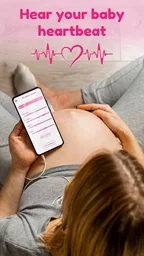
When a family is eager to hear a baby’s heartbeat, even a small moment can feel meaningful. Hear My Baby Heartbeat Monitor is a parenting app built around that simple idea: capture your baby’s heart sounds and make them easier to cherish. I like the warmth of that promise, but it’s worth approaching the app with a clear distinction in mind: it is a way to engage with a sound, not a replacement for medical advice or professional monitoring.
From curiosity to a keepsake
The starting point is familiar to many expectant parents: you want to feel a little closer to your baby, and hearing a heartbeat can make that connection feel vivid. The app’s focus is narrow and easy to understand. Rather than presenting itself as a broad pregnancy planner, it centers on capturing baby heart sounds, with the emotional value of listening again as the main appeal.
That focus gives Hear My Baby a clear place in the parenting-app category. It is meant for a personal, at-home moment, not for diagnosing a concern. I would treat any sound you capture as a keepsake or a point of curiosity, rather than as evidence that everything is medically well. If you have a health question or worry, a qualified healthcare professional is the right person to contact.
The app is free to download, and its content rating is Everyone. It is developed by App Bards and is available for Android devices running version 8.0 or later. The current release is version 1.2.8. Those details make it straightforward to judge whether it fits your device before you get started, while its stated purpose helps set expectations for the experience.
Getting ready for a listening session
A useful first step is to decide what you want from the session. If the goal is simply to spend a quiet moment listening, the app’s concept may suit you. If you are hoping to use a phone as a clinical monitor, this is the wrong expectation to bring. That distinction matters because the experience is emotionally charged: it’s easy to attach too much meaning to a sound, or to feel unsettled if the result isn’t what you hoped to hear.
Before opening the app, I’d choose a calm setting and give yourself time rather than trying to fit the experience into a rushed moment. A relaxed approach makes the activity feel more personal and less like a test. It also leaves room for an ordinary outcome: you may enjoy the moment, or you may decide that listening this way isn’t useful for you.
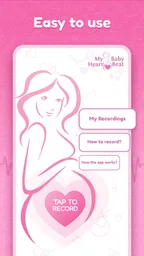
The app’s purpose is to capture heart sounds, so the central workflow is easy to grasp even before you begin: open the app, use it for the listening experience, and decide whether you want to keep or revisit what you captured. I appreciate that the concept doesn’t require a long explanation. Still, the practical outcome depends on what you can hear and how you feel about it, so it’s best to keep expectations gentle.
Following the flow from app to outcome
Once you begin, the experience is best understood as a short sequence rather than a complicated project. You bring the phone into the moment, focus on capturing the sound, and then listen back or reflect on what you heard. That input-to-outcome path is the appeal: a brief interaction can turn into a recording you associate with a particular stage of pregnancy or a shared family moment.
I’d approach the capture itself patiently. A quiet room and an unhurried pace can make the session feel less stressful, although no setting can guarantee a particular result. The important thing is not to turn repeated attempts into a source of pressure. If you don’t get the experience you expected, it doesn’t tell you whether the baby is healthy or not; it simply means the app didn’t provide the reassuring moment you were looking for at that time.
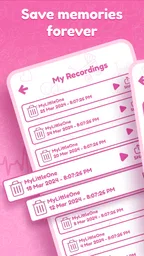
After the listening moment comes the emotional handoff: from the phone to you, and perhaps to someone you want to share the experience with. A captured sound can become a small personal keepsake, something to revisit together. That is where the app’s promise feels strongest to me. Its value is less about elaborate tools and more about helping a family pause and pay attention to a sound they care about.
There is also a practical handoff between the app and healthcare. The app can support a personal listening experience, but medical interpretation belongs with a clinician. If you notice something that worries you, don’t rely on a phone recording to assess it. Contact your healthcare provider and explain what concerns you. Keeping that boundary clear helps the app stay in its proper role: an optional parenting experience, not a source of medical reassurance.
What the experience gives back
When the session goes as hoped, the result can be emotionally rewarding. Hearing a baby’s heart sounds may help make pregnancy feel more tangible, and a recording can give you something to revisit later. For parents who enjoy small rituals and personal mementos, that simple outcome may be enough to make the app worthwhile.
The app has an average rating of 4.3 from around 20,000 ratings, and it has been installed over a million times. Those figures suggest that many people have tried it, though they don’t guarantee that every family will have the same experience. I’d use them as background when deciding whether to explore the app, not as proof that it will work in every situation or meet every expectation.
Its position as a focused baby heartbeat app is both its appeal and its limitation. If you want a straightforward way to engage with the idea of hearing and capturing heart sounds, the purpose is easy to understand. If you’re looking for a full pregnancy companion with a wide range of planning and tracking tools, this isn’t what its central promise is about.
The experience also depends on your emotional context. Some parents may find a recording sweet and reassuring as a memory. Others may feel frustrated if they cannot get the moment they hoped for, or may prefer not to listen at home at all. I wouldn’t consider either reaction unusual. A personal app should fit your comfort level, and there’s no need to keep using it just because the idea sounds appealing.
Where the flow can feel uneven
The main point of friction is the gap between the emotional promise of hearing a heartbeat and the uncertainty of a real listening session. A simple concept can still lead to an unpredictable experience. If you approach it expecting a clear, dependable medical check, you may come away disappointed or worried. Keeping the goal modest—a personal listening moment rather than a health assessment—makes the experience easier to evaluate fairly.
Another possible snag is that the app’s purpose may not match what you need at a particular moment. When you’re seeking clinical reassurance, a consumer app is not the right handoff. When you’re looking for a keepsake, however, the same narrow focus can feel refreshing. That difference is important: the app may be more suitable for a calm, optional activity than for situations where you need an answer to a medical concern.
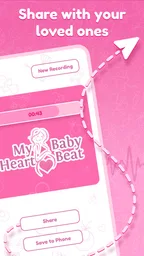
There’s also the question of sharing. A sound recording can feel intimate, and families may have different preferences about whether to keep it private or pass it along. I’d think about that choice as part of the workflow: first decide whether you want to capture a sound, then decide who, if anyone, should hear it. The personal nature of the moment is part of the appeal, so it’s sensible to handle it in a way that feels comfortable to you.
Overall, Hear My Baby Heartbeat Monitor is a focused parenting app with an appealing emotional idea: capture baby heart sounds and make the moment something you can cherish. It is free, has an Everyone content rating, and comes from App Bards. I’d recommend considering it for a personal keepsake experience, while keeping medical questions with a healthcare professional. If you go in with that boundary in place, the app’s simple purpose is easier to appreciate without expecting it to do more than it is meant to do.
What we like
- Lets expectant parents listen to fetal sounds at home.
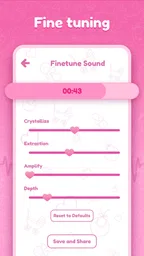
- Simple controls make recordings easy to start and save.
- Saved clips can be replayed and shared with family.
- Works with a phone microphone without extra monitoring hardware.
- Can make listening sessions feel more personal and memorable.
What could be better
- Phone microphones may not capture a heartbeat clearly.
- Finding the sound can take patience and careful positioning.
- Background noise can make recordings harder to interpret.
- It cannot assess fetal health or replace prenatal checkups.
- Listening results may cause unnecessary worry or false reassurance.





