






Hallow: Prayer & Meditation review
 Analysis by Appsdrops
I can see why someone might open Hallow during a stressful week: it gives prayer and reflection a more approachable place in a daily routine, rather than asking you to assemble a practice from scattered books, recordings, and timers. My impression is that its real test is not whether the first sessions feel comforting, but whether its range of Catholic material remains useful after the novelty wears off. For people who want guided Christian prayer, that is the question worth asking before making it a regular habit.
What feels useful in the first week
Hallow is a free Books & Reference app from Hallow, Inc., built around Catholic prayer and related listening. Its focus is clear: this is not a general meditation tool with a few religious tracks added on. The material is intended for people who want Christian practice to shape quiet moments in the day, whether that means praying the Rosary, reading Scripture, or using guided reflections to settle into a routine.
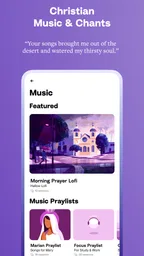
In the first few days, that focused approach can remove a common obstacle: deciding what to do. When I have only a short break, a guided session is easier to begin than opening a Bible at random, choosing a passage, and working out how to reflect on it. The app’s emphasis on daily Advent prayer, the Rosary, Scripture, and seasonal Christian music also gives a newcomer several recognizable starting points instead of an empty screen and a vague instruction to meditate.
That convenience is especially helpful for someone returning to prayer after a long gap. A person who feels unsure how to structure a quiet moment can follow along rather than worrying about doing it “right.” I would treat the guidance as a prompt, not a measure of spiritual progress: the point is to make space for prayer, not to complete sessions like chores.
A practical first-week routine could be modest: choose one short listening session at a time that already exists in your day, such as before getting out of bed or while winding down in the evening. I would avoid trying to sample everything at once. A small routine makes it easier to tell whether the style and pace suit you, and it leaves room to use the Bible or pray in your own words when that feels more natural.
How it differs from a Bible app or a general meditation app
Compared with a conventional Bible app, Hallow puts more emphasis on being guided through a devotional moment, rather than making you search and read independently. That can be a genuine advantage if you want help focusing, but a reading-first app may be better if your main goal is comparing translations, studying passages in depth, or quickly looking up a verse.
Against broad meditation apps, the distinction is the religious framing. Someone seeking secular breathing exercises or a wide mix of mindfulness techniques may find Hallow too specifically Catholic. That focus is also its strength for a Catholic user: prayer and reflection are not treated as interchangeable with generic relaxation. I would choose based on what I want from the moment, rather than expecting one app to serve every kind of quiet time.
Whether it earns a place month after month
After the initial curiosity fades, recurring value depends on whether the app fits the shape of a real week. Hallow’s subject matter gives it reasons to return beyond a single calming track: Scripture, the Rosary, prayer tied to Advent, and Christian music can serve different needs and seasons. That breadth makes it more adaptable than an app built around one narrow meditation format.
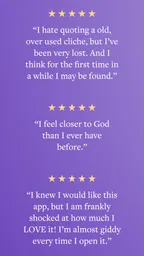
It is rated 4.5 on average, with around 124,000 ratings and roughly 7,300 written reviews, and it has passed 10 million installs. Those figures suggest it has reached a large audience, but they do not tell me whether it will suit an individual’s prayer life. The better test is whether I can name a repeatable use for it: perhaps a guided prayer on a busy morning, a Scripture reflection when I need a starting point, or a Rosary session when I would otherwise postpone it.
One useful way to keep the app from becoming another source of pressure is to assign it a role rather than a quota. For example, I might use it when I want company and structure, but read directly from a Bible when I want silence or control over the pace. That distinction matters: guided audio is supportive, yet it can also make prayer feel like content consumption if every quiet moment becomes a track to finish.
Seasonal material can bring a welcome change of texture, particularly when the calendar gives prayer a natural focus. At the same time, a user who wants a highly consistent daily plan may need to decide personally what “regular use” means. I would not judge the app by an unbroken streak. If a session helps on a difficult day and I return to it when useful, that can be more meaningful than opening it mechanically every day.
Hallow is free to download, with in-app purchases ranging from $0.99 to $199.99 per item. That range is broad, so I would check the specific purchase details in the app store before committing to anything. The free starting point makes it possible to assess the experience first, while the existence of paid options means users should distinguish between trying the app and deciding whether any additional content is worth paying for.
The small habits that make it easier to keep using
My first practical tip is to connect a session to a stable cue, not to an idealized schedule. A commute, a lunch break, or the few minutes before sleep is easier to remember than “I’ll pray more.” If listening is awkward in that setting, choose another moment instead; the purpose is to make prayer accessible, not to force audio into a place where it distracts you.
Second, alternate guided listening with unassisted prayer or reading. This keeps the app in a helpful supporting role and reveals what you actually value: the spoken guidance, the Scripture, or simply a protected pause. If you find yourself opening it only because you feel obliged to maintain a habit, taking a break is more sensible than turning a spiritual practice into another task list.
Third, use a session as a doorway rather than a finish line. After listening, sitting quietly for a moment or continuing with a passage in your own Bible can make the experience feel less passive. That is a particularly useful trade-off for people who enjoy audio but do not want their whole practice dictated by an app’s pacing.
Maintenance, friction, and the point when it may feel repetitive
The maintenance burden is relatively simple in concept: you need to remember to return, choose material that fits the moment, and keep expectations realistic. The app’s current version is 13.15.0, and it supports devices running Android 9 or later. It is rated for Everyone, but that age classification does not decide whether the content or devotional approach is suitable for a particular household; parents should still make that judgment themselves.
The main friction I would watch for is choice fatigue. A collection of prayer and listening options can be reassuring when you are unsure where to begin, but browsing too long can replace the quiet moment you meant to create. My workaround is to decide on a simple default in advance—such as a Rosary or a brief Scripture-focused session—then explore other material only when I genuinely want variety.
Another possible source of fatigue is the format itself. Guided audio will not appeal to everyone, and even a thoughtful voice can become background noise if played automatically while multitasking. I would give a session my attention when possible, or use a different approach—silent reading, a physical prayer book, or prayer without a device—when the phone is more distraction than aid.
The app may also be the wrong fit for someone who wants detailed Bible-study tools, a primarily secular meditation library, or complete independence from guided content. Those are not flaws so much as different needs. A printed Bible or prayer book can be better when screens feel intrusive; a study-focused resource can suit close reading; and a general mindfulness app may be more appropriate for someone who does not want a specifically Catholic framework.
Who is most likely to keep it installed
I would recommend trying Hallow if you are Catholic, curious about Catholic prayer, or looking for a structured way to bring Scripture and devotional listening into ordinary days. It is especially promising for people who find it easier to begin when someone guides the first few minutes, and for those who appreciate having different forms of prayer gathered in one place.
I would be more cautious if you already have a steady practice that works well without a phone, or if you prefer reading and reflection at your own pace. In that case, Hallow might still be useful occasionally, but I would not assume it needs to replace your current routine. The strongest reason to keep it is not that it can occupy every spare moment; it is that it helps you start a meaningful one when you might otherwise put it off.
My long-term verdict is favorable, with a clear condition: the app earns lasting space when it supports a personal practice rather than standing in for one. Its Catholic focus, guided format, and mix of prayer, Scripture, and seasonal listening give it more staying power than a novelty built around one brief experience. But recurring value comes from choosing a few uses that genuinely fit your life, not from trying to consume everything.
For me, the most sensible approach is to begin with the free experience, settle on one recurring moment, and notice whether the guidance helps or distracts. If it makes prayer easier to approach, keep it as a companion. If you find yourself browsing, feeling pressured, or preferring quiet without a screen, stepping back is a perfectly reasonable choice. That balance is what makes Hallow worth considering—and what keeps it from needing to become a permanent fixture for everyone.
What we like
- Offers guided prayers for different moods and daily needs.
- Includes sleep stories and calming audio for bedtime.
- Supports offline listening for downloaded content.
- Provides reminders to help build a regular prayer habit.
- Features content for children and families.
What could be better
- Many prayers and meditation sessions require a paid subscription.
- The large content library can take time to browse.
- Some audio programs are lengthy for quick listening.
- Personalized recommendations may need listening history.
- Availability of certain content may vary by region.





