


Ground News review
 Analysis by Appsdrops
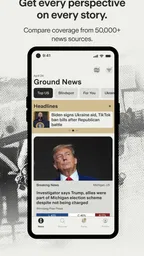
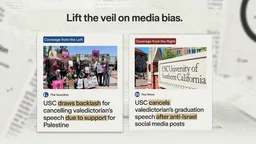
Ground News is most useful when I want to understand how a story is being covered, not simply collect another stream of headlines. Its central idea is to put reporting from different outlets side by side, giving readers a way to notice what is emphasized, what is downplayed, and where accounts diverge. That makes it a thoughtful choice for following contentious or fast-moving news. It is less convincing as a complete replacement for a favorite newspaper or a quick, frictionless headline feed: the value comes from comparing and reading, which takes attention.
Seeing coverage as well as headlines
Ground News is a free news and magazines app from Snapwise Inc., doing business as Ground News. Its aim is not just to tell me that a story exists, but to help me look across coverage of it. That distinction matters. A conventional news app usually gives me a personalized feed or the latest articles from selected publishers; this one is more interesting when I want to ask why several outlets are framing the same event differently.
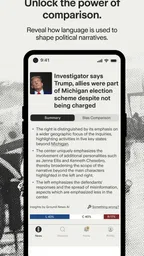
In practice, that makes it a useful second stop. I might first see a headline in a familiar publication, then open Ground News to find other reporting on the same subject. Comparing articles can reveal differences in the choice of sources, the context included, or the questions an outlet leads with. It does not settle which account is right by itself, but it can help me avoid mistaking one publisher’s framing for the whole story.
The app’s approach is a better fit for curious readers than for people who want a single authoritative summary. Its headline is easy to remember, but the real promise is a habit: pause before forming an opinion, look for more than one account, and read the underlying reporting. That comparison habit is the app’s strongest feature, even when it asks more of me than a standard news feed does.
Where the comparison approach earns its place
The most revealing use is a developing story that has become politically charged. Instead of treating the first article I encounter as definitive, I can use Ground News to look for other coverage and compare what different publishers choose to foreground. A report centered on official statements may feel quite different from one that focuses on people affected by an event. Seeing both does not make every source equally reliable; it gives me a clearer reason to check the evidence and decide what deserves further reading.
That also makes the app useful for catching gaps in my own routine. If I generally read the same kinds of publications, I can miss stories that receive less attention in my usual feed. Looking across coverage can prompt me to investigate those omissions rather than assuming that a quiet topic is unimportant. This is a more practical benefit than simply seeing a larger number of headlines: it gives the reader a question to take into the next article.
One good workflow is to use it selectively rather than trying to monitor everything. I would check a story that affects my community, a major public debate, or a claim that is circulating widely. I would then open a few reports and compare their sourcing and details, not merely their headlines. That keeps the app from turning into an endless exercise in collecting viewpoints. The point is to read with more context, not to consume every available angle.
There is an important trade-off here. Multiple articles can expose differences in emphasis, but a range of coverage is not the same thing as a range of equally well-supported facts. A reader still has to judge the quality of the reporting, distinguish analysis from evidence, and check whether the articles actually address the same question. Ground News can make comparison easier; it cannot do that reasoning on the reader’s behalf.
What it feels like in an everyday routine
Imagine that I have a few minutes during lunch and see a striking claim about a public decision. A normal headline app might let me read one article and move on. With Ground News, I can use that moment to look for additional reporting, then compare what each piece says before repeating the claim to someone else. If the coverage differs, I have a reason to slow down and read more carefully. If it largely converges, I still need to assess the reporting, but I have a broader starting point.
This is a particularly sensible routine for people who discuss current events at work or with family. Instead of sending the first link that supports an initial reaction, I can check whether other outlets describe the same facts and whether the disagreement concerns evidence, interpretation, or emphasis. That small pause is one of the app’s more useful outcomes. It can improve how I approach news even when I do not spend long inside the app.
I would not use that workflow for every casual update. If I only want a weather alert, a local service notice, or the latest sports score, comparing coverage is needless effort. A specialist source or a direct alert is usually faster. Ground News earns its place when the question is not just “What happened?” but “How are different outlets telling this story, and what should I read next?”
Strengths, with a real limit
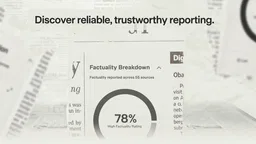
My main reservation is that comparison can become its own kind of noise. Several headlines about one event may look like a fuller picture while repeating the same underlying information or drawing attention to differences in tone more than differences in evidence. Readers who browse quickly can end up scanning labels and headlines without opening the articles that would explain the distinctions. For this app to be worthwhile, I have to treat its overview as a guide to further reading, not as a verdict on the story.
That makes it less suited to someone who wants a concise, settled answer in seconds. A traditional newspaper app can be better if I trust its editors and want a coherent report from one newsroom. A broad aggregator may be more convenient if my priority is collecting many headlines in one place. Ground News is a stronger choice when I value the act of comparing coverage enough to spend time on it.
There can also be a practical tension between breadth and focus. Exploring several accounts is valuable for big, disputed issues, but it can make a simple news check feel like homework. I would avoid opening it with the expectation that every story needs a full cross-outlet investigation. Choosing a few consequential subjects and reading them attentively is a better use of the app than trying to exhaust its coverage.
Who should try it—and who may prefer another app
I would recommend it to readers who want to challenge their own news habits, follow public affairs, or see how coverage of a contested issue varies. It can also suit students and discussion groups looking for material to compare, provided they check the articles themselves instead of treating a comparison view as proof. Anyone who often wonders whether their regular sources are leaving out context has a clear reason to give it a try.
I would be less likely to recommend it to someone who already has a tightly curated set of trusted sources and does not want another layer of browsing. It may also frustrate readers who prefer a short editor-written briefing, a narrowly focused local feed, or a simple chronological list. In those cases, a publication app, local news service, or basic aggregator may match the need with less effort. The right choice depends on whether examining differences is part of the goal or merely a detour.
The practical way to decide is to test it on one story you already know something about. Look at how the coverage is presented, open the articles, and ask whether the comparisons helped you notice useful context or simply added more headlines. If the former happens, the app has a distinctive role in your routine. If you still prefer reading one trusted source, there is little reason to force yourself into a more comparative style.
Availability and a balanced verdict
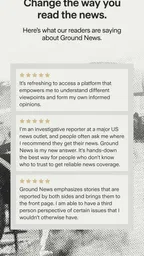
The app has an average rating of around 4.5 from roughly 33,000 ratings, with about 3,400 written reviews, and it has passed one million installs. Those figures suggest a substantial audience, though they do not tell me whether its approach will suit an individual reader. It is free to install, with in-app purchases ranging from about $0.99 to $99.99 per item, so I would check the purchase details in the app store before choosing any paid option.
Ground News is rated for Teen users. It was released on April 24, 2018, and version 5.1.0 supports operating systems from version 7.0 onward. These basics make it easy to judge whether it is a practical option for a device, but the more important question is whether its comparative style fits the way you want to read the news.
My verdict is positive, with a clear condition: use Ground News as a tool for thoughtful cross-checking, not as an automatic truth meter or a complete substitute for good reporting. I like that it encourages me to look beyond the first headline and notice how coverage differs. I also think it asks readers to do their share of the work by opening articles and judging evidence. For anyone who wants more context around important stories, that is a worthwhile trade. For someone who only needs fast updates, a simpler news source will probably feel better.
What we like
- Compare coverage of the same story across outlets.
- See how sources lean left right or center.
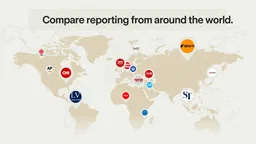
- Browse news from a wide range of publishers.
- Follow stories and save articles for later.
- Spot stories receiving limited media attention.
What could be better
- Some features require a paid subscription.
- Coverage ratings may oversimplify a publisher's viewpoint.
- Article links often open on external websites.
- The range of sources can vary by story.
- A large volume of news may feel overwhelming.





