



Grant Cash Advance review
 Analysis by Appsdrops
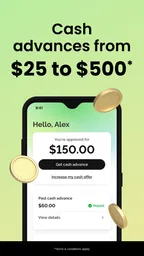
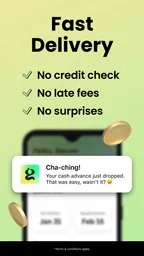
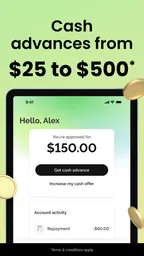
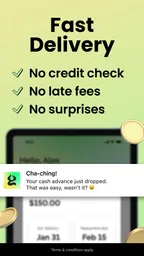
I look at Grant Cash Advance as a possible short-term cash-flow tool, not as a fix for a budget that is regularly running short. The app’s central appeal is straightforward: it offers a way to seek cash without a credit check or interest. That can matter when a small, unexpected bill arrives before payday, but the promise should not be mistaken for a guarantee of approval, instant delivery, or cost-free borrowing in every circumstance. I’d read the terms in the app carefully before relying on it.
What the app is useful for today
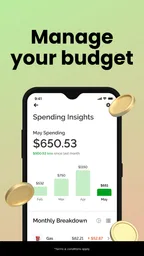
Grant Cash Advance is a finance app from Kikoff Inc. It is free to download, rated for Everyone, and currently at version 2.75.1924. Its focus is narrower than a full banking or budgeting app: it is designed around requesting a cash advance, rather than tracking spending, building a detailed budget, or managing a complete set of accounts. I would judge it on whether that focused job fits a specific, temporary need.
The app has a 4.8 average from around 181,000 ratings, with about 12,000 written reviews, and has passed 1 million installs. Those figures suggest many people have tried it, but they do not tell me whether a particular user will qualify or how quickly funds will arrive. For a cash advance, those personal details matter more than popularity, so I would treat the app’s rating as context rather than a promise about my own experience.
A realistic use case is a household expense that cannot reasonably wait until the next paycheck: perhaps a necessary repair or a bill due a few days early. In that situation, I’d first check the due date, my next income date, and whether I can repay the advance without pushing another essential expense into trouble. If the numbers work, an advance may be more suitable than paying a high penalty for a late bill. If repayment would leave me short again, it could simply shift the problem forward.
The claim of no credit check may make the service worth considering for someone who wants to avoid a conventional lending application based on credit history. Still, it does not mean there are no eligibility conditions. Any cash-advance service can have its own requirements and limits, and the user should establish those inside the app before making plans around money they have not received.
How I would approach a cash request
I’d treat the request as a small financial decision with a clear exit plan. Before tapping through, I would identify the exact expense, the amount needed to cover it, and the date I expect to repay. Asking only for what solves the immediate problem is a useful safeguard: taking more than necessary can make repayment harder without improving the underlying situation.
Then I’d review the repayment terms and any optional services or charges shown during the process. “No interest” is not the same thing as “no possible cost,” and an optional faster-funding route, membership, or other fee should never be assumed either way without checking what the app actually presents. If the final amount, timing, or repayment method is unclear, I would pause rather than accept based on the headline benefit.
One practical tip is to compare the advance with the cost of the specific alternative, not with borrowing in the abstract. A late fee, overdraft charge, or missed-work consequence may be more expensive than an advance, but a no-interest claim alone does not establish that this is the cheapest choice for every person. The comparison should include any service fees and the effect of the repayment on the next pay cycle.
Where it sits among everyday finance options
Compared with a bank overdraft, a cash advance app may feel more deliberate because a user can decide whether to request funds rather than allowing an account balance to fall below zero. Compared with a credit card, it avoids adding a purchase to a revolving balance, though the repayment obligation still arrives and deserves the same care. Compared with a personal loan, the app’s short-term focus may be a better match for a small timing gap than for a large expense that needs a longer repayment schedule.
Those alternatives can be better in important cases. A person who can wait may be better off moving a bill’s due date, using savings, or arranging a payment plan directly with the provider. Someone facing a recurring shortfall needs a broader solution, such as reviewing income, fixed expenses, and debt, rather than repeatedly taking advances. And for a larger planned purchase, a product with transparent installment terms may be easier to evaluate than a short-term cash tool.
I also would not use this app as a substitute for emergency savings. An advance can help bridge timing, but it does not create new income; it brings money forward and leaves a future repayment to manage. Keeping a small buffer, even if it grows slowly, reduces the chance that one advance leads to another. That is especially relevant when an unexpected expense is not truly one-off but part of a pattern.
What version history can and cannot tell users
The app was released on December 15, 2023, and its current version is 2.75.1924. That establishes that the product has received versioned updates since its release, but a version number by itself does not reveal which features changed, what was fixed, or whether the borrowing terms have evolved. I would avoid reading a specific improvement into the number alone.
For someone who already uses the app, the most practical reason to keep it updated is to use the current build rather than an older one. Updates can affect stability, compatibility, and the way an app presents its steps, but users should check the update notes in the app store to see what a particular release actually changes. I would also re-read the request and repayment screens when using it again; a familiar interface is not a reason to skip the current terms.
For a new user, the release and current version provide useful context about the app’s ongoing presence, not proof of a particular level of service or a guarantee that every issue has been addressed. The key evidence remains the actual offer shown to the user: eligibility, amount available, delivery timing, repayment date, and any costs. Those details should guide the decision more than the fact that the app has a later version number.
Friction and limits to keep in mind
The biggest limitation is built into the product type: getting money early can solve a calendar problem without solving an affordability problem. If an advance is repaid automatically or on a fixed schedule, the user needs to account for that deduction when planning the next pay period. I would put the repayment date in a calendar and make sure rent, food, transport, and other essential costs remain covered afterward.
Another point to check is timing. The phrase “cash advance” does not tell me how soon money will be available in a particular case. If an expense is due immediately, I would not count on funds until the app confirms the request and gives a clear delivery estimate. For a deadline that cannot tolerate delay, contacting the biller or using an available payment arrangement may be safer than assuming an advance will arrive in time.
Privacy is also worth considering whenever an app handles financial information. I would read the permissions and privacy explanations presented during setup, share only what is required to make an informed decision, and avoid proceeding if I do not understand why a requested piece of information is needed. This is not a reason to assume the app is unsafe; it is a sensible habit for any financial service.
Users who want a full money-management dashboard may find the app too limited for their needs. It is not the right first choice if the main goal is expense categorization, long-term savings planning, credit counseling, or consolidating debt. In those cases, a dedicated budgeting tool, a conversation with a creditor, or advice from a qualified financial professional would address the problem more directly.
Who I’d recommend it to—and who should skip it
I’d consider Grant Cash Advance if I had a specific, short-lived cash gap, understood the repayment terms, and could comfortably repay without borrowing again. It may also be worth exploring for someone who prefers to check an alternative to conventional credit products and is willing to verify the app’s requirements before depending on it. The free download lowers the barrier to reviewing the service, but it does not remove the need to inspect the terms of an actual advance.
I would skip it if I needed dependable funds by a guaranteed hour, could not identify how repayment would fit into my next pay period, or was already using advances to cover ordinary recurring bills. I would also look elsewhere if the amount I need is substantial enough to require a longer repayment plan. In those situations, a direct payment arrangement, a carefully compared loan, or help addressing the ongoing budget gap may be more appropriate.
My overall view is measured: this is a focused option for a narrow problem, not a general financial safety net. Its no-credit-check, no-interest positioning is appealing, and its broad adoption gives a prospective user plenty of other people’s experiences to consider, but neither point replaces reading the offer on screen. The most useful habit is to decide the repayment plan before requesting money, then confirm the actual cost and timing before accepting. If those details work for your situation, Grant Cash Advance may be a practical bridge; if they do not, I would choose a slower but more predictable alternative.
What we like
- The application provides a mobile way to submit a cash advance request.
- A simple interface can make basic account navigation straightforward.
- Users can review available loan terms before deciding whether to proceed.
- Application status updates can help users track a submitted request.
- The app may offer a convenient alternative to visiting a lender in person.
What could be better
- Approval and funding are not guaranteed for every applicant.
- Cash advances may carry high fees or interest charges.
- Eligibility can depend on income and other lender requirements.
- Repayment deadlines may be short and difficult to meet.
- Availability and features may vary by location or lender policies.





