
Goodreads: Book Tracker & More review
 Analysis by Appsdrops
I use Goodreads as a place to keep my reading life organized and to get ideas for what to pick up next. Its appeal is straightforward: discover books, read other readers’ opinions, track what I’m reading, and share the journey. That combination makes Goodreads feel less like a digital bookshelf alone and more like a community built around reading. The app is free, and its focus on books and reader conversations is easy to understand from the moment you start exploring.
Finding books when you’re connected
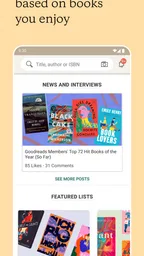
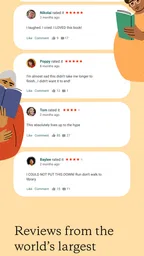
Much of Goodreads’ value comes from browsing and exchanging information. When I’m connected, I can explore books, look through reviews, and use other readers’ reactions as a starting point for my own next-read shortlist. Reviews are especially useful when a title catches my eye but I’m not sure whether its style or subject is right for me. They don’t make the decision for me, of course, but they give me a broader sense of how a book lands with different people.
The social side matters too. Goodreads is designed around sharing a reading journey, so the experience feels livelier when I can see and respond to the activity around books. That makes connectivity more than a background technical detail: it supports the discovery and conversation that give the app its character. If I open it hoping to browse recommendations or catch up on readers’ thoughts, a working connection is central to that moment.
My favorite part of this approach is how discovery can begin with a small curiosity. I might arrive with a particular author in mind, or I might simply want a book that suits my mood. Reviews and reader activity offer several ways to keep looking rather than forcing me into one narrow path. For a book discovery app, that open-ended quality is a real strength.
Goodreads has a substantial audience, which helps make its community aspect feel meaningful. It has more than 10 million installs and an average rating of 4.6, supported by a large volume of reader feedback. Those figures don’t tell me whether a particular review will match my taste, but they do show that this is an established destination for people who want to organize and discuss reading.
Reviews as a guide, not a verdict
I treat reviews as conversation rather than a final judgment. A reader may love a book for the very reasons another person finds it slow, so it helps to read a few perspectives and notice what people actually say about the experience. Goodreads makes that kind of browsing part of its core appeal. It can help me narrow a choice, while still leaving the final call where it belongs: with me.
This is also where a connection can shape the pace of using the app. Looking through opinions and exploring titles is more engaging when the information is available as I browse. If I’m planning a reading list or comparing a few possibilities, I’m likely to spend longer with those discovery tools than I would while simply checking a book I already know I want to read.
Keeping a reading routine on the move
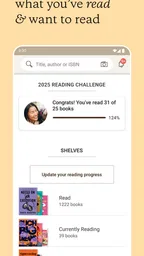
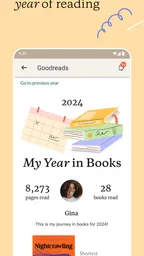
Goodreads suits the little gaps in a day: a quiet moment between errands, a break, or the time when I’m deciding what to read next. Its purpose is easy to return to because it brings tracking and discovery together. Instead of keeping my reading plans only in my memory, I can use the app to follow my progress and make the habit feel more intentional.
The mobile format is most useful when I want to capture a thought while it’s fresh. I may remember a title I’ve been meaning to look up, or want to see what readers think of a book someone mentioned. The app’s combination of tracking and sharing gives those moments a natural place to go. It is not only about finding a new book; it is also about keeping a record of the reading I’m already doing.
That said, Goodreads is not a substitute for the book itself. I see it as a companion to reading: a place to keep track, explore, and talk about books, rather than the main event. That distinction helps set expectations. If I want a rich community and a record of my reading journey, its focus makes sense. If I’m opening an app solely to read a book, Goodreads is aimed at a different need.
Its age rating is Teen, and the app sits in the books and reference space. That positioning fits its role as a reading companion and catalog of reader perspectives. The overall experience is centered on books and the people who read them, rather than on unrelated social updates or general-purpose browsing.
When a connection falters
Because discovery and reader interaction are such prominent parts of Goodreads, interruptions to connectivity can affect the flow of those activities. If browsing or checking conversations is the reason I opened the app, a poor connection can make the session less satisfying. I find it helpful to think of Goodreads as a connected reading companion, particularly when I’m looking for fresh reviews or want to engage with the wider community.
In practice, I’d keep my expectations simple when a connection is unreliable: focus on what I came to do, and return to browsing or conversation when the connection is better. That is a sensible way to approach any app whose appeal includes exploring shared information. The important point is not to assume every part of the experience will behave the same way in every network situation, but to recognize that the social and discovery elements are strongest when connected.
When I return after an interruption, I can pick up the broader purpose of the app again: check my reading plans, explore a title, or catch up with the reader community. Goodreads’ straightforward focus helps here. I don’t have to rethink what the app is for; I can simply return to the part of my reading routine I want to continue.
For readers who often switch between places or network conditions, this makes Goodreads easiest to appreciate as one part of a wider routine. I can use it when I’m ready to browse and share, and keep the actual book or my own reading time at the center when I’m not. That balance feels natural for a companion app rather than an all-in-one reading environment.
A mindful approach to browsing
Goodreads encourages exploring titles and reading opinions, so it’s easy to keep scrolling once a book catches my attention. I try to use that discovery in a purposeful way: look for a few useful viewpoints, save the ideas I care about in my reading plan, and then get back to reading. This keeps the app from turning into a destination in itself when what I really want is to spend time with a book.
For anyone who pays attention to mobile data use, the most practical approach is to be deliberate about when to browse. Reader conversations and book discovery are the parts that make the app feel most connected, so I can reserve those sessions for times when I’m comfortable exploring. I don’t need to turn every spare moment into an extended search; a quick check can be enough to find a promising title or revisit a reading goal.
That approach also helps keep the social side enjoyable. Goodreads works best for me when I use reviews as helpful context, not as an endless stream of opinions I have to follow. A few thoughtful perspectives can add a lot, especially when I’m choosing between books, while my own taste remains the guide. The app gives me a place to discover and share without requiring me to treat every update as urgent.
Who will get the most from it?
I’d recommend Goodreads to readers who like having a visible record of what they’re reading and who enjoy hearing how other people respond to books. It is a particularly natural fit for anyone who often wants recommendations or likes discussing reading with a community. The combination of tracking, reviews, discovery, and sharing gives it a clear identity as a book tracking app rather than a general-purpose social platform.
It may be less compelling for someone who wants an app focused only on opening and reading digital books. Goodreads’ strength is the reading journey around the book: finding it, keeping track of it, and seeing what fellow readers think. That focus is useful when it matches your habits, and easy to recognize if you want a more direct reading tool instead.
The app has been available since April 29, 2011, and its current version is 2.77.0 Build 3. It is free, with a minimum operating-system requirement of version 10. Those details make it straightforward to check compatibility and decide whether it fits the device you plan to use.
My connectivity verdict
As a connected companion for reading, Goodreads brings together the pieces I’m most likely to want around a book: reader reviews, discovery, progress tracking, and sharing. Connectivity matters most when I’m exploring opinions or joining the social side of the experience, while the app’s purpose remains clear even when I’m simply thinking about my next read. I like that it supports both the practical side of tracking and the more social pleasure of finding books through other readers.
Goodreads is a solid choice if you want to make your reading routine easier to organize and enjoy discovering books through a community. I’d approach it with the expectation that browsing and interaction are central to its appeal, and use it intentionally when I want those connected moments. For me, that makes it a helpful partner to reading itself: a place to keep my literary plans together, find fresh inspiration, and share the journey without losing sight of the books.
What we like
- Personalized recommendations help you discover books that match your interests.
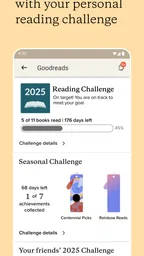
- Reading challenges make it easier to set and track yearly goals.
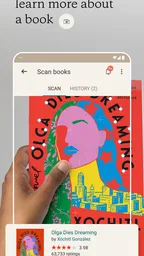
- ISBN scanning can quickly add physical books to your shelves.
- Reviews and ratings offer useful perspectives from other readers.
- Shelves help organize books by status or custom category.
What could be better
- Some recommendations can feel repetitive or miss your preferences.
- The interface can feel dated compared with newer reading apps.
- The large volume of reviews can make quality opinions harder to find.
- Social features may be distracting if you only want to track reading.
- Reading progress updates require manual entry for most books.





