
Edmtrain Concerts & Raves review
 Analysis by Appsdrops
When I’m choosing a night out, the hard part is often not finding a famous DJ but figuring out what is actually happening nearby. Edmtrain Concerts & Raves is built around that moment: it helps me look for electronic music events and gives me a place to explore artists I might otherwise miss. I find its focused purpose more useful than a broad events app when I already know I want an EDM show, though it is not a complete substitute for checking practical details before heading out.
Finding the right show without a crowded event feed
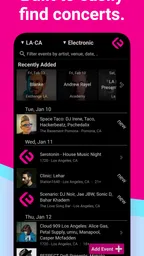
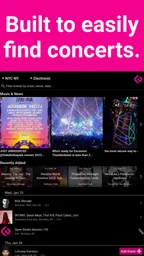
This is an events app from EDM Train LLC, aimed at people who want live electronic music rather than a little bit of every kind of entertainment. That focus makes the basic idea easy to grasp. Instead of sorting through unrelated exhibitions, comedy nights, and general concerts, I can start with the scene I care about and look for something to attend.
The app has been available since January 25, 2013, and its audience has grown to over 100,000 installs. Its average is 4.9 from around 4,700 ratings, with 803 written reviews. Those figures suggest that many listeners value its narrow, practical focus; they do not tell me whether a particular local event listing is current, so I still treat the app as a discovery tool rather than my final source for a night’s logistics.
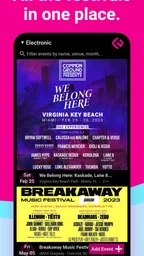
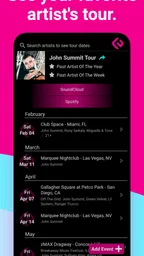
One of the strongest reasons to use a specialist finder is that electronic music plans often start with an artist, not a venue. I might hear a track, recognize a name on a lineup, or want to see a favorite performer again, then need to work out where they are playing. A dedicated EDM event search is a more natural starting point for that task than a general concert calendar that expects me to know the venue or browse by broad genre.
Readable choices and a focused way to browse
Because the app is centered on shows and artists, I can approach it with a practical question: what could I go to? That is a helpful distinction from social feeds, where event discovery can depend on recommendations, posts, and friends’ activity. A focused event app can make the search feel more intentional: I am looking for a night out, not trying to infer one from a stream of unrelated content.
For readability, a list of event choices is most useful when I can scan names and locations at my own pace. I would use this app in short sessions: check what is coming up, note a promising artist or event, and then take time to verify the details elsewhere if I am considering buying a ticket. That slower workflow is especially sensible if I find dense event information tiring to process or prefer not to make plans while rushing.
Its strength is not that it can answer every question about a show, but that it narrows the initial search to the right kind of event. I would not expect a specialist listing app to replace a venue’s own event information, ticket seller, or direct communication with an organizer. For me, the useful handoff is clear: discover a possible show here, then confirm the details at the source responsible for it.
Comfort, control, and different ways of using it
People differ in how they handle bright screens, crowded layouts, small text, and rapid browsing. I would use the app in a quiet moment rather than trying to inspect listings while walking through a loud venue or juggling a conversation. That is not a special feature claim; it is a practical way to give myself enough time to read an artist name, check where an event is, and decide whether it deserves a closer look.
Motor comfort matters too. Searching for an event can involve repeated taps and scrolling, so someone who finds precise touch actions difficult may prefer to browse when they can hold the phone steadily and take breaks. I would also avoid treating a quick glance at a listing as a finished plan. Before leaving, I’d make sure I have the artist, venue, date, and ticket information recorded in a way that is easy for me to revisit.
For sensory-sensitive users, the app’s subject matter is worth separating from the experience of using it. EDM shows themselves can involve loud sound, intense lighting, dense crowds, and late hours; an event finder cannot make those conditions comfortable. I would use it to identify options, then look into the venue and event environment before deciding. If a person needs quieter surroundings or predictable crowd conditions, a smaller event or a different kind of outing may be a better fit.
Useful in everyday planning, with a careful handoff
A realistic use case is a Friday afternoon when a friend asks whether anything electronic is happening nearby that evening. I can open the app, see whether a promising show appears, and use the artist or event as a starting point for a group conversation. Rather than committing based on a single glance, I’d check the venue’s current information, confirm ticket availability, and agree on transport and a meeting point. That workflow keeps discovery convenient without asking the app to handle every part of the plan.
Another useful approach is to browse before a trip. If I am visiting a city, I can use an EDM-focused search to look for artists or events worth investigating, then verify the venue and timing directly. The trade-off is that a listing may help me discover a possibility without resolving questions such as entry arrangements, accessibility at the venue, age restrictions for a specific event, or changes to the schedule. Those details matter enough that I would confirm them before spending money or traveling.
The app is free, which makes it easy to try as a discovery aid without paying just to see whether its focus suits me. The app’s Teen content rating describes the app’s age classification, not a promise that every concert is appropriate for every teenager. For an actual event, I would check its own entry rules and venue guidance, particularly when planning for a younger attendee.
Where a specialist app helps—and where it falls short
Compared with a general ticketing or events app, this one has a clearer musical purpose. General services can be better once I already know a venue, need to compare ticket options, or want to browse many kinds of events in one place. A social platform can be more useful for seeing what friends are discussing. But those alternatives may take more filtering when my only question is whether there is an EDM show I would enjoy.
The reverse is also true: an EDM-only focus can be limiting if I am open to other live music, want a full city calendar, or need planning tools beyond discovery. I would not use it as my sole source for ticket purchases, accessibility arrangements, or last-minute event changes. Keeping the app’s role narrow is actually a practical advantage: it helps me find candidates, while the venue and ticket provider remain the places I check for decisions that affect the night.
There is also a human side to event search. A name on a lineup may be unfamiliar, and genre labels do not always tell me what the show will feel like. I’d use the app to spot possibilities, then listen to the artist and look into the event before deciding. That extra step is useful for anyone who wants a more predictable night, is sensitive to sound or crowd intensity, or simply wants to avoid buying a ticket based on a name alone.
Who should try it, and who may prefer another route
I’d recommend giving Edmtrain Concerts & Raves a try if electronic music is a regular part of your life and you want a focused way to uncover nearby shows. It is particularly handy when you know the artist you want to see, are open to discovering someone new, or need a starting point for a group plan. Its high average rating and steady audience are encouraging signs, but the deciding question is whether its event focus matches the way you make plans.
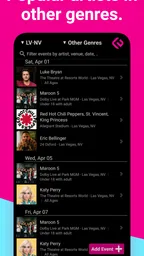
I would steer someone toward a broader event service if they want to compare concerts across genres, manage tickets in one place, or build an itinerary around several kinds of activities. I would also suggest checking venue information directly for anyone who needs detailed access arrangements or wants to understand the sensory environment before attending. The app can help identify a show; it cannot, by itself, tell each person whether that venue and event will work for them.
My overall view is that this is a useful, straightforward discovery companion with a clear audience. I like that its purpose is easy to understand and that it gives electronic music fans a more direct route to possible nights out than a general events feed. Its inclusive value depends on how comfortably someone can browse on their device and on the follow-up information available from the venue. Used as the first step rather than the whole planning process, it can make finding a show easier while leaving room for the checks that make the outing feel right.
What we like
- Find EDM events by city and date.
- Event listings include useful venue and lineup details.
- Save events to keep track of concerts you like.
- Discover shows while traveling in other cities.
- The focused EDM listings make browsing feel relevant.
What could be better
- Coverage depends on how many local events are listed.
- Some event details may change after you find a listing.
- Popular shows can sell out before you buy tickets.
- You may need a separate service to complete ticket purchases.
- The app is less useful if you do not follow EDM events.





