

EarnIn: Why Wait for Payday? review
 Analysis by Appsdrops
I see EarnIn as a timing tool, not a way to make a tight budget work indefinitely. It can help when an ordinary expense lands before your next paycheck, but the convenience comes with a trade-off: money you access early will not be available later in the same pay cycle. Used occasionally and with a plan, that can be useful. Used to cover a recurring gap, it may simply move the stress to payday.
What EarnIn is good at
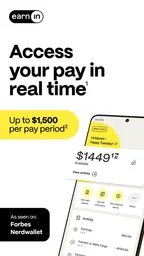
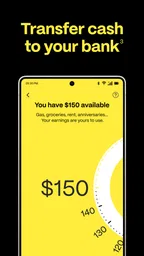
EarnIn is a finance app from Activehours Inc. built around access to earned pay before the usual payday. Its central appeal is easy to understand: rather than waiting for your normal pay date, you may be able to draw on part of the money you have already earned. The app’s stated limit is up to $200 a day, with a maximum of $1,000 per pay period. Those are ceilings, not a promise that every user will qualify for the full amount.
That distinction matters. I would treat the available amount as a possible buffer, not as money to count on for a fixed bill. If your car needs a small repair a few days before payday, an early-pay option may be more practical than letting the problem worsen or putting the cost on a high-interest card. If you need the same advance every pay cycle just to cover rent or groceries, the underlying budget problem deserves attention too.
The app is free to download, and its age rating is Everyone. It has been available since January 21, 2014, and its current version is 16.69. Its scale is notable: it has more than 10 million installs, with an average rating of 4.8 from around 313,000 ratings. That suggests broad interest, though popularity does not tell you whether the service fits your pay schedule or personal finances.
For a reader deciding whether to try it, the most useful question is not simply “Can I get cash early?” It is “Will I still be comfortable when that money is accounted for at payday?” Thinking about the second question first is a simple way to avoid treating an advance as extra income.
A practical way to use an early-pay option
Imagine your paycheck is due later in the week, but a necessary household purchase comes up today. I would first check the amount needed and whether I could wait, use savings, or adjust another expense. If waiting is not realistic, a modest early draw could bridge the timing gap. I would then record that amount against the upcoming paycheck so the next week’s spending plan reflects money already accessed.
That last step is easy to overlook. An advance can make today feel manageable while quietly reducing what is left to work with later. Before requesting money, I’d make a short list of the bills and essentials due before the next pay date, then see whether the expected remaining pay can cover them. If it cannot, taking more early may only postpone a shortfall.
A second helpful habit is to reserve advances for specific, unavoidable needs rather than letting the available balance become part of everyday spending. When the need is concrete, it is easier to judge whether the timing benefit is worth it. For casual purchases, waiting for payday is usually the cleaner choice because it avoids creating a second decision about how to stretch the following pay period.
Where it differs from familiar alternatives
Compared with a credit card, early access to earned pay is conceptually different: it brings forward money associated with work already done rather than extending a revolving line of credit. That can feel more straightforward for someone who wants to avoid carrying a card balance. But it is not a substitute for a long-term emergency fund, and the next paycheck still has to cover the rest of the month.
A personal loan is generally a better fit when someone needs a larger, planned amount and wants to understand a defined repayment arrangement before borrowing. A savings account is better when the expense can wait and the person has a cushion available. Asking an employer about pay timing may also be worth considering where that option exists. Each route solves a different problem; EarnIn’s strongest case is a short gap between earning money and receiving it.
I would not compare it to a budgeting app as though the two do the same job. Budgeting tools help people see and plan their money; an early-pay service changes when some money is accessible. A budget can reveal whether a cash crunch is temporary or recurring, while an advance can address the immediate timing issue. For many people, those approaches are more useful together than either one alone.
The limits I would keep in view
The daily and pay-period caps place a boundary on what the app can do, and the amount a person can actually access may be lower than the headline maximum. That makes it a poor solution for a large emergency or a bill that substantially exceeds available funds. I would not build a plan around receiving the maximum, and I would not assume that a request will solve every short-term cash problem.
There is also a behavioral risk: when money arrives sooner, it can be tempting to spend it without mentally subtracting it from the upcoming paycheck. That can create a cycle in which each pay period begins with less room than expected. My practical safeguard would be to note every early draw in the same place I track bills and to avoid requesting funds for discretionary spending.
Another limitation is fit. The app is designed around earned pay and a pay period, so it is most relevant to people whose income and pay timing make that model useful. Someone with irregular earnings, a major one-off expense, or a need for a predictable borrowing arrangement may be better served by another option. If you are already using advances repeatedly, I’d pause and look at the pattern rather than treating another draw as a lasting fix.
Convenience should not replace checking the terms presented in the app before making a decision. I would review the amount offered and the steps involved at the time of use, then consider how the resulting balance affects upcoming essentials. The key is to judge the actual offer in front of you, not to assume the maximum stated limit applies to your circumstances.
Who is most likely to benefit
I think EarnIn is best suited to someone with a relatively clear pay cycle who occasionally faces a small mismatch between when a necessary expense is due and when pay arrives. A worker who has already earned the money and can see how the next paycheck will cover remaining commitments may appreciate having another way to bridge that interval.
It is less suitable for anyone looking for extra income, a recurring way to make an unaffordable budget balance, or a large source of emergency funding. If an expense can be delayed without harm, waiting may be simpler. If the problem repeats month after month, reviewing bills, adjusting spending, building a small reserve, or seeking a more sustainable form of support is likely to matter more than accessing pay early again.
People who are careful about cash flow may find the most value by deciding in advance what qualifies as a genuine need. For example, they might use an advance only for essential transport, a time-sensitive household cost, or another expense that cannot reasonably wait. That personal rule helps keep a useful fallback from becoming routine spending money.
My verdict on EarnIn
EarnIn offers a focused solution to a familiar problem: the gap between earning money and receiving it. I like that the core idea is easy to relate to, and the stated limits make clear that it is meant to be a partial bridge rather than an unlimited source of cash. The app’s long presence and large audience make it a well-established option in the early-pay space, but neither is a reason to skip a careful look at your own budget.
My recommendation is to use it only when the timing problem is temporary and the next paycheck can absorb the advance without jeopardizing essentials. If that describes your situation, it may offer welcome flexibility. If you need it regularly to get through the pay period, I would choose a budgeting or longer-term financial approach instead and treat early access as a warning sign, not the solution.
Overall, I’d recommend considering EarnIn as a selective cash-flow tool rather than a default payday routine. Its value depends less on the maximum you might access than on whether you can use a smaller amount deliberately, keep track of what has already been spent, and arrive at payday with a realistic plan.
What we like
- Get access to part of your earned wages before payday.
- No mandatory interest is charged for standard Cash Outs.
- The app can help cover a small unexpected expense.
- Automatic payments can reduce the need to remember a repayment date.
- Balance alerts can make upcoming cash flow easier to monitor.
What could be better
- Cash Out limits may be too low for larger expenses.
- Eligibility and available features vary by user and employer.
- Tips are optional but can make borrowing feel more expensive.
- Repayments are taken from a later paycheck or linked account.
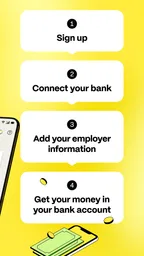
- Bank verification and location permissions may be required.





