




Dwell: Audio Bible review
 Analysis by Appsdrops
I find Dwell: Audio Bible most useful when I want Scripture to fit into a part of the day that would otherwise be spent staring at a screen. It is a Bible app built around listening, so the key question is not simply whether you want a digital Bible, but whether hearing passages suits your routine better than reading them. If audio helps you focus, reflect, or keep a regular habit, Dwell has a clear purpose. If you mainly want a searchable text reference, a conventional Bible app may serve you better.
Choose by how you want to engage with Scripture
As a Books & Reference app from Dwell App, LLC, this is aimed at people who want Scripture to accompany everyday activities: a walk, a quiet moment before work, or time winding down in the evening. Its central appeal is straightforward—make listening a natural way to spend time with the Bible, rather than treating audio as an occasional extra in a text-first tool.
That difference matters more than a long feature checklist. When I am listening, I can keep my phone in my pocket and give the passage attention without needing to scroll or hold my place. Reading remains better when I want to compare wording, scan a chapter, or find a specific phrase quickly. Dwell is most compelling when the goal is sustained listening, not rapid lookup.
A practical way to decide is to picture the moment you want the app for. If you have a reliable ten-minute walk and would like to use it for a passage, audio fits naturally. If your usual study involves marking text, checking references, or moving between translations, you may prefer a reading-focused Bible app and use audio only as a supplement.
Where listening earns its place
The strongest case for an audio-first Bible is that it lowers the effort needed to begin. I do not have to find a comfortable reading position or keep looking at the display. That can make a listening routine easier to maintain during chores, commuting as a passenger, or a walk. The trade-off is that listening is not automatically focused: background noise, interruptions, and multitasking can make it easy to miss a sentence.
I would treat listening as a distinct way of engaging, not as a replacement for every kind of Bible use. A passage heard in context can feel more continuous than one read in short fragments, while a difficult verse may still call for a pause and a closer look at the text. Switching between those approaches is more useful than expecting one format to do everything.
For a realistic routine, I would choose a regular activity that does not demand much attention, start a passage before setting off, and avoid trying to listen while doing something that needs concentration. Afterward, I might return to a text Bible to find a particular verse or note a question. That simple two-step workflow plays to audio’s strength without asking it to replace study tools it is not designed to be.
What to check before making it your regular app
Consider whether you enjoy spoken Scripture and whether you can give it a reasonably quiet window. Some listeners absorb a passage more readily by hearing it; others find that their attention drifts unless they can see the words. If you are unsure, try listening for a short, familiar section first. Notice whether you remember the flow and meaning, rather than judging the app only by whether audio is convenient.
It is also worth thinking about how you handle interruptions. With a book, it is easy to glance back at the previous paragraph. Audio asks you to recover your place through listening, so frequent stops can break the thread. I would use it for a walk or a calm routine with fewer interruptions, then switch to text for a busy moment when I need quick access to a verse.
Where Dwell stands out—and where another approach may fit
Dwell: Audio Bible makes sense for people who already value audio, want Scripture in an everyday listening routine, or find extended reading difficult to fit into the day. Its focus gives the experience a clear identity: it is not trying to be a general reference library first. That focus is a benefit when you want to press play and listen, but it can feel limiting if your main need is a flexible study workspace.
Compared with a typical text-first Bible app, Dwell’s advantage is the listening-centered experience. A text-first option is usually the more natural choice for searching, comparing passages, reading silently in a public place, or following along visually. If you frequently need to locate a word or revisit a specific sentence, audio can feel slower even when it is convenient for other tasks.
Compared with listening to a general audiobook or podcast, Scripture has a different purpose: you may want to return to a passage, connect it with a reading habit, or listen reflectively rather than simply fill time. Dwell is a better fit when the Bible itself is what you want to hear. A general audio player may be more suitable if you mainly want to manage a broad mix of spoken content in one place.
One useful trade-off is whether to make Dwell your only Bible app. I would not assume that an audio-first tool should replace a text reference app if you rely on search or close reading. Keeping both approaches available can be less frustrating: use Dwell for a regular listening session and a text Bible when you need precision. That is not redundant if the two apps serve different moments.
Another practical point is how you choose a listening session. Rather than starting audio whenever you have a spare minute, tie it to one repeatable activity. A walk after lunch, for example, gives listening a predictable place in the day. If you try to use it only in scattered gaps, the interruptions may outweigh the benefit and make the habit feel harder than it needs to be.
Getting started without creating extra friction
I would begin with a modest routine instead of setting an ambitious daily target. Pick a passage or a convenient time, listen without doing another demanding task, and see whether the format helps you stay with the material. If it does, expand the routine gradually. If you repeatedly lose focus, use audio for familiar passages and keep new or challenging material for reading.
For shared or quiet environments, consider whether listening is practical at that moment. Audio requires a way to hear it comfortably, and a public setting may not suit every listener. A text app is a simpler fallback when you need silence or want to read at your own pace. Thinking about those situations in advance helps prevent the common mistake of choosing an audio app and then expecting it to work equally well everywhere.
The app is free to install, but it also offers in-app purchases ranging from $4.99 to $799.99 per item. I would check the purchase details in the app before committing to anything, especially if I only want to test whether listening works for me. The free starting point makes it possible to explore the format, while the wide span of listed purchase amounts means it is sensible to understand the exact option and terms shown at the point of purchase.
Reputation, access, and ongoing fit
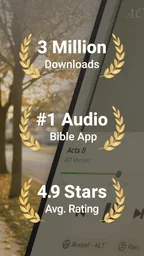
Dwell has a 4.7 average from around 15,000 ratings, with about 2,400 written reviews, and has passed over one million installs. Those figures suggest that it has found a substantial audience, but they cannot tell me whether the listening approach fits a particular person. I would treat them as reassurance that the app is established, then make the decision based on my own habits and needs.
It is rated for Everyone, and its current version is 2026.10.1. The app first appeared on April 13, 2019, and its minimum operating-system requirement is version 7.0. Before installing, I would still check that my device meets that requirement and that I have a comfortable way to listen. Compatibility is only useful if the app also fits the situation in which I plan to use it.
Switching to Dwell has a small but real habit cost. If you already read from a text Bible every day, moving that routine to audio may take adjustment: listening requires a different level of attention, and you may need to choose a setting where spoken content is practical. I would not abandon a reading routine that works just to use a new format. Instead, add one listening session and keep the existing method for study or quick reference.
The reverse is true if audio is already part of your day. In that case, Dwell may be easier to adopt because it can occupy a familiar listening slot. The key is not to measure success by how often the app is open. A short, attentive session may be more useful than leaving audio running while your mind is elsewhere.
Who should choose it—and who should pass
I would recommend Dwell to someone who wants to hear Scripture regularly, appreciates a hands-free option, or is trying to build a listening habit around an existing routine. It is also worth considering if reading from a screen is inconvenient for you but listening feels comfortable. Its clearest value comes when audio is the format you genuinely prefer, rather than a feature you expect to use occasionally.
I would steer a reader toward a text-focused alternative if they depend on fast search, visual comparison, extensive note-taking, or silent reading in places where audio is awkward. People who struggle to retain spoken information may also find that a conventional Bible app is the better primary tool. Neither choice is inherently better; the right one is the format that lets you pay attention and return to the material in the way you need.
My recommendation is to try Dwell as a dedicated listening companion, not as an automatic replacement for every Bible tool. Start with one repeatable, low-distraction part of your day and see whether hearing passages helps you engage more consistently. If it does, the app fills a specific and useful role. If you mostly want to search, study, or read at your own pace, a text-first app will probably remain the better home for your routine.
What we like
- Offers a large selection of Bible translations.
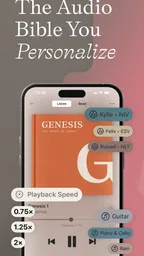
- Includes dramatized audio performances for an immersive experience.
- Lets users download audio for offline listening.
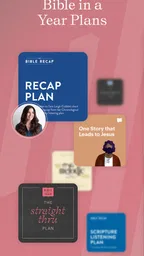
- Provides listening plans to support a regular routine.
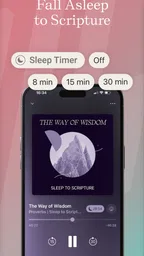
- Sleep timer helps stop playback after a chosen period.
What could be better
- Some translations or features may require a subscription.
- Audio availability can vary by Bible translation.
- Offline downloads take up device storage.
- A stable connection is needed to stream audio.
- Playback controls may feel limited for advanced listeners.





