
DailyBible for Women - KJV review
 Analysis by Appsdrops
I like a Bible app best when it helps me begin reading without turning the moment into another task to manage. DailyBible for Women - KJV is aimed at that kind of routine: it brings King James Bible reading together with prayer, devotionals, and encouragement. Its focus is clear, and that can be a real advantage if you want a faith-centered pause that feels approachable rather than a broad study tool packed with options.
In my view, the key question is not whether it can replace every Bible resource you use. It is whether its combination of scripture and daily reflection fits the way you actually make time for them. For a short morning reading, a quiet break, or a few minutes of prayer before bed, the app has a practical shape. For detailed textual research or a choice of translations, a dedicated study app may suit you better.
A simple routine built around the KJV
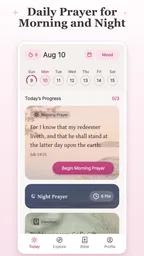
The core appeal is the pairing of King James Bible reading with devotional material and encouragement. Instead of opening one app for scripture and another for a guided reflection, you can approach those parts of a daily practice in one place. That is useful when your aim is consistency, especially if you often have only a few minutes and do not want to decide what to read from scratch.
I would use it in a repeatable sequence: open the app, read a passage at a comfortable pace, sit with the devotional, then take a moment to pray. Keeping that order simple matters. The app’s subject is personal, but the habit does not need to be complicated; a small, familiar routine is more likely to survive a busy week than an ambitious plan that asks for a long session every day.
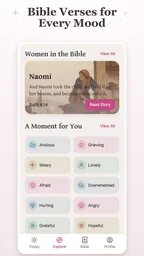
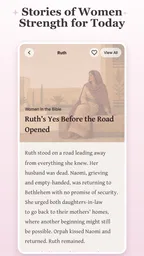
The women-focused presentation gives the app a more specific identity than a general-purpose Bible reader. That can feel welcoming if you want devotional encouragement framed for women, rather than a library-first tool that leaves you to assemble a routine yourself. At the same time, the Bible text remains the central reference point, so the app can still make sense for someone who mainly wants a familiar KJV reading experience with reflective material alongside it.
A realistic use case is a rushed weekday morning. I would not try to read at length while getting ready; I would choose a brief window before the day becomes noisy, read attentively, and use the devotional as a prompt rather than something to race through. If the morning gets away from me, the same basic sequence works during a lunch break or in the evening. That flexibility is more valuable than forcing one ideal schedule.
Make the first session easy to repeat
When you first install a devotional app, it is tempting to browse every section and lose the quiet moment you meant to create. I would begin by checking how the reading and devotional content are arranged, then settle on one time of day and a modest session length that feels realistic. If the app presents a daily reading or prayer, treat it as an invitation, not a test you have to pass.
That distinction is especially helpful for people who feel guilty when they miss a day. A useful Bible routine should make it easier to return, not turn a gap into a reason to give up. I would simply reopen the app when convenient, read what feels relevant, and continue with the habit rather than trying to compensate with an unusually long session.
The app is free to install, though it includes optional in-app purchases priced from $3.99 to $19.99 per item. I would explore the basic experience first and decide whether any paid content is genuinely useful to my routine before spending. That approach is sensible for any devotional app: the value comes from whether the material helps you return to reading, not from collecting more content.
Settings to check before settling in
Because the app centers on the KJV, I would first make sure that this translation is comfortable for your everyday reading. Its traditional wording can be meaningful and familiar, but it may feel less immediate if you are used to contemporary English. That is not a defect in the app; it is a choice of text. If you regularly compare translations to understand a difficult verse, a multi-translation Bible app will be a better companion for that specific job.
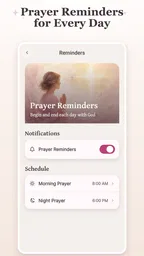
I would also look through the available reading and notification controls rather than assume that every reminder suits me. The useful setting is the one that supports a routine without interrupting work, family time, or rest. If reminders are offered, choose a time when you can actually pause. If they are not part of the experience you want, do not let notifications become the reason you stop using the app.
One practical tip is to decide in advance what you want the app to do for you. If it is primarily a prayer prompt, open it when you have enough quiet to reflect. If it is a scripture-reading aid, give the text your attention before moving to the devotional. Separating those intentions can make a short session feel less rushed, even when the app puts both kinds of material close together.
It is also worth considering whether you prefer reading on a phone at all. A screen can be convenient when you are out, but it can bring messages and other distractions into a reflective moment. I would silence interruptions or set the phone aside after opening the reading. This is not an app-specific feature; it is a simple way to protect the purpose of using a digital devotional in the first place.
Shortcuts that build a steadier habit
Experienced users do not necessarily need more features; they need fewer decisions. I would attach the app to an existing cue, such as sitting down with breakfast or winding down before bed. That makes opening it part of a familiar sequence. The aim is not to promise a perfect streak but to reduce the small friction of deciding when to begin.
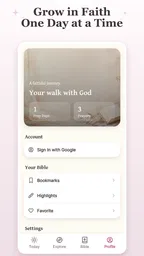
A second useful pattern is to keep a brief personal note outside the app if a prayer or passage stays with you. I would not assume the app has a particular journaling or bookmarking tool unless I could see it. A notebook or a private note-taking app works just as well for capturing a thought, and it keeps the reading experience focused instead of sending you into menus to organize everything.
You can also use the devotional as a starting point for a more personal prayer rather than treating its wording as the whole conversation. Read the reflection, identify one idea that connects to your day, and pause there. For example, before a difficult conversation, a short reading can help you choose a calmer intention; after a stressful day, the same routine can create a deliberate transition before sleep. These are modest uses, but they make the app’s combination of scripture and encouragement more concrete.
If you share a household or have an irregular schedule, build the habit around a flexible window rather than a fixed clock time. A morning routine may work on weekdays and an evening one on weekends. What matters is returning to the same simple sequence, not matching someone else’s idea of a perfect devotional schedule.
Where this app is not the right tool
The KJV focus is also the clearest limitation. Readers who want side-by-side translations, word searches for in-depth study, extensive commentary, or a large reference library should compare it with a study-oriented Bible app. DailyBible for Women is more naturally suited to devotional reading and prayer than to academic research. I would keep a specialist reference app nearby if I were preparing a lesson or tracing a phrase across scripture.
Likewise, the women-centered approach will not be everyone’s preference. Some readers want devotional material that is less tailored by audience, while others may specifically appreciate that focus. The right choice depends on whether the tone and framing help you engage. If they feel too narrow or simply do not resonate, a general Bible reader can provide a more neutral starting point.
Another trade-off is that devotional guidance can shape what you notice in a passage. That can be helpful when you want a gentle prompt, but it is not a substitute for reading the text carefully for yourself. I would read the KJV passage before deciding what the reflection means to me, then use the devotional as one perspective rather than the final word. That small habit helps preserve a personal reading practice.
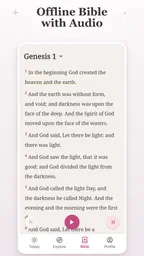
For people who want offline access, detailed privacy controls, audio, or particular accessibility options, I would check those needs in the app before relying on it as a daily resource. I would not choose a Bible app on the assumption that it supports a feature I have not confirmed. If one of those requirements is essential, a tool that clearly provides it is the safer choice.
Who will get the most from it
I can see this app working well for someone who already likes the King James Version and wants a straightforward bridge between reading and prayer. It is also a reasonable fit for a beginner who would rather receive a devotional prompt than face a large catalog of study materials. The combination gives a session a natural direction, which can help when opening a Bible app otherwise feels like one more decision.
It is less compelling for readers who want a customizable research workspace, compare translations every day, or prefer to choose every part of a study plan themselves. In those cases, a more flexible Bible reference app is likely to be a better main tool. You could still use this one for devotional reading, but there is little reason to force it into a role it is not designed to fill.
LINKAMEN PTE. LTD. develops the app. It is listed as a Books & Reference app, carries an Everyone age rating, and is currently at version 1.1.9, with Android 7.0 as its minimum operating-system requirement. It has a 4.9 average from around 2,600 ratings, and more than 50,000 installs. Those figures suggest that it has found an audience, but I would still judge it by whether its devotional style and KJV text suit your own reading preferences.
My verdict after weighing the routine
I would recommend DailyBible for Women - KJV to a friend who wants scripture, prayer, and encouragement to sit together in a calm, repeatable daily practice. Its strongest point is focus: rather than asking you to build a whole study system, it gives you a clear reason to open it and a natural way to spend a few minutes. The free starting point makes it easy to try before deciding whether any optional purchase belongs in your routine.
I would not call it a universal Bible solution. The KJV is a specific reading choice, the audience framing will not suit everyone, and people who need deeper research tools should look elsewhere for their primary study app. But if the text feels comfortable and a devotional prompt helps you return to prayer, this is a focused option worth trying. Its best feature is the gentle structure it can give a habit, not a promise that a phone app will do the reflecting for you.
My practical advice is to use it for a week as a small daily pause: read first, reflect second, and let the prayer connect the passage to whatever is in front of you. Keep the routine flexible and skip any purchase until you know what you actually use. If that simple pattern feels grounding, the app is doing its job; if you keep wishing for translation comparisons or study references, choose a broader Bible tool instead.
Overall, I see it as a devotional companion rather than a complete theological library. That is a fair and useful role. For a reader who wants the King James text in a women-focused setting and values a manageable rhythm over a crowded feature set, it can make a quiet part of the day easier to protect.
What we like
- Daily scripture readings make it easy to build a regular devotional habit.
- The KJV wording offers a traditional Bible translation.
- Women-focused reflections can make devotional themes feel more relatable.
- Short daily content suits quick reading sessions.
- A dedicated devotional format keeps daily inspiration easy to find.
What could be better
- The KJV's older language may be difficult for some readers.
- Women-centered content may not suit every reader's preferences.
- Daily material may feel repetitive to users seeking deeper study.
- A reading plan can be harder to follow if you miss several days.
- The app may offer less flexibility than a full-featured Bible study tool.





