

Current - Mobile Banking review
 Analysis by Appsdrops
I find the most useful way to think about Current is as a finance app built around getting access to pay sooner. That idea is easy to like, but its value depends on the details of your pay schedule, your spending habits, and whether you want a focused mobile banking experience or a more traditional bank account. I would consider it a practical tool for managing the gap between earning money and seeing it arrive, not a shortcut to having more money.
Early access to pay, with a budgeting effect
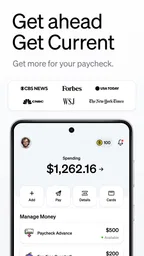
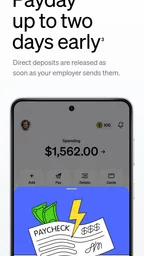
Current is a finance app from Current, and its central appeal is the possibility of receiving pay early. In everyday terms, that can make a difference when a bill is due before a normal payday or when a necessary purchase cannot wait. Rather than treating that timing problem as a budgeting failure, the app puts earlier access to pay at the center of the experience.
The important distinction is that earlier pay changes when money is available; it does not increase what you earn. I would use it to smooth out a short-term cash-flow pinch, not as a reason to spend more freely. If an early deposit helps you avoid carrying a balance elsewhere or missing a planned expense, it can be useful. If it simply shifts the same money forward and leaves the next week tighter, it may not solve the underlying problem.
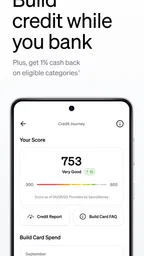
Current also presents itself as a place to build credit. That makes the app more interesting to people who want their everyday financial routine to support longer-term goals, rather than using a separate app for every task. Still, I would approach credit-building as a gradual process and read the in-app terms carefully before relying on any particular outcome. The sensible expectation is that a banking app can support habits; it cannot promise that every user’s credit situation will change in the same way.
The clearest benefit is timing, not a larger paycheck. Keeping that in mind helps set realistic expectations from the start. Current is worth considering if you regularly need better alignment between income and expenses. It is less compelling if your pay already arrives when you need it and your main priority is a broad set of traditional banking services.
What early pay changes in a normal week
Picture a common situation: your rent or another regular bill is scheduled shortly before payday, while your pay arrives a little later. Earlier access may give you room to cover the bill on time without leaning on a credit card or asking someone to bridge the gap. That is a concrete use case, and it is more valuable than the vague promise of “more flexibility” because it ties the feature to a decision you can plan around.
I would start by mapping a month of income and fixed expenses before changing any habits. Note which bills fall before payday, which ones can be moved, and how much of each deposit is already committed. Then treat any early pay as the same income arriving sooner. That simple accounting step can prevent the common trap of using the next deposit to cover spending that was pulled forward from the following pay period.
There is a useful trade-off here. If early availability lets you avoid a costly late payment, the timing can be genuinely helpful. If the underlying issue is that your regular expenses exceed your income, a faster deposit only gives temporary breathing room. I would use the app alongside a basic calendar or budget, not as a replacement for tracking obligations.
A practical routine for using it carefully
My approach would be to connect the timing of pay to specific priorities rather than treating the available balance as all-purpose spending money. For example, decide in advance that an early deposit will cover a scheduled bill, groceries, or transport. Once that amount is accounted for, the remaining balance is easier to assess honestly. This is especially useful for people whose income arrives on a predictable cycle but whose bill dates are inconvenient.
I would also check the app when a deposit is expected instead of assuming that “early” means a guaranteed arrival at a particular hour or on every occasion. Pay timing can depend on the circumstances around an employer’s payroll process, and plans should leave room for variation. If a payment has a strict deadline, it is safer to keep a backup plan than to make an irreversible commitment based on an assumed deposit time.
Another practical tip is to separate essential spending from flexible spending in your own notes, even if you do not use another budgeting tool. A quick list of rent, utilities, food, and transport makes it easier to see whether early access is solving a timing mismatch or disguising a shortfall. That distinction matters because the right next step is different in each case: move a bill date for a timing problem, or revisit the budget for a persistent shortfall.
For someone paid on an irregular schedule, the benefit may be less straightforward. Earlier access is easiest to plan around when income and payroll are reasonably predictable. If earnings vary substantially, I would avoid building recurring expenses around the earliest possible arrival. A conservative budget based on money actually received is less exciting, but it is usually safer.
Where it sits beside familiar banking options
Compared with a conventional bank account, Current’s appeal is its mobile-first focus and its emphasis on pay timing and credit-building. A traditional bank may be a better fit for someone who values established in-person service, a wider range of account types, or a familiar branch-based relationship. The choice is not simply “modern versus old-fashioned”; it is about which features you will use often enough to matter.
Compared with a standalone budgeting app, Current is aimed at handling financial activity rather than only showing a plan or tracking figures you enter. That can be convenient if you want your banking and day-to-day money routine in one place. On the other hand, people who want detailed spending reports, custom planning tools, or a view across several financial providers may prefer a dedicated budgeting product alongside their existing account. I would not assume that one app has to do every job.
It is also worth separating early pay from borrowing. A timing feature can feel similar to having extra cash, but the money still belongs to a pay cycle and must cover the same real-world costs. If you need a longer-term source of credit, compare the terms and risks of suitable options rather than assuming early access is a substitute. Current’s credit-building angle may appeal to people working on their financial profile, but that is not the same as having a loan or a guaranteed credit result.
Limits and points I would check before relying on it
One friction point is that the usefulness of early pay depends on a user’s pay arrangement. Someone whose employer or payroll setup does not support the relevant flow may not get the experience they expect. Before reorganizing bill dates or moving another account, I would check the app’s current eligibility and setup details. That is a more reliable approach than making plans based on the feature’s headline appeal alone.
I would also look closely at the terms attached to the services I intend to use. Financial apps can have different rules for different features, and those details matter more than a broad description. Check what is required to receive pay, how deposits are handled, and whether any service has conditions that affect your particular situation. I would not assume every feature works identically for every user.
Another limitation is concentration. Keeping more of your routine in one mobile app may feel convenient, but it also means you should be comfortable managing money primarily through your phone. If you prefer face-to-face help, paper processes, or a long-standing relationship with a local bank, Current may not match your habits. Convenience is only a benefit when the way you manage your account feels dependable to you.
The app has an average rating of 4.4 from around 181,000 ratings, with about 48,000 written reviews and over five million installs. Those figures suggest that many people have tried it, but they do not tell me whether the early-pay feature will fit an individual’s payroll situation. I would use user feedback as background, then make the decision based on my own deposit pattern and the terms shown in the app.
Who is most likely to get value from it
I can see Current working best for someone who is comfortable with mobile banking, has regular pay, and occasionally needs income to arrive in better alignment with bills. It may also suit a person who wants a single place to explore banking and credit-building habits without beginning with a complicated financial setup. The strongest case is not a dramatic financial turnaround; it is reducing avoidable stress around a predictable gap in the calendar.
It is a weaker fit for someone who has no cash-flow timing problem, needs extensive branch support, or is looking for a guaranteed improvement in credit. It may also disappoint people who treat early access as extra income or who cannot tolerate any uncertainty around deposit timing. In those situations, a conventional account, a dedicated budgeting app, or a different financial product may be the better choice.
Current is free to download, rated for Everyone, and its current version is 8.21.1; it runs on operating systems version 9 and later. It was released on May 5, 2017, and has remained focused on mobile financial use. Those details make it accessible to a broad range of users, but I would still judge it by the services available to me and the terms I see when setting up the features I actually need.
My overall view is that Current is most useful when early access solves a specific timing problem. I would try it with a clear plan for what the earlier money needs to cover, then watch whether it makes the next pay period easier rather than merely moving pressure around. If that routine feels manageable and the app’s terms suit your needs, it can be a helpful addition to everyday banking. If you need deeper traditional banking support or a more comprehensive budgeting system, I would pair it with—or choose—an option better suited to those priorities.
What we like
- Check account balances and recent transactions from your phone.
- Manage cards and report a lost or stolen card in the app.
- Send money to other people with eligible payment options.
- Use biometric sign-in for convenient access on supported devices.
- Receive alerts that help you keep track of account activity.
What could be better
- Some features may require an eligible Current account.
- Cash deposits may depend on participating retailers and fees.
- Transfers can take time to complete depending on the payment method.
- Access to certain services may require identity verification.
- Mobile banking features depend on a reliable internet connection.





