

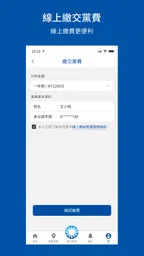
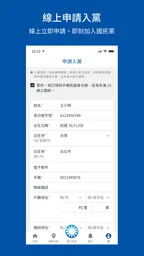
中國國民黨數位黨部 review
 Analysis by Appsdrops
I would judge a political party app less by the novelty of installing it and more by whether it becomes useful once the first look is over. 中國國民黨數位黨部 is aimed at members of the Chinese Kuomintang, with a clear purpose: giving the party a direct digital channel to serve and communicate with them. That focus makes it a very different proposition from a general events app. It may be worthwhile for someone who needs a party-specific point of contact, but it is not automatically useful to people who simply want a broad calendar of local happenings.
Useful at first, if you are part of its intended audience
The app sits in the events category, but its role is more specific than that label suggests. It is an app developed by 社團法人中國國民黨 for party members, rather than a neutral event-discovery tool. The practical question for a new user is therefore not whether it has something for everyone, but whether the party’s digital services and communications are relevant to their regular life.
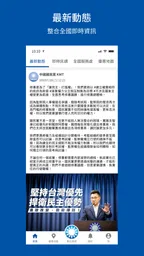
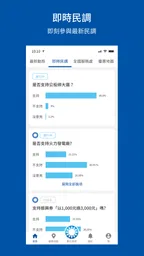
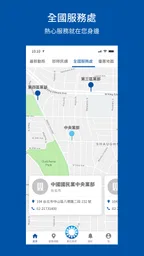
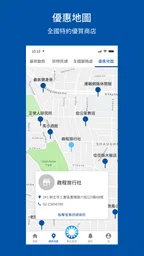
In the first week, I would treat it as a central place to check rather than assume it can replace every other channel. A member could make a habit of opening it when looking for party-related information or checking whether an event or service has been made available digitally. That may reduce the need to search across scattered messages, provided the information they need is actually offered through the app. Its value depends on that fit, not on simply having another icon on a phone.
There is a useful distinction between installing an app for a one-off task and adopting one as a routine. If you are joining a party activity, helping coordinate your involvement, or trying to keep up with the organization through its own channel, a dedicated app has a sensible advantage: it gives those interactions a home separate from general social feeds. If you are not a party member and have no ongoing reason to follow the organization, the initial curiosity may not turn into a lasting use case.
The app is free, so trying it does not require a purchase decision. It has a Teen content rating, and its current version is 1.0.46. It was released on August 18, 2020, and supports devices running Android 8.1 or later. Those details help set expectations about access, but they do not by themselves establish how often the app changes or how much content it currently offers. I would base the decision to keep it on whether it helps with a recurring need.
What a first-week test should answer
Rather than browse without a goal, I would use the first few days to answer three practical questions: can I find the party information I came for, is the app a convenient channel for checking it again, and does it make a real task simpler than my usual method? This is a better test than judging it on the number of screens or the impression of being “digital.” A service app earns its place when it saves a step or makes a relevant update easier to notice.
A realistic example is a member who wants to keep track of party activity while handling work and family commitments. They could check the app during a quiet moment, note any relevant event information, and decide whether to follow up through the appropriate channel. The useful outcome is not merely seeing an announcement; it is being able to fit that information into a real schedule. If the app supports that routine for the member, it has a credible role. If the person still has to rely on unrelated channels for the details they need, its convenience is naturally more limited.
One non-obvious point is that a dedicated political app can be most useful as a source of context, not as a complete organizer. Members may still prefer their phone calendar for reminders and a messaging app for conversations. I would not expect a party app to displace those familiar tools. Instead, I would look for whether it provides a reliable starting point for party-specific information that can then be acted on elsewhere.
Whether it earns a place month after month
The harder test arrives after the first week. Events are often occasional, while a digital service channel only becomes part of a routine if there is a reason to return between events. For this app, recurring value is tied to the party’s ongoing communication and member services. If those are relevant to a user’s role or interests, checking the app periodically may make sense. If their involvement is seasonal or limited to a single event, there may be long stretches when opening it offers little benefit.
This makes the app a poor fit for anyone expecting a broad, constantly refreshed public events calendar. Its purpose is tied to one political organization, and that specificity is both its strength and its main limit. Compared with searching social media, a party-specific channel can offer a more focused route to information associated with the organization. Compared with a general calendar or event platform, however, it will not serve people looking for activities across unrelated groups and venues.
I would also compare it with the simplest alternative: staying with the channels a member already checks. If a person reliably receives the relevant information from existing party communications, installing another app may create duplication rather than convenience. On the other hand, if those messages are easy to miss or hard to revisit, a dedicated app could be a useful place to check deliberately. The right choice depends on whether it consolidates something the user already needs, rather than whether it can theoretically do so.
The app has an average rating of 3.4 from around 870 ratings, while its store presence shows over 10,000 installs and 30 written reviews. I would read those figures as a reason to approach it with measured expectations, not as a verdict on any one person’s experience. A middling average can reflect different needs, device experiences, or expectations; the important thing for a prospective user is whether the app’s narrow purpose matches their own. Its political focus is not a drawback for the intended audience, but it does mean that many people will have little reason to use it.
Keeping the routine light
My practical recommendation is to avoid turning it into a daily check unless your party work genuinely calls for that. A weekly or event-driven check may be enough for someone whose involvement is occasional. Someone with more regular responsibilities may have a reason to look more often. This small distinction matters: a useful service can become tiring if the user checks it out of habit without having anything concrete to do there.
It is also sensible to keep the app’s role clear. Use it for party-related information and services, then use the phone’s ordinary tools for personal scheduling and communication where those work better. This division prevents a common source of frustration: expecting one organization’s app to become the single place for every reminder, conversation, and plan. The benefit of a focused channel is focus, not necessarily all-in-one convenience.
For a member deciding whether to retain it, I would assess it after a month by asking whether it has helped with a real task at least once or made a relevant update easier to follow. That is a more honest measure than counting how often it was opened. If it has become a dependable checkpoint, keeping it is reasonable. If it has only repeated information already easy to find elsewhere, removing it is equally reasonable; a free app still takes attention and space.
Where fatigue can set in
The main risk is not that the app is inherently complicated; it is that a specialized channel can feel redundant when the user’s connection to the organization is infrequent. Political news and event details may already reach members through other routes, and checking several channels for the same information can become an unnecessary chore. I would be particularly cautious about keeping it out of obligation if I rarely participate or have no need for its services.
Another possible source of fatigue is a mismatch between the expectation created by an app and the user’s actual needs. Someone looking for a comprehensive event browser, broad civic resources, or a place to discuss politics with the public should choose a service designed for those purposes instead. This app is associated with the Chinese Kuomintang; it should not be treated as a politically neutral directory. Its narrow audience is a defining feature, not something a user should expect to change through settings or casual exploration.
There is also a maintenance trade-off for the user. Any app that matters for time-sensitive information needs occasional checking, and a member should not assume that an installed app alone guarantees they will notice every important update. I would pair it with whatever established communication route the organization uses when a matter is important, rather than relying on a single app as the sole record of plans. That is a cautious workflow, not a claim about the app’s notification behavior.
The developer is 社團法人中國國民黨, which makes the relationship between the publisher and the intended organization straightforward. For a member, that direct connection may be reassuring because the app is not an unrelated event service. For someone outside that audience, the same connection is a clear signal that this is not a general-purpose community product. Knowing who it is for before installing saves time and avoids expecting features aimed at a different kind of user.
My long-term verdict
I see 中國國民黨數位黨部 as a focused utility that can justify lasting space on the phone for members who repeatedly need party-specific information or services. It is not the kind of app I would recommend keeping simply because it is free, nor would I measure its success by how often everyone opens it. Its lasting value comes down to whether it makes a meaningful part of a member’s relationship with the party easier to manage.
If you are actively involved and want a dedicated digital route to the organization, I would try it and judge it by a few real interactions rather than by first impressions. If your involvement is occasional, use it when a relevant need comes up and be willing to remove it when that need passes. If you want a neutral events app or a broad political discussion space, a different option will serve you better.
In short, the app’s focused purpose gives it a legitimate reason to exist, but also sets a firm boundary around who will benefit. For the right member, it may become a useful checkpoint between events; for everyone else, its value is likely to fade once the curiosity of installing a dedicated party app wears off. That is a fair trade-off for a specialized service: it does not need to suit everyone, but it does need to make returning worthwhile for the people it is meant to serve.
What we like
- Provides a digital channel for accessing KMT party services.
- Offers party-related information in one mobile app.
- May help members stay informed about party activities.
- Supports convenient access to digital party resources.
- Useful for users who prefer mobile access to party services.
What could be better
- Its usefulness may be limited for people who are not KMT members.
- Some information may be available only in Chinese.
- App features may depend on an active internet connection.
- Party updates may not suit users seeking neutral news coverage.
- Availability and support may vary by region or device.





