





Bright: Loans & Credit Builder review
 Analysis by Appsdrops
I look at a finance app differently from a budgeting game or a simple calculator: it may influence decisions about borrowing and credit, so convenience is only part of the test. Bright: Loans & Credit Builder is aimed at people who want help navigating credit-building and borrowing options in one place. My main advice is to treat it as a guide to consider, not as a substitute for checking the terms of any financial product before you commit.
What Bright is trying to help you do
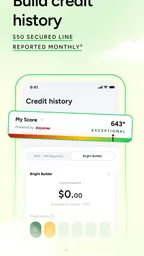
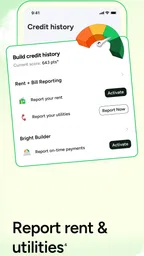
Bright is a free finance app from Bright Money. Its focus is credit and borrowing rather than everyday expense tracking: it is intended to help users work toward a stronger credit profile and explore loans or credit cards. That makes it most relevant if you are actively trying to understand your next step, rather than simply looking for a place to record purchases.
The app has an average rating of 4.6 from around 179,000 ratings, and more than a million installs. Those figures suggest it has reached a substantial audience, but they are not a promise that a particular person will qualify for credit or see a particular result. Credit decisions depend on individual circumstances, and I would not install it expecting a guaranteed approval or a quick change to a score.
One useful way to approach it is to start with a specific question: am I trying to build credit, compare borrowing possibilities, or simply learn what choices might be available? If you cannot name the job you want the app to do, it is easy to get drawn toward financial products before you have decided whether taking on credit fits your budget.
Trust starts with the decision, not the download
Financial apps ask for attention at moments when users may feel rushed or worried. That is why I would judge Bright less by its promise of assistance and more by the choices presented when I explore a product. Before moving forward, I would read the relevant terms, identify any costs and repayment obligations, and make sure I understand what action I am authorizing.
I would also distinguish between using an app to explore options and accepting a loan or card. Browsing can help organize a decision, but an offer is not automatically a good fit. If the monthly payment would compete with rent, utilities, or existing debt, I would pause rather than treat access to credit as progress by itself.
The app is rated for Everyone, but that age label is not a sign that every financial product is suitable for every user. I would still consider my own age, eligibility, income, and financial responsibilities before acting. That distinction matters particularly for younger users who may be learning about credit for the first time.
Use it as a deliberate workflow
A practical approach is to open Bright with one task in mind, review the information relevant to that task, and stop before committing to anything you have not had time to understand. For example, if your goal is to build credit, first decide what a manageable payment would look like in your monthly budget. Then assess whether the available route aligns with that limit, rather than allowing a suggested amount to set your budget for you.
For a realistic everyday scenario, imagine you are considering a card while planning a move. Your expenses are already changing, and an additional payment could make the first few months harder. I would use the app to explore the credit-related choices, then compare the obligations with the moving costs and existing bills before applying. If the numbers feel tight, waiting may be the more useful outcome than getting access to another product.
A second useful habit is to separate information gathering from decision-making. I would review an option, take time to think, and return only if it still makes sense. That small pause can help prevent a moment of curiosity from turning into a commitment. It is especially valuable if you are comparing more than one source or discussing the decision with someone who shares your household budget.
Where controls and transparency matter
When I use a finance app, I pay attention to what it asks me to provide and why. Details about income, identity, or finances can be sensitive, so I would read each request in context and avoid entering information simply because a screen makes it feel like the next obvious step. If I do not understand why a detail is needed, I would stop and seek clarification before proceeding.
I would also look for clear choices as I move through the app: whether a step is optional, what happens after I submit information, and how to back out if I change my mind. Those are practical questions, not technicalities. A user should be able to distinguish exploring an option from applying for it, and should know when they are moving from one stage to another.
Keep your own record of decisions that could affect your finances. If you compare an offer, note the payment and terms you considered and the reason you chose to proceed or wait. That is a simple way to retain perspective if you later revisit the decision, and it keeps the app from becoming the only place where you remember what you agreed to examine.
I would not assume that a finance app’s presence on a phone tells me everything about its data handling or account controls. Instead, I would check the explanations and settings available in the app and in the app store, and make choices based on what is actually shown. If you are uncomfortable with a request or cannot find a control you need, it is reasonable to stop rather than share more than you intended.
Who may find it useful—and who may not
Bright may suit someone who wants a focused starting point for credit-building and borrowing questions, particularly if they prefer exploring those topics in an app rather than piecing together information across several sources. Bright Money has kept the product in this finance niche, and version 1.63.1 is listed for devices running Android 8.0 or later. The app is free to download, but that does not mean any financial product you encounter through it is cost-free; read product terms separately.
It may be less suitable if your main need is a detailed household budget, cash-flow calendar, or manual spending ledger. A dedicated budgeting tool is usually a better match for categorizing purchases and planning bills. Likewise, if you already have a bank or credit-union relationship that gives you the comparison and support you need, using that familiar channel may be simpler than adding another finance app.
I would also skip it if you are not comfortable sharing financial information with an app, or if you are tempted to borrow mainly because a new option is visible. A credit-building goal is not the same as a reason to take on debt. For someone with immediate financial strain, speaking with a trusted nonprofit counselor or another qualified adviser may be more appropriate than searching for another borrowing option on a phone.
What to check before you continue
Before applying for anything, I would make sure I can answer a few plain questions: What is the total obligation? What payments would I need to make, and when? What happens if my income changes? Does the product address a real need, or am I responding to the convenience of seeing it in the app? If any answer is unclear, I would wait until I can review the terms carefully.
It is also worth checking whether an action is a soft exploration or a formal application and what information will be used at that stage. I would not rely on assumptions about how a credit check works. Read the explanation shown for the specific step, because the consequences can differ depending on the product and process.
Bright’s value, in my view, depends on maintaining that boundary between guidance and judgment. It can help focus attention on credit-related choices, but it cannot know every constraint in your household budget or decide how much financial risk feels acceptable to you. That part remains personal, and it deserves more than a quick tap.
My cautious verdict
Bright: Loans & Credit Builder is worth considering if credit-building or borrowing is a current, defined goal and you are prepared to examine each option carefully. Its appeal is the focused subject matter; its limitation is that a focused finance app is not a complete budgeting system or an independent guarantee that a product is right for you.
I would use it as a place to investigate, not as an automatic route to a loan or card. Take time over sensitive requests, look for clear choices at each step, and compare any commitment with your real monthly budget. If you want help exploring credit options, that measured approach makes Bright a plausible starting point. If you mainly need spending control, have no reason to borrow, or are uneasy about sharing financial details, a simpler budgeting method—or no additional app at all—may serve you better.
What we like
- The app provides a clear overview of loan options and credit-building tools.
- Prequalification may help users explore offers without an immediate hard inquiry.
- Credit-building features can support users with limited credit history.
- A mobile application makes account access convenient on the go.
- Loan details can help users compare potential borrowing costs.
What could be better
- Approval and loan terms depend on eligibility and are not guaranteed.
- Some features may require fees or recurring payments.
- Available offers can vary by location and personal credit profile.
- Building credit takes time and requires consistent account management.
- Sharing financial and identity details may raise privacy concerns.





