





Blessed - Bible Verse & Prayer review
 Analysis by Appsdrops
I found Blessed - Bible Verse & Prayer most useful as a small, personal prompt for making room for faith in a busy day. Its approach suits someone who wants a guided devotional rhythm rather than a digital Bible that leaves every next step up to them. That distinction matters in a household, where one phone may be passed around but each person may want a different kind of quiet, reflection, or prayer.
One phone, different moments of reflection
Picture a family member opening the app before breakfast, then another person using the same device later in the day. The six-step daily journey gives the first person a defined path to follow, while the second can treat it as a separate moment of reflection. I would not assume that sharing a device means sharing a spiritual routine: a parent might prefer a quiet reading, while a teenager may only have a few minutes between classes.
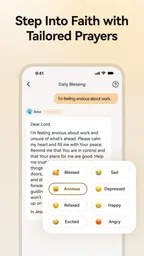
That is where the app’s structure can help. Instead of asking everyone to decide what to read, how to pray, and how long to stay, it offers a devotional framework to begin with. I like that kind of gentle direction when my attention is scattered. It can make an ordinary pause—waiting for coffee, taking a lunch break, or winding down at night—feel more intentional without requiring a long study session.
There is also a trade-off. A guided sequence is useful when you want momentum, but less appealing if you prefer to jump straight to a passage, compare translations, or explore a topic independently. Blessed is best thought of as a daily faith companion, not a replacement for every Bible reference tool or a deep study library.
Keep personal routines personal
On a shared phone, I would agree on a simple household boundary before anyone starts: use the app for your own reflection, and avoid treating another person’s devotional activity as something to inspect or correct. That is practical advice, not a claim about built-in account or privacy controls. If several people want to use it, separate devices or clearly agreed turns are a cleaner arrangement than assuming the app will divide one person’s experience into several profiles.
This matters especially when someone is trying to build a habit. A family member who is just starting may not want their routine turned into a group expectation. I would introduce the app as an option—“this is here if it helps you”—rather than making completion a test of commitment. For an adult who wants a dependable nudge toward prayer, the guided format may be encouraging; for someone who finds scheduled devotional habits stressful, it may feel like another task.
A useful household workflow is to choose a time window, not a compulsory appointment. For example, someone might open the app after dinner when the room is quiet, while another person uses it during a commute break. That keeps the six-step structure from becoming a race to finish or a shared checklist. It also leaves room for a person to stop when they need to, instead of squeezing reflection into a conversation or a crowded family routine.
Setting expectations before anyone downloads
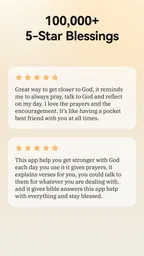
Blessed is a free app in the books-and-reference space, developed by Everblessed Technology Inc. It has a 4.6 average from around 46,000 ratings, with more than a million installs. Those figures suggest that plenty of people have found a reason to keep it around, but they cannot tell me whether its devotional style will fit a particular household. The better question is whether the people using it want a guided daily experience.
The app is rated for Everyone, and that makes it reasonable to consider for a range of ages, but an age label is not a substitute for a parent’s judgment. I would sit with a younger child the first time, read through the material together, and explain that a devotional app can support reflection without replacing a conversation with a trusted adult, clergy member, or caregiver. Older children may prefer to explore privately, so the right boundary depends on maturity and family expectations.
It is also worth setting expectations around purchases. The app is free to start, while in-app items range from $0.99 to $456.00 each. That span is broad enough that I would check the purchase screen carefully before confirming anything, particularly on a shared device or one used by a child. If the household does not want accidental spending, use the device’s purchase safeguards and make sure everyone knows that a free download does not mean every optional item is free.
For an individual user, I would also clarify who owns the device’s app-store account and who is allowed to approve purchases. That prevents a common household misunderstanding: one person may think they are simply opening a devotional, while another is responsible for the account. This is a device-management issue rather than a feature I would attribute to Blessed itself.
Coordinating without turning devotion into homework
Some families like to talk about what they have read; others want faith practices to stay private. I would let the app support either approach rather than making group discussion part of the routine. If a household wants to share, a low-pressure check-in works better than asking everyone to report each step: “Was there anything you wanted to think about today?” leaves space for an honest answer, including “not really.”
The six-step format offers a natural starting point for coordination, but it should not be mistaken for evidence that everyone is progressing at the same pace. One person may linger over a prayer, while another simply wants a brief moment of focus. If the family has different levels of familiarity with Bible reading, it may help to try the routine together once, then let each person decide whether to continue alone. That reveals whether the structure feels supportive or overly prescribed.
My practical tip is to avoid placing the app at the center of a family schedule. A phone can be useful for a short devotional, but notifications, messages, and household interruptions can break concentration. I would choose a quieter setting, silence unrelated distractions if appropriate, and treat the app as a doorway into reflection rather than the whole experience. A paper Bible or a conversation can be better when the goal is sustained discussion.
For coordination across a household, agree on a few simple rules: do not edit or clear another person’s activity, do not assume that a visible phone means someone is ready to talk, and do not require a child to share personal reflections. These are boundaries I recommend for any shared spiritual practice; they are not claims about account separation or family management features inside the app.
What the guided format does well—and where it may frustrate
The strongest case for Blessed is the reduction in decision-making. When I want to pause but cannot think of a passage or prayer topic, a defined journey offers an immediate next step. This makes it different from opening a standard Bible app, where search, bookmarks, reading plans, and study tools may be the main draw. It also differs from a paper devotional, which can be calmer and easier to share physically but may not provide the same app-based sequence.
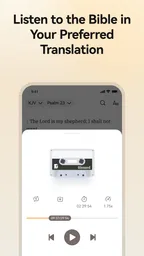
The limitation is that a guided flow can feel narrow to readers who already have a study method. If I am researching a particular verse, following a church reading plan, or comparing how a passage is translated, I would reach for a dedicated Bible reference app instead. If I want fewer screens and no phone in the room, a print Bible and notebook may serve me better. Blessed makes the most sense when structure is the need, not when breadth is.
I would also be cautious about expecting every household member to respond to the same devotional tone. A person who prefers spontaneous prayer may find a sequence too formal; someone who wants clear direction may find the same sequence reassuring. Try it as a personal tool first, then decide whether it belongs in a shared routine. That small trial is more useful than assuming a popular app will suit everyone.
The current version is 3.4.5, and it supports devices running Android 7.0 or later. If a family shares an older phone, checking compatibility before planning a household routine can save an unnecessary setup. The app’s broad age rating is reassuring as a starting point, but content and spending decisions still deserve an adult’s attention when a child is involved.
Who I would recommend it to
I would suggest Blessed to someone who wants a repeatable devotional prompt, especially if open-ended Bible reading tends to get postponed. It may also suit a household where adults have separate moments of reflection and want a simple shared reference point without requiring everyone to read together. The developer is Everblessed Technology Inc., and the app’s six-part daily structure is its clearest reason to choose it over a general-purpose reading tool.
I would skip it if you need strong separation between multiple people on one device, want a broad reference library, or prefer a completely offline, paper-based practice. I would also avoid making it mandatory for a child or reluctant family member. A spiritual routine is more likely to last when the person using it has chosen it, and a guided app cannot replace personal judgment or meaningful conversation.
My household verdict is that Blessed can be a useful, low-friction starting point, but it works best with clear expectations: each person owns their own reflection, purchases are handled carefully, and no one is pressured to share more than they want. It is a good fit for guided personal devotion, not an all-purpose family Bible system. If that is the distinction you need, I think it is worth trying; if your priority is shared accounts, detailed study, or screen-free reading, another approach will fit better.
What we like
- Offers daily Bible verses for a brief moment of reflection.
- Prayer features can support a consistent devotional routine.
- A simple layout makes core features easy to find.
- Useful for readers seeking faith-based encouragement on the go.
- Combines scripture and prayer in one app.
What could be better
- Some content may require an internet connection to access.
- Daily reminders may feel intrusive to users who prefer quiet apps.
- The experience may be less useful for users outside the Christian faith.
- Limited variety could make repeated visits feel predictable.
- Some features may require in-app purchases or a subscription.





