






Bible-Daily Bible Verse review
 Analysis by Appsdrops
When I want to read the Bible during a busy day, the biggest hurdle is often getting started: finding a passage, choosing what to focus on, and making time to stay with it. Bible-Daily Bible Verse brings several familiar parts of a Bible routine together, including Bible reading, an audio book, a verse of the day, and devotionals. That makes it a practical option for anyone looking for a Bible study app that can fit into ordinary moments rather than demand a complicated setup.
From opening the app to finding a passage
The app’s purpose is clear from the start: it is a Bible app for reading and study. Instead of framing the experience around a single daily prompt, it combines that prompt with broader ways to spend time with scripture. I find that approach useful because the right entry point can change from one day to the next. Sometimes I want a short verse to reflect on; at other times I would rather read or listen for longer.
The basic workflow is easy to understand. I open the app with a small goal in mind, choose a way to engage with the Bible, and then use the content as a starting point for reflection. A verse of the day offers a focused beginning, while Bible reading gives me room to explore beyond one short passage. Devotionals add another guided route, and the audio book provides an alternative to reading on screen.
That range matters for everyday use. A reading routine can be interrupted by a commute, a busy morning, or simple screen fatigue. Having both reading and audio in the same app gives me more than one way to continue. It does not mean every mode will suit every situation, but it does make the app feel more adaptable than a tool built around only one kind of interaction.
A small prompt can lead to a longer session
The verse of the day is a natural first step when I have only a few minutes. It gives the day’s reading a clear focal point without requiring me to decide immediately where to begin. If I have more time, I can treat that verse as a doorway into broader Bible reading or a devotional. That movement from a brief prompt to a longer session is the strongest idea in the app’s design.
I also like that the main elements serve different intentions. A verse can be a quick moment of attention; a devotional can offer structure for reflection; and reading or listening can support a more sustained session. These are not interchangeable experiences, and the app’s value comes from letting me choose among them according to the time and attention I have available.
Choosing between reading and listening
Reading is the most direct way to work through scripture in a traditional format. Audio is useful when looking at a screen is inconvenient or when listening feels more comfortable. In practice, that choice can help keep a routine from becoming all-or-nothing: if I cannot settle down to read, listening may still be a way to engage with the Bible.
The audio book is best understood as an additional route into the content, not a replacement for every reading session. Some people absorb a passage more carefully by seeing the words; others appreciate being able to listen. I value having the option because it lets the session adapt to the moment instead of forcing a single method.
Devotionals provide a guided next step
When a passage alone feels like an incomplete starting point, a devotional can give the session a more guided shape. It offers a different kind of engagement from simply opening the Bible and choosing a place to read. For someone building a regular habit, that structure can make it easier to move from a quick glance at a verse toward a more deliberate period of reflection.
I would approach devotionals as a companion to Bible reading rather than a substitute for it. The combination gives the experience a useful rhythm: start with a prompt, spend time with a devotional, and then continue into scripture when the moment allows. That workflow feels approachable without suggesting that every session needs to be long or elaborate.
How the parts work together in everyday use
The app’s handoffs are important. A verse of the day can lead into reading; a devotional can frame reflection; and audio can carry a session when reading is less practical. Each part gives me a possible next step, which helps the experience feel connected rather than like a collection of unrelated tools. I can begin small and continue only if I want to.
That flexibility also makes the app suitable for different kinds of routines. Someone may open it for a brief daily moment, while another person may use it as one piece of a longer study habit. The app supports those different starting points through its mix of Bible reading, audio, daily scripture, and devotionals. The outcome depends on how much time I bring to it, but the available paths make it easier to choose a manageable one.
For example, I might begin with the daily verse, pause to think about its meaning, and then move to a devotional for more guidance. On another occasion, I might skip that sequence and go directly to reading or listening. The point is not to follow one rigid program; it is to have a few clear ways to engage. That makes the app feel usable even when my schedule changes from day to day.
What the experience does well
The clearest strength is its simple, familiar purpose. People looking for a daily Bible verse can start with that feature, while those interested in a broader routine can make use of the reading, audio, and devotional options. The app does not need an elaborate pitch: its core appeal is bringing several common Bible-study activities into one place.
Its reach suggests that many people have found that approach worthwhile. The app has a 4.8 average rating from around 542,000 ratings, and it has passed 10 million installs. Those figures do not determine whether it will match an individual’s preferred reading style, but they do indicate that it has become a widely used choice in the Bible and reference space.
It is free to download, with in-app purchases available. It is rated for everyone, and the current version is 1.8.9. The app was released on September 5, 2022, and supports Android 7.0 or later. I see those details as useful context when deciding whether it suits a device and a budget, while the day-to-day appeal still comes down to whether its mix of reading, listening, and devotionals fits the routine I want.
Where the workflow can feel less smooth
The same variety that makes the app flexible can also leave me deciding what to do next. A verse, a devotional, Bible reading, and audio each offer a different kind of session. If I already know what I want, that choice is helpful. If I open the app without a clear intention, having several routes may mean taking a moment to settle on one.
There is also a natural limit to the daily verse format: a short prompt is a starting point, not a complete study by itself. Anyone hoping to explore a passage in depth will need to continue into reading or spend more time with the material. I think that is a reasonable distinction, but it helps to approach the daily verse as an invitation rather than expecting it to provide everything in one glance.
Likewise, audio and reading serve different habits. Listening can make a session easier to fit into a moment when screen reading is inconvenient, but it will not be everyone’s preferred way to study. Devotionals may provide helpful structure, though some users may prefer to shape their reflections independently. The app offers options, but choosing the one that feels meaningful remains part of the experience.
That is where the workflow can break: not because the central idea is hard to understand, but because a routine still depends on the user’s own time, attention, and preferred approach. If I want a highly directed study path, I need to decide whether the available devotional and reading experience provides the kind of structure I enjoy. If I want an especially minimal app, the range of content may be more than I need. These are matters of fit rather than flaws that will affect everyone in the same way.
Who may find it a good fit
I would recommend Bible-Daily Bible Verse to someone who wants a straightforward Bible reading app with more than one way to engage. The daily verse makes it approachable for short visits, while the audio book, devotionals, and Bible reading give users other routes when they have more time or want a different format. It is especially appealing if having those elements together helps you maintain a regular habit.
It may be less compelling for someone who wants only one narrowly defined tool or who prefers to build every study session without devotional guidance. Still, the central workflow is easy to grasp: choose a starting point, read or listen, and continue into reflection if it suits the moment. That simplicity is a meaningful advantage for people who want to make scripture part of an everyday routine without turning each session into a project.
A practical Bible companion for daily moments
Overall, this is a useful, approachable app for Bible reading and reflection. Its best quality is the way it connects a daily verse with broader options for reading, listening, and devotionals. I can begin with a brief moment and continue when I have the time, or choose a different route from the outset. That flexibility gives the app a clear role in a daily routine.
The experience works best when I treat the daily verse as a starting point and select the next step that suits my needs. Some days that may mean a quick reflection; other days it may mean reading or listening for longer. With a free download, a broad audience rating, and a recognizable set of Bible-focused features, it is a strong option to consider for anyone seeking a convenient daily Bible study app for Android.
What we like
- Daily verses offer a simple prompt for reflection.
- A lightweight format makes short reading sessions easy.
- Verse reminders can help build a consistent routine.
- Scripture content is accessible without lengthy lessons.
- The app suits users seeking brief faith-focused encouragement.
What could be better
- Verse selections may not provide enough context on their own.
- Reminder notifications may feel repetitive over time.
- Daily content may offer limited depth for extended study.
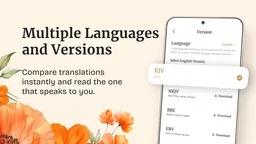
- The experience may be less useful to readers seeking multiple translations.
- Users may need another resource for detailed Bible research.





