





Babyname review
 Analysis by Appsdrops
Babyname is most appealing when choosing a baby’s name feels less like a solo research project and more like a conversation between two people. I see its value in that shared decision: instead of trading long lists or trying to remember names mentioned in passing, you can use the app as a common place to explore possibilities. That makes it a focused parenting tool, not a complete pregnancy or baby-planning companion.
A shared shortlist works better than another name list
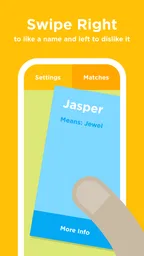
The basic idea is simple, but the relationship dynamic is what gives it purpose. In my view, a name app is most useful when it helps parents find overlap without turning every suggestion into a debate. Babyname, made by DoSomethingGood, is built around that kind of joint discovery. Its appeal is strongest for couples who want to compare preferences at their own pace and have a clear starting point for a conversation.
That distinction matters because the usual alternatives are easy to reach for: search results, baby-name books, notes apps, or a message thread full of suggestions. Those can provide plenty of names, but they leave the work of organizing and comparing them to you. Babyname is more narrowly aimed at making the search a shared activity. If you already enjoy researching names together, that focus can make the process feel lighter; if you simply want a reference list, a book or straightforward name directory may be more direct.
I would treat it as a tool for finding candidates, not for making the decision on your behalf. A name can look appealing in a quick browse and feel wrong when you say it aloud with a surname, imagine using it every day, or consider how both sides of the family will hear it. The useful outcome is not a perfect answer from an app. It is a shorter, more thoughtful list that helps you decide what deserves a closer look.
Where the shared approach earns its place
The app’s strongest practical use is making separate preferences visible. One person might be drawn to familiar names while the other prefers something less common; talking about those tastes in the abstract can go in circles. A shared naming activity gives the discussion a more concrete starting point: you can react to actual candidates, notice where your instincts align, and learn which styles each of you tends to favor.
A helpful way to use it is to resist treating an early match as a final shortlist. I would first collect names that get a positive reaction, then revisit that smaller group after a few days. That pause helps separate the excitement of finding a new option from the feeling that the name still fits when it is no longer fresh. It also gives each person a chance to explain what they like without pressuring the other to agree immediately.
Another useful habit is to discuss the reason behind a reaction, not only the reaction itself. “I like this one” might mean it sounds warm, has family significance, feels easy to pronounce, or simply looks good on a screen. Those are different preferences, and recognizing them can help when a couple has no obvious shared favorite. Babyname can open that conversation, but the judgment still comes from the people using it.
For a realistic everyday scenario, imagine two parents who have only a few quiet minutes after dinner. They can explore names together rather than each maintaining a separate list and trying to reconcile it later. If one partner is busy or away, the app may still help them keep the naming conversation centered on a common activity when they return to it. I would not expect a quick session to settle the choice; the benefit is keeping the search manageable and giving both people a role in it.
What it cannot solve for you
The narrow focus is also the main limitation. Babyname is about finding and comparing baby names, so it is not the right choice for parents seeking a broader planning hub with unrelated tools for pregnancy, newborn care, or family organization. Its usefulness depends on whether the naming decision is the task you want help with. If you need one place for multiple parenting needs, a broader app or a few separate resources may suit you better.
There is also a limit to what a shared discovery format can do for a serious disagreement. If one person wants a name tied to family tradition and the other finds it unsuitable, seeing more candidates will not automatically resolve the underlying difference. In that situation, I would use the app to generate alternatives and then talk through the non-negotiables separately. The app can make the search easier; it cannot replace compromise or help you decide which values matter most.
Nor should a promising candidate skip the real-world test. Say it with the surname, try it in a casual introduction, and consider whether you are comfortable with likely shortened forms. If spelling, pronunciation, cultural meaning, or family associations are important, check those independently before settling on a choice. An app can help surface names, but the responsibility for checking how a name works in your particular family remains yours.
Some people will also prefer the freedom of an ordinary list. A notes app is better if you want to record long explanations, attach family stories, or organize names under your own categories. A book or name reference may be better if you want to browse at length without making the activity feel like a couple’s exercise. Babyname makes most sense when its specific shared purpose matches the way you want to choose.
Who is most likely to enjoy it
I would recommend trying it if both parents are willing to participate and neither wants one person to do all the searching. It is especially well suited to couples who have broad ideas about the kind of name they like but have not found a common shortlist. The app’s parenting focus is clear, and its store summary reflects that joint naming purpose without suggesting that it does everything involved in preparing for a baby.
It may be less satisfying for someone who already has a firm favorite and wants help researching its history, meaning, pronunciation, or popularity. In that case, a dedicated name reference or independent research is likely a better fit. The same goes for parents who prefer to make the choice privately before discussing it: the app’s central appeal is the shared process, so using it alone may leave much of that value untouched.
Before starting, I would agree on a low-pressure rule: a first reaction is not a promise, and either person can save a candidate for later consideration. That small boundary can prevent a fun search from feeling like a test of who has better taste. It also makes the experience more useful for couples whose preferences differ, because each person can explore without worrying that every choice will be treated as a final vote.
Cost, access, and what to expect
Babyname is a free app, with in-app purchases ranging from $0.99 to $7.99 per item. I would begin with the free experience and decide whether the way it supports your search is useful before spending anything. That is a sensible approach for a specialized tool: its value depends less on how long you keep it installed and more on whether it helps you and your partner make progress on this particular decision.
It is rated for Everyone and has an average rating of 3.6 from around ten thousand ratings, alongside roughly 1,400 written reviews. Those figures suggest a mixed reception rather than universal enthusiasm. I would read that as a reason to keep expectations grounded: the idea may suit couples who enjoy interactive, shared browsing, while people looking for a comprehensive reference or a more flexible personal organizer may prefer other methods.
The app was released on February 2, 2015, and its current version is 3.4.5. It requires Android 7.0 or later. It has passed 500,000 installs, which indicates that many people have at least tried it, but popularity alone does not tell me whether its format will suit your relationship or naming style. The deciding question is simpler: do you want a dedicated place to explore names together, or would you rather gather suggestions in a tool you already use?
My verdict: useful when the process is the point
I see Babyname as a focused helper for the part of choosing a name that is often harder than finding names: getting two people to explore options together. Its strength is not that it can determine the perfect choice, but that it gives a couple a shared starting point and can make an otherwise scattered search feel more collaborative.
That strength comes with a clear boundary. It will not replace careful checking, a conversation about family priorities, or a flexible system for people who want to record detailed notes. If you want a broad parenting toolkit, a research-heavy name reference, or complete control over how your shortlist is organized, another option may be more practical. If you and your partner are open to exploring candidates side by side, though, I think it is worth trying as a low-pressure way to move from vague preferences toward a shortlist you can both discuss.
My recommendation is to use it as the beginning of the decision, not the final authority. Explore together, save only names that invite a genuine conversation, then take those candidates into everyday life: say them aloud, pair them with the surname, and revisit them when the initial excitement has passed. For couples who want help sharing the search, that is a worthwhile role for a small, purpose-built parenting app.
What we like
- Browse a broad selection of names for inspiration.
- Save favorites for easy comparison.
- Simple interface makes exploring names straightforward.
- Useful for parents who have not chosen a name yet.
- Can help spark ideas through name discovery.
What could be better
- Name suggestions may not match every family's preferences.
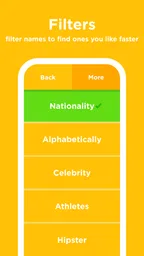
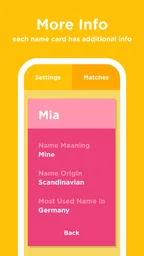
- Some names may lack detailed origin information.
- Choosing a name still requires research beyond the app.
- The available selection may feel limited to some users.
- App features and availability may vary by device or region.





