

Word Riddle: Offline Word Game review
 Analysis by Appsdrops
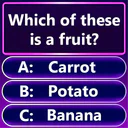
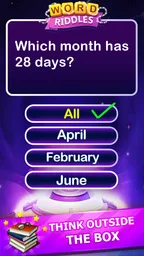
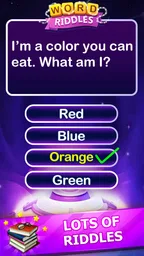
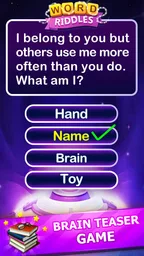
I like a word puzzle best when it gets me thinking right away, without a long tutorial or a complicated setup. Word Riddle: Offline Word Game is built around that straightforward appeal: read a quiz-style clue, work out the answer, and give your brain a quick workout. It is a free trivia game from Magic Word Games, and its simple word-riddle premise makes it easy to understand before you even begin.
From clue to answer: the first move
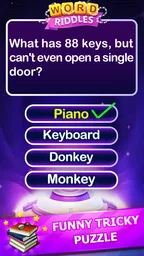
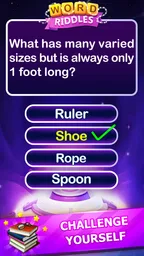
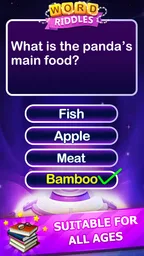
The central action is easy to grasp: look at a riddle or quiz prompt and guess the word that fits. That clarity is a big part of the game’s charm. Rather than asking players to learn an elaborate rule set, it puts the focus on interpreting language, making connections, and deciding which answer seems right. When I want a casual puzzle rather than a demanding commitment, that kind of direct start is appealing.
The game describes itself as a word riddle experience, and the store summary presents it as a collection of new word puzzle games designed to challenge the brain. That gives the experience a clear identity: this is for players who enjoy testing their vocabulary and reasoning through short prompts. It sits in the trivia space, but the emphasis is on solving language-based clues rather than recalling facts from a broad range of subjects.
My favorite part of this format is the moment before an answer clicks. A clue can prompt me to consider a familiar word in a different way, or to connect two ideas I initially treated as unrelated. A good riddle makes the solution feel satisfying without requiring specialist knowledge. That small mental turn is what makes the first guess enjoyable, even when the puzzle itself is brief.
The appeal is the simple loop of reading, thinking, guessing, and moving on. There is no need to plan a long session before opening the game. I can approach it as a quick brain teaser during a spare moment, or stay with it longer if I am in the mood to keep solving. That flexibility suits a casual word game particularly well.
A familiar idea with an easy entry point
Word puzzles are a familiar kind of mobile entertainment, so the basics do not need much explanation. The challenge is in the clue, not in learning how to play. For newcomers, that makes the game approachable; for regular puzzle fans, it means they can get straight to the part they enjoy. The Everyone content rating also makes its general audience clear.
The game is free to download, with optional in-app purchases listed from $0.99 to $9.99 per item. That means the core invitation is easy to try, while purchases are part of the app’s commercial setup. Players who prefer to keep a close eye on spending can check the purchase details in their app store before making any decisions.
The rhythm of trying, learning, and continuing
A word riddle works best when its feedback feels connected to the thought that produced the answer. The basic rhythm here is easy to picture: I read a prompt, weigh possible meanings, enter a guess, and find out whether I have made the right connection. That immediate question-and-answer structure is what gives the game its pace. Each attempt is small enough to be satisfying on its own, yet naturally points toward another puzzle.
There is a particular pleasure in recognizing why a solution fits. Sometimes I arrive at the answer quickly; sometimes I need to reconsider the wording and look for another interpretation. Either way, the clue encourages active thought rather than passive tapping. That is a useful distinction for anyone searching for a trivia game that feels more like a compact mental exercise than a stream of unrelated facts.
Of course, the enjoyment of any riddle depends on the player’s taste. Some people love wordplay and ambiguity; others prefer questions with a single obvious route to the answer. If you enjoy turning a phrase over in your mind, this format has a natural pull. If you want a game based on action, competition, or a detailed story, a word-guessing puzzle is likely to feel much quieter by comparison.
The feedback rhythm also helps the game stay approachable. A wrong guess is not a reason to abandon the whole session; it is simply a signal to look again at the clue. That makes the act of trying feel low-pressure. I can take a moment, reconsider what the question might mean, and make another attempt without needing to treat every puzzle as a test of expertise.
Small wins that make another puzzle tempting
Solving a riddle provides a compact reward: the satisfaction of seeing the clue and answer come together. The pleasure is less about a grand achievement and more about that brief “there it is” moment. For me, that is the strongest reason to return to this sort of game. A successful guess feels earned because it follows a bit of attention and reasoning, even if the puzzle only takes a short while.
That reward can also come from learning how a clue is constructed. A prompt may encourage me to question an assumption, notice a second meaning, or think beyond the most obvious response. These are modest mental habits, but they give a word-riddle game its character. The challenge comes from interpreting language, and the payoff is the instant the intended idea makes sense.
The game has attracted a large audience: it has over 10 million installs, and its average rating is 4.8 from around 188,000 ratings. Those figures suggest that many players are interested in this kind of accessible puzzle experience. They are useful context, but the best measure for an individual player is still whether solving word clues feels enjoyable rather than like a chore.
Its release date is April 15, 2020, and the current version is 5.5. The game is designed for Android 7.0 and later. These details can help players check whether it suits their device, while the actual appeal remains the same straightforward promise: open a word puzzle, focus on the clue, and see if the answer comes to you.
How a session finds its reset
The natural reset in a puzzle game arrives when one riddle is solved and another can take its place. There is no need for a complicated transition to understand why a fresh round is tempting: the previous answer is settled, and a new clue offers a new little problem. That structure makes it easy to stop after one puzzle or continue when curiosity wins out.
This is where the format suits short breaks particularly well. I can treat one clue as a complete experience rather than feeling that I must commit to a long campaign. At the same time, the prospect of another question creates a gentle reason to keep going. The next puzzle may be easy, tricky, or simply phrased in a way I have not considered, and that uncertainty gives each new attempt its own small pull.
The title includes “Offline Word Game,” which signals its offline-oriented identity. That wording makes it especially attractive to players looking for a word-puzzle option they associate with playing without a constant online session. I would still check the app’s details on the device’s store page for any practical setup requirements, but the game’s stated identity is clearly centered on word riddles rather than online competition.
Because the core activity is based on clues and guesses, the experience is easy to return to after stepping away. I do not have to remember a complex plot or a chain of tactical decisions. I simply come back ready to read a prompt and think. That low barrier matters for a mobile game: the less effort it takes to resume, the more naturally it can fit into everyday downtime.
Who will enjoy Word Riddle?
Word Riddle: Offline Word Game is a natural fit for people who like trivia, wordplay, and bite-sized brain teasers. It is also a reasonable pick for anyone who wants a casual game with an immediately understandable objective. The free entry point makes it easy to explore the idea, while the listed optional purchases are worth keeping in mind if you prefer to avoid spending inside games.
Players who enjoy language-based challenges will likely get the most from it. The fun comes from examining a clue and trying to uncover the word behind it, so patience and curiosity matter more than fast reactions. It can be a pleasant choice for a quiet moment, a short pause in the day, or a relaxed puzzle session when I want something mentally active without a demanding learning curve.
By contrast, anyone looking for elaborate graphics, a deep narrative, or a highly competitive multiplayer experience may want a different kind of game. Word Riddle’s appeal is its focused premise. It does not need a sprawling setup to make the basic activity work: the prompt gives me something to consider, the guess tests my interpretation, and a correct answer brings a small sense of completion.
That simplicity is both the game’s strongest selling point and the key to deciding whether it suits you. A word riddle can be wonderfully satisfying when its phrasing catches your attention, but the genre is naturally built around repetition. If you already enjoy solving clues, that repeated cycle is the attraction. If you do not, the straightforward structure may not offer enough variety to hold your interest.
The loop verdict
What makes the game easy to understand is also what gives it a reason to be played again: each clue asks for a fresh thought, each guess provides a clear response, and each solved riddle leaves room for another. The reward is not a complicated system but the small satisfaction of making a connection. The reset is equally simple: move on to a new prompt whenever you feel like continuing.
Overall, I see Word Riddle: Offline Word Game as a friendly option for casual puzzle fans who want a quick test of vocabulary and reasoning. Its trivia framing, accessible word-riddle idea, and light session structure make it easy to dip into. With an average rating of 4.8 and around 7,000 written reviews, it has built a substantial presence among players, though personal enjoyment will depend on how much you like solving clues.
If you are searching for a free word puzzle game that gives you a simple action, a clear response, and a natural reason to try one more riddle, this is an easy title to consider. I would recommend it most to players who enjoy language puzzles and prefer a relaxed pace. The loop is uncomplicated, but that is precisely the point: read, think, guess, enjoy the answer, and decide whether you are ready for another round.
What we like
- Works offline so you can play without an internet connection.
- Short puzzles make it easy to play in brief sessions.
- Word clues can help build vocabulary and spelling skills.
- A simple interface is approachable for casual players.
- Progressive puzzles offer a steady sense of challenge.
What could be better
- Some clues may feel vague or open to several answers.
- Later puzzles can become repetitive over time.
- A small screen may make letter selection less comfortable.
- Players who prefer fast action may find the pace slow.
- Puzzle difficulty may not suit every skill level.







