
Trivia Night review
 Analysis by Appsdrops
When a trivia game comes up in a group, the questions matter—but so does the way the game handles a wrong answer, a quiet player, or someone who would rather not spend money. Trivia Night is a free trivia game from Random Logic Games, LLC, and I’d consider it for casual quiz sessions rather than as a carefully documented competitive platform. Its appeal is easy to understand: open a trivia game when you want a bit of mental activity, then decide whether its style suits you.
What the game is—and what free means
Trivia Night sits in the trivia game category, where the basic pleasure is testing what you know and discovering what you have forgotten. The game is free to install, but it also offers optional in-app purchases priced from $0.99 to $7.99 per item. That is useful context before anyone taps a purchase button: “free” describes the starting cost, not a promise that every possible in-game option has no charge.
I’d treat the purchase range as a reason to be deliberate, not as evidence that spending is necessary. The available purchase details establish that paid items exist and give their price range; they do not establish what those items do or whether they affect answers, progress, or competition. If I were playing with friends, I would avoid assuming that a paid purchase improves anyone’s chances. I’d check the in-game description before buying and keep the session enjoyable without spending unless a clearly explained item genuinely seems worthwhile.
The game is rated Everyone, which makes it broadly suitable for a general audience. That rating is helpful when choosing something to play around family, but it does not tell me whether every topic will suit every group. For a mixed-age gathering, I’d still pay attention to the questions as they appear and choose a different activity if the subject matter or pace does not fit the people playing.
A practical fit for short, social sessions
The most natural use case is a spare moment when people want something more engaging than scrolling but less involved than arranging a full board-game night. I can imagine opening it during a relaxed evening, letting a few people take turns thinking through questions, and treating missed answers as conversation starters rather than keeping score as if the result mattered.
That distinction is important. Trivia is often at its best when a question prompts a memory, a confident guess, or a friendly disagreement. If your group enjoys that kind of back-and-forth, a phone-based quiz can be an easy way to give the conversation a little structure. If you want a host-led format, carefully balanced teams, or a polished party-game setup, a dedicated quiz-night game may be a better fit.
For a solo player, I’d use it as a light mental break rather than a study tool. A trivia answer can be satisfying, but getting a question right is not the same as learning a subject systematically. If I wanted to prepare for an exam or build knowledge in a specific field, I’d choose a resource designed to explain and revisit material, not rely on a general trivia game.
Progress is only satisfying when the pressure stays friendly
Trivia games create their own kind of pressure: the moment when an answer feels familiar, the clock or turn seems to be moving, and everyone is waiting. That tension can make a simple question more entertaining, especially when players accept that guessing is part of the fun. It can also make a casual game feel less welcoming if someone is much less confident than the rest.
My practical advice is to agree on the mood before starting. If the group is competitive, keep the banter kind and make it clear that a wrong answer is not a reason to put someone on the spot. If people are there to chat, let each question lead into a short discussion instead of rushing straight to the next one. That approach makes trivia useful even when players have very different levels of knowledge.
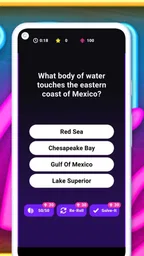
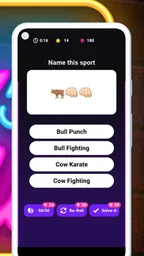
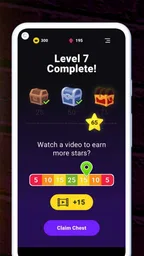
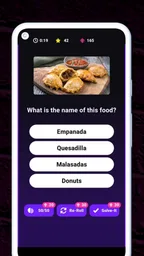
I would not assume that the game provides a particular progression system, difficulty setting, timer, leaderboard, or multiplayer arrangement based on its category alone. Those details matter because they determine whether a game works for quick solo play, a party, or repeated competition. Without a confirmed description of those mechanics, it is more sensible to judge the game by the experience you encounter than to plan a gathering around an unverified feature.
One useful way to decide whether to keep playing is to notice what you enjoy: answering familiar questions, taking an educated guess, or comparing how different people reasoned through the same prompt. If the enjoyment comes mainly from discussion, you can keep the stakes low. If you need visible progress, increasingly challenging rounds, or a clear reason to return every day, make sure the game actually offers the structure you want before treating it as a long-term hobby.
Fair play and the limits of what can be judged
Fairness is not just about whether a question has a correct answer. In a group game, it also depends on whether players face comparable conditions and whether purchases change the contest. The confirmed purchase information tells me that optional items cost between $0.99 and $7.99, but it does not explain their effects. I therefore cannot responsibly describe the game as pay-to-win—or promise that spending has no competitive impact.
For a friendly session, that uncertainty is easy to manage: play without purchasing anything, and do not make money part of the competition. If an item is offered, read its explanation and decide separately whether it is worth buying. For a formal contest where equal conditions are essential, I’d choose a platform whose rules and purchase effects are explicitly clear to every participant.
The same caution applies to comparing scores. A score only means much when players know how it was produced: whether they received the same questions, had the same amount of time, or were playing under the same conditions. Unless the game makes those rules apparent during play, I would treat a result as a bit of fun rather than a meaningful ranking of who knows more.
This is where Trivia Night differs from a hosted quiz with a human moderator. A host can adjust the pace, explain an ambiguous question, and make sure quieter players get a turn. An app is more convenient and less work to arrange, but it cannot automatically replace that social judgment. If your group has strong preferences about rules or accessibility, a person-led quiz may be the more considerate choice.
How it compares with other trivia choices
Compared with a printed quiz book, a phone game is easier to pick up for a brief session and does not require someone to prepare questions in advance. A book, however, can make the rules and question order easier to control, which may help when a group wants a host and a predictable pace. Compared with broad online quiz platforms, a standalone game can feel more focused, but I would not assume it offers a particular community, live competition, or topic library unless the game itself makes that clear.
That makes the right choice depend on the occasion. For a quick break, casual solo play, or an informal round with family, this is a reasonable kind of game to try. For a classroom activity, a planned pub-style quiz, or a competition where everyone needs identical questions and transparent scoring, I’d favor a tool that spells out those controls and makes them easy to manage.
Trivia Night has an average rating of 4.5 from around two thousand ratings, and it has over one million installs. Those figures suggest that plenty of people have tried it, but they cannot tell me whether its question style will match yours or whether its purchase options fit your preferences. I’d use them as context, not as a substitute for deciding what you want from a trivia game.
What to check before making it your regular game
The game was released on September 19, 2022, and its current version is 1.1.25. It requires Android 7.1 or later. Those details are practical if you are checking compatibility on an older device; if the app store identifies your device as unsupported, there is little point in planning a session around it. The version number also helps distinguish the current release from older descriptions that might not reflect what you see after installing.
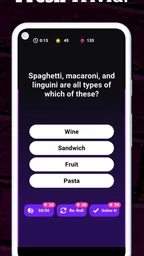
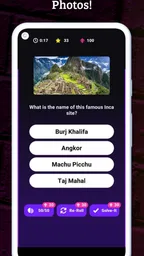
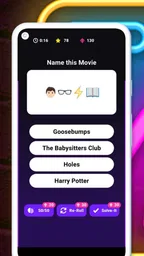
Before inviting a group, I’d spend a few minutes exploring the opening experience and checking how questions are presented, how turns work, and whether a round feels comfortable for the least confident player. That small trial answers more useful questions than guessing from the word “trivia”: Is it easy to understand? Does the pace suit the group? Are the purchase prompts clear enough to ignore or evaluate? If the answers are no, switching to a quiz someone can host is a simple fix.
With 344 reviews alongside its broader rating history, the game has a substantial amount of user feedback to consider, though individual opinions can differ for good reasons. I’d look for comments that match my own intended use—especially whether I want a casual solo distraction or a shared activity—rather than treating any single reaction as a verdict. A game that entertains one player may not be the right tool for a competitive group.
My recommendation
I’d recommend Trivia Night to someone who wants a free-to-install trivia game to try in low-pressure moments and is comfortable deciding for themselves whether optional purchases are worthwhile. Its general-audience rating and straightforward premise make it an easy candidate for casual play, while the app’s scale—over a million installs—shows that it has found an audience.
I’d skip it if you need clearly documented competitive rules, a guaranteed party format, or a learning tool that explains answers and builds expertise. I’d also avoid spending until an item’s purpose is clear, especially if several people are comparing results. Those are not reasons to dismiss the game; they are sensible boundaries for choosing an app when fairness and money matter.
My overall view is that Trivia Night is best approached as an informal quiz option, not as a promise of a fully specified competition. Try it for a short session, notice whether the questions and pacing work for your group, and keep purchases separate from any scorekeeping unless their effect is clear. If the game sparks conversation and gives you an enjoyable mental pause, it has done what I’d want from a casual trivia app.
What we like
- Quick rounds make it easy to play during a short break.
- A wide range of topics helps keep trivia sessions varied.
- Simple controls make the game approachable for new players.
- Solo play lets users enjoy quizzes without a group.
- Questions can offer a fun way to test general knowledge.
What could be better
- Some questions may feel too easy for experienced trivia fans.
- Repeated questions can reduce the challenge over time.
- A steady internet connection may be needed for some features.
- Ads may interrupt the flow of a quiz session.
- The experience may be less enjoyable without friends to compete against.







