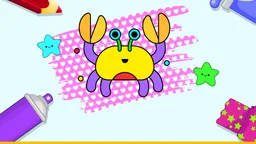
Toddler Coloring Book For Kids review
 Analysis by Appsdrops
When I want a young child to settle into a quiet activity that still involves making choices, a coloring game can be more useful than another video. Toddler Coloring Book For Kids is aimed at that simple moment: opening a picture, picking colors, and getting on with the fun without needing a grown-up to explain a complicated game. My overall impression is that it makes the most sense as a low-pressure first coloring app, not as a deep art tool or a complete early-learning program.
A straightforward first coloring activity
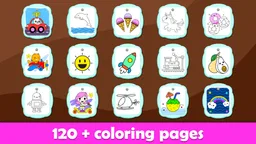
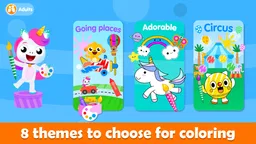
This is an educational game from Toy Tap LLP, designed for children aged two and up. Its focus is painting and coloring rather than puzzles, timed challenges, or reading practice. That narrow purpose is a strength for toddlers: a child can understand the basic idea quickly, and an adult can use it as a short activity during a quiet stretch of the day.
The game is free to download and has an Everyone age rating. It has a 4.5 average from around 14,000 ratings, with over 10 million installs. Those figures suggest that it has found a broad audience, though popularity alone cannot tell you whether its style will suit your child. I would judge it by whether the child enjoys choosing colors and returning to pictures, rather than expecting a particular learning outcome.
In practical use, a coloring game is most helpful when the adult sets a small, clear goal: choose one picture, color it together, then stop when attention wanders. That works better for many toddlers than leaving a phone or tablet open as an all-purpose distraction. I also like the possibility of taking turns—one person chooses a color, the other chooses where it goes—because it makes screen time feel more shared.
What the simple format does well
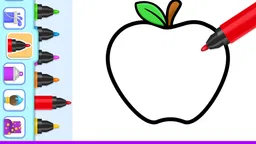
Coloring gives a young child a manageable way to practice making choices. Even without treating the game as a formal lesson, selecting a shade and applying it to an image can encourage attention, hand-eye coordination, and conversations about colors or objects. The important point is to keep expectations modest: this is an activity to enjoy together, not a substitute for drawing with crayons, reading, or hands-on play.
Compared with a physical coloring book, the appeal is convenience. There is no need to find paper or clear a surface before starting, which can be handy while waiting at home or filling a brief lull. The trade-off is that digital coloring does not offer the feel of crayons, the freedom to draw anywhere on a page, or a finished picture that can be put on the fridge. For a child who loves the sensory side of making art, paper may be the better choice.
Compared with broader toddler-learning apps, this game is more focused. A parent looking for stories, number activities, or a varied set of mini-games should choose something built around those needs instead. Here, the central attraction is coloring. That focus may help a child get started without being pulled in several directions, but it also means the app should not be mistaken for a wide-ranging educational package.
How I would fit it into an ordinary day
One realistic use is a short wait before dinner, when a child is restless but there is not enough time to begin a messy craft. I would open the game alongside the child, agree on one picture, and ask them to pick a color for a familiar object. If the child starts tapping at random or wants to switch activities immediately, I would treat that as a cue to stop rather than trying to stretch the session.
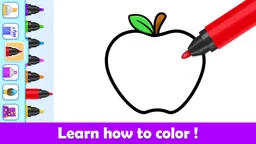
For a first-time user, it is worth sitting nearby and letting the child explore at their own pace. Toddlers often learn a touch activity by trial and error, but they can also get frustrated if they do not understand what a tap does. A calm demonstration—choose a color, then try it on the picture—can make the first minutes smoother without turning play into a lesson. For very young children, supervision is sensible even when the content is age-rated for everyone.
Another useful approach is to make the screen a prompt for conversation. Instead of asking a child to finish a picture correctly, I would ask what color they want to try or what they think the picture is. That keeps the activity open-ended and avoids making a toddler feel that there is a right way to color. It also gives parents a better sense of whether the child is engaged or simply tapping through the screen.
Current version and what it means for regular users
The current version is 6.7.3, while the game first appeared on February 6, 2020. That tells me the product has had a continuing life beyond its initial release, but a version number by itself does not reveal what changed or whether a particular update transformed the experience. I would not assume that a newer version means new coloring tools, more pictures, or a different interface unless the app itself makes those changes clear.
For an existing user, the practical question is less about the number attached to an update and more about whether the child can still use the activity comfortably. If a familiar child already likes the game, a version change is worth checking in context: open it together, see whether the child can find the coloring activity, and make sure the experience still suits their attention and age. A toddler who is content with a simple routine may not need novelty at all.
The game’s continued presence in the app stores can be reassuring to someone looking for an established option, but it should not be treated as proof that the app will fit every device or household. The minimum operating system is 7.0, so compatibility is one practical check to make before downloading. I would also review the purchase options with an adult before handing the device over, especially if the child can navigate menus independently.
Costs, limits, and the better alternatives
The download is free, with in-app purchases ranging from $1.99 to $6.99 per item. That makes it sensible to try the basic experience before spending anything. I would avoid promising a child access to paid content until an adult has checked what is offered and decided whether it is worth buying. For a family that wants a completely no-purchase routine, a paper coloring book and a small box of crayons may be simpler.
One limitation of any focused coloring game is that it can become repetitive. A child who wants new kinds of interaction may lose interest, while an older preschooler who enjoys drawing from scratch may find a coloring activity too constrained. In those cases, a blank drawing app—or, better still, real paper and washable art materials—may offer more room for independent creativity. The right alternative depends on what the child is seeking: quick, guided coloring or open-ended making.
I would also keep the activity short and adult-led at first, rather than assuming that an educational label makes unlimited screen time beneficial. The app can support a pleasant creative moment, but it does not replace conversation, movement, or physical play. If the child becomes upset when asked to stop, that is a sign to set clearer boundaries or choose an offline activity, not a reason to keep extending the session.
Who should try it—and what to watch for
I can see this working well for a caregiver who wants a simple, child-friendly coloring option for brief supervised sessions, especially for a toddler beginning to explore touchscreens. It may also suit families who want to keep a coloring activity available when paper and art supplies are inconvenient. The best results are likely when an adult joins in, helps the child get started, and treats the finished image as less important than the choices made along the way.
I would steer away from it if the main goal is a broad curriculum, a replacement for physical art materials, or a game that will hold an older child’s interest for long stretches. It is also not my first pick for a toddler who does not enjoy coloring or who becomes frustrated with touch controls. A child’s response matters more than the app’s category: if they engage happily for a few minutes, it is serving its purpose; if not, there is no need to push it.
As you decide whether to keep using it, watch for the basics that matter in a toddler app: whether your child can begin without repeated rescue, whether the activity stays enjoyable rather than stressful, and whether in-app purchase prompts are easy for an adult to manage. I would also notice whether the child wants to talk about the picture or simply taps rapidly. That difference can help you decide whether to join in, shorten the session, or switch to an offline activity.
My verdict is that Toddler Coloring Book For Kids is worth trying if you want a focused digital coloring activity for a young child and are comfortable supervising its use. Its appeal is its straightforward purpose, while its limits are equally clear: it is not a full learning suite, a substitute for hands-on art, or a guaranteed way to occupy every toddler. Start with a short shared session, check the purchase options, and let your child’s interest—not the promise of educational value alone—decide whether it earns a regular place in your routine.
What we like
- Simple controls make it easy for young children to use.
- Large coloring areas are suitable for developing fine motor skills.
- A child-friendly layout helps little ones navigate the app.
- Coloring activities can encourage creativity and self-expression.
- Works well as a quiet activity for short breaks.
What could be better
- Some children may outgrow the basic coloring options quickly.
- Small icons can be tricky for toddlers to tap accurately.
- The app may include ads or prompts that interrupt play.
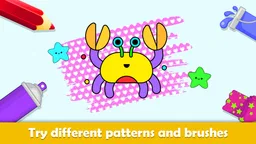
- Color choices may feel limited for children seeking more variety.
- Screen time still requires supervision from an adult.







