
Toddler Car Games For Kids 2-5 review
 Analysis by Appsdrops
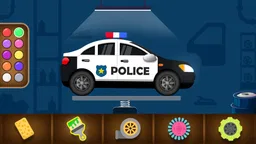
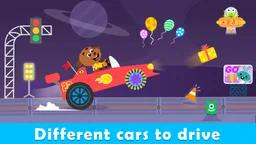
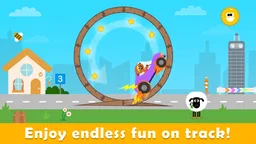
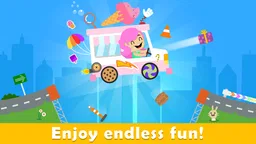
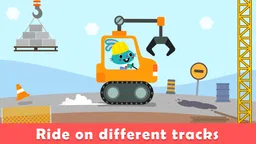
I would choose a toddler car game for a very different reason than I would choose a racing game for myself: the best one gives a young child something easy to understand, a little room to explore, and enough variety to stay engaging without turning play into a test. Toddler Car Games For Kids 2-5 is aimed squarely at that kind of short, supervised play. It is an educational game from Toy Tap LLP, free to download, with an Everyone age rating. Its car theme makes the premise immediately approachable for children who already enjoy vehicles, while the intended age range signals that this is about early play rather than realistic driving or demanding competition.
Small goals that make sense to a young player
For a child who is still learning how to tap, drag, and notice what changes on screen, a clear visual goal matters more than a complicated explanation. A car-centered game has a natural advantage: vehicles are familiar, movement is easy to recognize, and a child can often tell what they are meant to focus on just by looking. That is the kind of starting point I would want when handing a game to a preschooler for a few minutes.
The important distinction is that this is not a traditional racing game built around beating opponents or mastering precise controls. Its educational positioning makes it better suited to playful interaction than to score-chasing. I would use it as a brief activity for a child who likes cars, not as a substitute for a structured lesson or a promise of measurable learning. A parent can make the experience more meaningful by naming what the child notices, asking what they think will happen next, or taking turns rather than leaving the screen to do all the entertaining.
That approach also helps set expectations about goals. Young children often enjoy completing a small action more than pursuing a long chain of achievements. If a child is pleased by seeing a vehicle respond to a touch or by exploring a scene, that can be enough for a short session. I would avoid presenting it as a challenge they need to finish. The more relaxed framing suits this age group and keeps frustration from creeping in if a child loses interest or needs help.
Progress is best judged by the child, not a scoreboard
With a game for very young players, progress does not have to mean unlocking a large collection or advancing through increasingly difficult stages. It can simply mean that a child becomes more comfortable using the screen, remembers where to tap, or starts explaining what they are doing. Those are useful signs for a caregiver to notice, even when the game itself is being used mainly for entertainment.
I would pay attention to whether the child can return to the activity after a pause without needing a fresh explanation. That is a practical test of whether the interaction feels understandable. If they keep asking an adult to take over, or tap randomly because nothing seems to respond in a way they can follow, the session may be too confusing for them at that moment. It is fine to stop and try again another day; a toddler game should not become a battle over persistence.
A useful tip is to begin beside the child and let them lead after the first few moments. Rather than demonstrating every possible action, show one simple interaction and wait. This gives you a better sense of whether the game is inviting independent exploration or whether adult guidance is doing most of the work. It also turns the screen time into a shared activity instead of a quiet handoff.
Keep the difficulty gentle and the session short
For ages two to five, difficulty is less about reaction speed and more about how clearly the game communicates what a child can do. A toddler may be comfortable tapping but not with holding, dragging, or following instructions that change quickly. I would introduce the game when the child is rested and curious, rather than during a moment when they are already tired or upset. If they become frustrated, a short break is likely more helpful than repeated coaching.
The game is not the right choice for a child looking for deep strategy, realistic vehicle handling, or a demanding race against other players. Older children may quickly want more control, a stronger sense of competition, or goals that require planning over several sessions. For them, a more advanced driving or puzzle game may offer a better fit. By contrast, a preschooler who enjoys bright, vehicle-themed play may appreciate the approachable premise without needing the mechanics to become complex.
There is also a difference between “educational” as a broad category and a game that teaches a specific skill in a structured way. I would treat this one as an opportunity for playful attention and conversation, not assume that time in the app automatically builds a particular ability. If a caregiver wants focused practice in letters, counting, or another defined subject, a dedicated learning app will usually be a clearer match. Here, the car theme is the reason to open it; an adult can add learning moments through questions and conversation.
What keeps a child coming back—and when to step in
Repeated play can be a positive sign when a child enjoys the theme and understands how to interact. It can also become repetitive if the child is seeking novelty that the game does not provide for them. I would watch for whether they are still exploring or simply tapping through the same action without interest. If attention has faded, there is little benefit in stretching the session just because the game is available.
One everyday use case is a short wait at home while a caregiver prepares a meal. I would sit the child somewhere safe, offer the game for a limited stretch, and stay close enough to see whether they are enjoying it or becoming absorbed in frustration. Another is taking turns during a calm play break: the adult can ask the child to point out a car or describe what they noticed, then let the child choose what to do next. Those small routines make the game easier to supervise and prevent it from becoming an automatic way to fill every spare moment.
Because the game is free and includes in-app purchases priced at $2.99 per item, I would check the purchase settings on the device before handing it to a child. That is a sensible precaution for any app used by a toddler, especially if the child explores by tapping broadly. The free entry point makes it easy to try, but it is still worth setting a clear boundary around buying anything. I would not promise a child an extra item before checking what it offers and whether it is useful for your family.
How it compares with other preschool options
Compared with a general collection of preschool learning activities, a dedicated car game has a narrower appeal. That is a strength if a child is fascinated by vehicles: a familiar theme can make it easier to invite them into play. It is a limitation if they would rather draw, solve simple puzzles, or explore a broader set of subjects. I would choose based on the child’s current interest, not on the assumption that one educational game should cover every kind of learning.
Compared with physical toy cars, the app offers a screen-based activity that can be ready without setting up a play area. But physical toys naturally encourage movement, imaginative storytelling, and interaction away from a device. I would treat the digital version as one option among several, not a replacement for hands-on play. If a child is already spending a lot of time with screens, toy cars on the floor may be the better choice that day.
The game has an average rating of 4.7 from around six thousand ratings, and it has been installed over ten million times. That indicates broad interest, but popularity cannot tell me whether a particular child will enjoy the pace or understand the interactions. I would make the decision based on a short, supervised try rather than assuming that a well-used app is automatically right for every preschooler.
Practical fit, device expectations, and the final call
The game was released on March 18, 2024, and its current version is 4.2.3. It requires Android 7.0 or later, so it is worth checking the device before planning to use it. Toy Tap LLP is the developer. Those details are useful when deciding whether an older family phone or tablet is suitable, but the more important practical question is whether the child can use the screen comfortably and whether an adult can supervise the session.
I would recommend Toddler Car Games For Kids 2-5 to caregivers whose preschooler already gravitates toward cars and who want a simple, low-commitment digital activity. Its free download makes a trial straightforward, and its Everyone rating fits the young audience it is designed for. I would not choose it for a child who needs a carefully sequenced curriculum, for an older player seeking a serious challenge, or for a family looking to minimize screen use altogether.
My main advice is to treat it as a small play prompt rather than a progression system that needs to be completed. Start with a brief shared session, let the child show you what catches their attention, and stop when their interest drops. That gives the game its best chance to work: as an easy car-themed diversion that can spark a little conversation, without placing unrealistic expectations on what a toddler game should teach or how long it should hold a child’s attention.
What we like
- Simple touch controls suit young children.
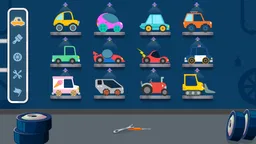
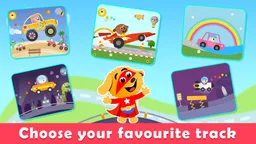
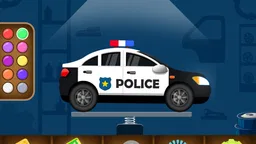
- Vehicle variety keeps play sessions engaging.
- Bright visuals are easy for toddlers to follow.
- Short activities work well for quick play sessions.
- The game offers age-focused entertainment for preschoolers.
What could be better
- Some activities may feel repetitive over time.
- Young children may need help navigating menus.
- The game may include ads or in-app purchases.
- Gameplay offers limited challenge for older children.
- Device compatibility may vary by model.







