
The Rhyme Game review
 Analysis by Appsdrops
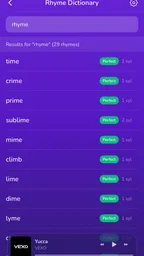
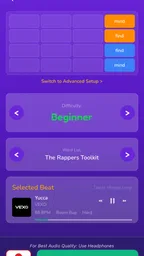
I’d consider The Rhyme Game if I wanted a playful way to practise making up rap lines rather than a full music-production setup. Its focus is narrow: this is a music game built around freestyle rhyming, not a beat-making studio or a course in songwriting. That focus can be a real advantage when all I have is a spare moment and a desire to get words flowing. It also sets expectations: if I’m looking for detailed lessons, recorded performances, or a polished path from lyric to finished track, I’d look elsewhere.
What matters when choosing a freestyle game
For a casual practice tool, the key question is whether it helps me start creating instead of leaving me staring at a blank page. A rhyme prompt can give a session direction, but the experience only feels worthwhile if I’m willing to play along, accept imperfect lines, and try again. I’d approach this game as a low-pressure creative nudge, not as a promise that a few rounds will turn anyone into a skilled rapper.
The distinction between a game and a learning course matters here. People who want structured instruction on rhythm, delivery, or writing technique may prefer lessons or a guided songwriting app. People who already know the basics and want a quick mental warm-up may find a focused rhyme game more appealing. The Rhyme Game is most convincing for the second group: it makes freestyle practice feel approachable by giving the activity a simple, playful frame.
It is free to download, with optional in-app purchases priced from $0.99 to $29.99 per item. That range is worth noticing before spending: I’d start with the free experience and only consider a purchase if I had already found a repeatable reason to return. A game can be fun for a few minutes without becoming part of a routine, so paying early would be a poor way to test whether the format suits me.
A small creative prompt, not a replacement for practice
My useful test for any freestyle app is whether it helps me practise a specific habit. For example, I might try building two connected lines around a prompt, then say them aloud and notice whether the rhyme sounds natural or forced. That simple routine turns a quick game session into a writing exercise. The game can supply a starting point; the improvement comes from listening, revising, and trying again.
This is also a better fit for people who feel self-conscious about freestyling. A private phone session lets me experiment without needing an audience or a beat-making setup. I can treat awkward lines as part of the exercise rather than as a performance failure. Still, anyone who needs detailed coaching or feedback on delivery should not mistake a prompt-based game for a personal tutor.
Where The Rhyme Game earns its place
The strongest case for The Rhyme Game is its directness. Creative Rhythm developed it as a music game, and the idea is easy to grasp: use the game to get into freestyle mode. The store’s short description calls it a rhyme game, but the practical appeal goes beyond the label. A focused activity can make it easier to begin than opening a blank notes page and deciding what to write.
I’d use it in short bursts rather than setting aside a long practice session. A realistic moment might be a few minutes while waiting for a friend or taking a break between tasks. I could play a round, jot down a line I like, and revisit it later when I have more time. That approach is useful because it keeps the game from becoming an all-or-nothing creative commitment: a small session can still produce a phrase worth developing.
One non-obvious advantage of this format is that it can expose how quickly I rely on familiar rhymes. I’d deliberately reject my first obvious match and search for a less predictable one. That self-imposed rule makes the exercise more demanding without requiring extra equipment or a formal lesson. It also helps separate “I found a rhyme” from “I found a line that says something.” A rhyme is only a starting point; meaning and delivery still matter.
Another practical technique is to keep a small note of lines that feel promising instead of expecting every round to result in a finished verse. After a session, I can sort those fragments into themes or connect a pair of lines later. This makes the game useful even when I’m not in the mood to perform aloud. It is a personal workflow rather than a feature claim, but it helps turn brief play into material I can actually use.
The game has an average rating of 4.3 from 629 ratings, with 32 written reviews, and it has passed 100,000 installs. Those figures suggest that it has found an audience, though they do not tell me whether every player uses it for the same purpose. I would treat them as a modest sign of interest, not proof that it will match my own taste. The deciding factor is whether I enjoy practising through a game rather than through a notebook, a beat, or a lesson.
It is marked Teen, so it is not presented as a young-child game. That is useful context for families deciding whether the style and subject matter suit them, but I would still make the decision based on the person who will use it and the setting. For a teen interested in lyrics, it could be a light way to experiment. For someone wanting family-friendly music activities for younger children, I would choose a more clearly age-targeted option.
How it compares with the usual alternatives
Compared with a blank notes app, a dedicated rhyme game offers a more playful reason to begin. A notes app is better for storing longer verses, organizing drafts, and editing carefully; it is less helpful when I want a prompt to break through hesitation. I’d use both differently: play to generate possibilities, then move the strongest ideas into a writing space where I can revise them.
Compared with a beat-making app, this is the lighter choice for someone focused on words. A production tool is more suitable when I want to build an instrumental, arrange sounds, or work toward a recorded track. The trade-off is that production apps can pull attention toward sound design before the lyrics are ready. A rhyme-focused game keeps the creative task smaller, but it is not the right tool for someone whose main goal is making finished music.
Freestyle videos and online challenges offer another kind of alternative: they can show how other people approach rhythm and performance. They may be more inspiring for a learner who wants examples, but watching is not the same as practising. I’d use a game like this to make myself produce lines, then turn to performances or lessons when I need ideas about flow, phrasing, or stage presence. Neither format covers every part of learning to rap.
There is also a trade-off with formal writing courses. A course can provide a progression and explain concepts in sequence, while a casual game can be easier to pick up for a brief session. If I repeatedly feel stuck because I don’t understand meter or structure, a game alone is unlikely to solve that problem. If I already know what I want to practise and just need a nudge to start, the lighter approach may be more inviting.
Version, compatibility, and spending choices
The current version is 3.8.2, and the minimum operating system requirement is 7.0. I’d check that my device meets the requirement before installing, especially if I’m using an older phone. That small compatibility check is more useful than assuming every music app will run on every device, and it saves me from confusing an operating-system issue with a problem in the game itself.
Although there are optional purchases, I would not treat them as necessary for learning to rhyme. The most useful test is whether the basic experience gives me enough reason to return. If I’m using it only once in a while, a free game is already doing its job. If I find myself building a regular practice around it, I can then decide whether a paid item adds value for the way I play. The listed price range is broad enough that checking the individual purchase details before confirming anything is sensible.
A useful switching test is to ask what I want from my next session. If I want to generate a few ideas, I can stay with the game. If I want to turn a good line into a verse, I can switch to a notes app. If I want to hear how the words sit against music, a beat or recording tool makes more sense. Moving between tools is not a failure of the game; it is a practical way to use each option for its strongest purpose.
Who should choose it—and who should pass
I’d recommend it to someone who enjoys wordplay, wants a low-pressure route into freestyle, or needs a brief creative warm-up. It may also suit a beginner who would rather experiment than begin with formal theory. The best results will come from treating each session as practice: say lines aloud when possible, notice where the rhythm feels clumsy, and keep the ideas that have room to grow.
I’d pass if my main goal were to learn music production, record polished songs, receive detailed teaching, or get critique from other writers. I’d also skip it if I dislike game-like exercises and prefer to work quietly through a structured writing plan. Those are not criticisms of its central idea; they are signs that a different category of app is a better match for the job.
Creative Rhythm’s game is free, launched on February 13, 2024, and has a clear niche among music apps: it gives freestyle-minded players a compact way to practise rhyme. I like it best as a starting point, not a complete creative toolkit. If the idea of trying lines on the fly sounds fun, I’d install it and test the free experience before spending. If I wanted instruction, recording, or a place to manage full songs, I’d choose a tool built specifically for that instead.
What we like
- Quick rounds make it easy to play during short breaks.
- Simple rules let new players start without a lengthy tutorial.
- Rhyme challenges can help build vocabulary and listening skills.
- Solo play offers a way to practice without coordinating with others.
- Its playful format can make word practice more engaging.
What could be better
- Some answers may feel subjective when words have varied pronunciations.
- Repeated rounds can become predictable over time.
- Players with limited English vocabulary may find challenges difficult.
- The game may be less enjoyable for those who prefer strategy or action.
- Playing with others can depend on everyone agreeing on valid rhymes.







