

Sprunki: Funky Remix Beats review
 Analysis by Appsdrops
The appeal of Sprunki: Funky Remix Beats is its focus on making music through play rather than asking you to learn a conventional music-making app. The central idea is simple: shape your own Sprunki songs by experimenting with sounds and combinations. I like that invitation because it gives a curious player somewhere to start even if they have no musical training. It is best approached as a creative toy for short, satisfying experiments, not as a full production studio or a rhythm game whose main goal is to test precision.
Making a song is the main event
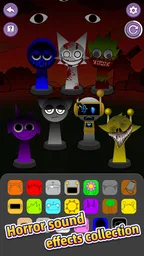
As a music game from SYNTHJOY GAMES, Sprunki: Funky Remix Beats puts the emphasis on creating a result that feels like your own. That makes the experience different from the usual music-game routine of following a fixed track and chasing a score. Here, the more interesting question is what happens when you try a different mix of sounds and decide whether the result works for you.
That freedom has a useful effect: it lowers the stakes. I can explore without needing to know music theory or treat every attempt as a performance. A player who enjoys finding a pleasing combination by ear may get more out of it than someone looking for a strict challenge. The trade-off is that open-ended creativity can feel less guided than a level-based game. If you prefer clear objectives, timed input, and a steady stream of unlocks, this may not scratch that particular itch.
The game’s short store description is simply “Sprunki,” while its broader premise is about making songs. I would keep expectations focused on that creative loop. The most valuable question before installing is not whether it can replace a music workstation, but whether you enjoy trying ideas, listening back, and making small changes until a mix feels right.
Experiment first, then refine
A practical way to approach a music-creation game like this is to begin with one simple idea rather than trying to make a perfect track immediately. Add or change one sound at a time, listen to how the overall mix shifts, and keep the versions that feel promising in mind. That process makes cause and effect easier to hear. If several changes happen at once, it is harder to know which one improved the result.
This is also a helpful way to avoid the common creative-game trap of tapping everything quickly and then deciding the outcome is random. A little patience turns experimentation into a deliberate activity: make a change, listen, and decide whether it serves the mood you want. I find that approach more rewarding than treating the game as a button-mashing distraction, even if I only have a few minutes.
One non-obvious strength of this kind of loop is that it can work as a low-pressure introduction to arrangement. You begin to notice that a sound can feel different depending on what accompanies it, and that a mix needs contrast rather than simply more layers. You do not need to name musical concepts to benefit from that instinct. For a younger player or a beginner, the pleasure can be in hearing a rough idea become more coherent through small choices.
A good fit for a short creative break
My clearest everyday use case is a short break between tasks. Instead of opening a demanding game that requires a long session, I can spend a few minutes trying a musical idea, listen to the result, and stop when I have had enough. That makes the experience easier to fit into a spare moment than a lengthy campaign or a studio workflow that asks me to manage many technical settings.
It can also suit a shared setting where someone wants to show another person a sound combination and invite them to suggest a change. The point is not to turn that moment into a formal lesson; it is to make the creative decision visible and hear how a different choice changes the mood. If you are choosing a game for a child or teenager, the Teen content rating is worth considering alongside your own judgment about what is appropriate for them.
For a solo session, I would use a simple goal to keep the play satisfying: aim for a particular mood, such as energetic or relaxed, and make choices that support it. That is more useful than chasing an abstract idea of “the best” song. It also gives you a reason to stop experimenting once the mix matches the feeling you wanted, instead of endlessly changing things without a direction.
Where it sits beside other music games
Compared with rhythm games, this is more about making a musical result than proving that you can hit notes on time. Players who love score chasing, increasingly difficult charts, or a clear win condition may find that conventional rhythm titles provide stronger structure. On the other hand, those games usually give you less room to shape the music yourself, so they are not a direct substitute if creative choice is what you want.
Compared with music-production apps, Sprunki is the more approachable kind of experience to try when you want play rather than a technical workspace. A dedicated production tool is the better choice if you need detailed control, a serious arrangement process, or a track intended for polished release. I would not treat this game as a replacement for that. Its value is in making the act of experimenting feel accessible, not in promising professional output.
That distinction helps set realistic expectations. The game can be enjoyable without becoming a new hobby, and a casual player does not need to turn every session into a finished composition. If you want a guided lesson in theory or a tool for recording and editing a complete song, choose an app built around those jobs. If your goal is to play with musical ideas and see what sounds good, this is much closer to the right lane.
Small choices matter more than frantic tapping
One useful tip is to listen for balance rather than judging each sound in isolation. A sound that seems fun on its own may crowd the overall mix, while a less striking choice can make the other parts feel clearer. When a result seems messy, I would remove or change one element before starting over. That gives you a better chance of identifying what is getting in the way.
Another practical habit is to pause between experiments. A few seconds of listening can reveal whether a change improved the flow or merely made the mix busier. This matters especially when the game is being used as a quick distraction: rapid tapping may produce novelty, but listening carefully is what makes the creative side feel intentional. The best outcome is not necessarily the most complicated one.
These suggestions are not hidden modes or technical tricks; they are ways to get more out of the central creative premise. They also clarify who may enjoy the game. A patient player who likes testing small variations has a reason to return, while someone who wants instant, highly directed action may find that the open-ended approach takes too long to become rewarding.
Cost, availability, and practical expectations
The game is free to install, with in-app purchases listed at $3.99 per item. I would start with the free experience and decide whether the core creative loop is enjoyable before spending anything. That is a sensible approach for a casual game, especially if you are still figuring out whether you want a playful music-making experience or a more structured rhythm challenge. Individual purchase prices do not, by themselves, tell you what you will want to buy, so there is no reason to plan a purchase before trying the game.
Its average rating is 3.5 from around 4,200 ratings, and it has more than 5 million installs. I read that combination as a sign that the game has reached a sizeable audience while still being a mixed fit rather than an obvious recommendation for everyone. Ratings can help set expectations, but your own preference matters more here: creative freedom is enjoyable for some players and frustratingly loose for others.
The release date was July 23, 2025, and the current version is 1.2.7. The listed minimum operating-system requirement is version 7.0. Those details are useful when checking whether the game is suitable for a device, but I would still make the decision based on the experience you want. A compatible phone does not make an open-ended music game appealing if you are mainly looking for competitive scoring or a structured campaign.
Who should give it a try
I would recommend it to players who like casual creative play, want to experiment with musical combinations, or are looking for something they can dip into without treating every session as a challenge. It may also appeal to someone who has wondered whether making music could be fun but feels put off by complex production software. The game’s approachable premise gives that person a low-pressure way to explore the idea.
I would skip it if your priority is a conventional rhythm game, a detailed audio workstation, or a clear progression system that constantly tells you what to accomplish next. It is also a weaker choice if you dislike trial and error or want each session to have a defined endpoint. In those cases, a chart-based music game or a purpose-built production app will likely be more satisfying, depending on whether you want challenge or control.
Overall, I see Sprunki: Funky Remix Beats as a casual creative option whose strongest appeal is the invitation to shape music through experimentation. Its best moments come from listening closely, changing one thing at a time, and finding a mix that matches your mood. If that sounds more enjoyable than chasing a score, it is worth trying for free; if you need structure or professional-level control, I would look elsewhere.
What we like
- Quick rhythm rounds make it easy to play in short sessions.
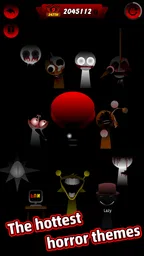
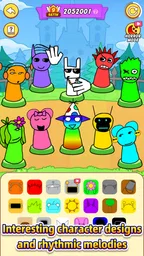
- Bright visuals give the music gameplay a playful style.
- Simple controls are approachable for new players.
- Remixing beats encourages experimentation with sound.
- The energetic soundtrack suits fans of rhythm games.
What could be better
- Some tracks may become repetitive after extended play.
- Timing challenges can feel frustrating for casual players.
- The interface may take time to get used to.
- Performance can vary across older devices.
- Limited variety may reduce replay appeal over time.







