



Sprunki Funky Beat review
 Analysis by Appsdrops
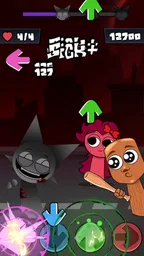
Music games are at their best when they make a short break feel lively without demanding a long tutorial or a serious time commitment. Sprunki Funky Beat is a free music game built around rap and dance battles with Sprunki characters. I’d look at it as a playful, quick-session option rather than a deep rhythm game: its appeal is the combination of beat-focused play and a colorful battle theme, not a promise of a demanding music-simulation experience.
How the game feels in a quick session
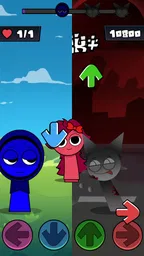
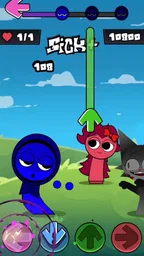
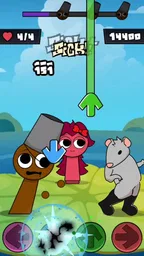
The basic idea is easy to understand: follow the musical action and take part in battles set to a funky, character-driven mood. That makes the game approachable if you want to try a music game without first learning a complicated set of rules. In my view, this kind of clear premise suits short sessions, such as a few minutes while waiting for a ride or taking a break between tasks.
There is an important trade-off, though. Players who enjoy rhythm games for the precision of their input, an extensive song library, or a long progression challenge may want more than this concept promises. The focus here is on the Sprunki theme and rap-and-dance battles. I would choose a more traditional rhythm title if chart accuracy, song selection, or a structured path through increasingly difficult stages is the main reason I play.
That distinction also helps set expectations for speed. A music game should feel responsive enough that its rhythm remains enjoyable, but I wouldn’t assume that every phone will behave identically or that the game is designed for competitive play. If timing feels off on your device, try a short session in a quiet setting before deciding whether it is a game issue or simply a mismatch between your expectations and the style of play.
What to expect from the moment-to-moment pace
The battle framing gives the music a purpose beyond tapping along: the player is following a contest, not just listening to a track. That can make a brief session feel more animated than a bare-bones rhythm exercise. It also means the game is best approached with an open mind about presentation. If you want a minimal interface that keeps attention entirely on notes and timing, a stripped-down rhythm game may suit you better.
A practical way to judge the pace is to play when you can give the screen your attention for a few minutes. Music games lose some of their appeal if you are repeatedly interrupted, and this one is no exception. I wouldn’t treat it as background entertainment while doing something that needs concentration; the beat-based action is the point, so the game works best when you can follow it rather than glance at it now and then.
When the action gets demanding
In music games, the moments that feel “heavy” are often less about a phone running a demanding simulation and more about the player keeping up with what is happening on screen. A busy stretch of music can be harder to follow when you are tired, distracted, or using a small display. For this game, I’d start with a relaxed session and see whether the battle presentation stays readable for you before settling into longer play.
One useful habit is to separate device trouble from play-style friction. If the game seems to miss your input, first check whether you are playing in a comfortable position and whether your fingers obscure the action. Then try again when you can focus on the rhythm. That simple comparison is more informative than repeatedly retrying a difficult moment while distracted, and it helps you decide whether the game’s pace is genuinely a poor fit.
Another trade-off to keep in mind is attention. A rap-and-dance battle theme may be fun when you want an energetic break, but it is less suitable if you want calm music to leave running while you work. The game is built around active play, so I would not choose it as a substitute for a music player or a passive listening app. Its value is in engaging with the music-game format.
Reliability and getting back into play
I would judge reliability by whether the game is comfortable to return to, not by assuming it will run perfectly on every device or network condition. Since the game is centered on musical action, interruptions can break the flow more noticeably than they would in a slow, menu-based game. If you are about to start a session somewhere with an unreliable connection or frequent interruptions, it is sensible to keep expectations modest and avoid treating a single disrupted attempt as a definitive verdict.
For recovery after an interruption, the most useful approach is simple: reopen the game and see whether you can resume comfortably, rather than building a long session around a point you cannot afford to lose. I would also avoid making purchases in the middle of a rushed play session. The game is free to start, while optional in-app purchases range from $0.99 to $49.99 per item, so it is worth checking the purchase screen carefully and deciding in advance whether you want to spend anything.
This is also where the game’s casual appeal has a limit. If you need a music title that you can pause and resume seamlessly during frequent calls or commutes, test that experience for yourself before relying on it. I prefer to use games like this when I have a clear few minutes, rather than when I expect constant interruptions. That is a practical way to protect the enjoyment of the rhythm instead of blaming the game for an unsuitable setting.
Device fit and who should choose it
The game is available on Android, with a minimum operating-system requirement of version 7.0. That makes the compatibility threshold clear, but it does not tell you how smoothly it will run on every device that meets it. Older or less capable phones can behave differently from newer ones, so I would leave some storage and close unnecessary apps if your device is already struggling with games. These are sensible general steps, not a guarantee of a particular performance result.
Because rhythm play depends on seeing and responding to the action, screen comfort matters as much as raw speed. If you play on a compact phone, hold it in a way that leaves the active area visible and your hands relaxed. If you find yourself covering important parts of the display or reaching awkwardly, a different grip or a larger screen may make the experience easier. I would not force a long session if the controls feel uncomfortable; the game’s casual format should make it easy to keep play brief.
Sprunki Funky Beat is a sensible pick for players who like character-led music games and want something easy to sample. It has an Everyone age rating, and its appeal is broad enough for casual players who enjoy a lively theme. It may be less satisfying for someone seeking realistic performance tools, a serious competitive ladder, or a music game whose main attraction is a large, carefully curated catalogue. In that case, compare it with rhythm games that put those priorities first.
The game is made by Gotstar Studio and has an average rating of 4.8 from around 34,000 ratings. It has been installed over 5 million times, which suggests plenty of players have tried it, but those figures alone cannot tell you whether its timing, style, or session length will suit you. I’d use them as context, then decide based on what you enjoy in a music game and how it feels on your own phone.
How it compares with other music games
Compared with a conventional rhythm title, the clearest difference is the battle-centered Sprunki presentation. That gives it a more playful identity than a game that focuses only on matching notes to a track. The trade-off is that players who care most about musical breadth or demanding timing may find the theme more appealing than the depth of play. I would treat it as a distinctive casual alternative, not an automatic replacement for every rhythm game already on your device.
It also differs from music apps that let you choose songs and listen without interacting. Here, the music is tied to play, so it asks for attention and offers a game-like reason to engage. That makes it a better fit for a short, active break than for filling a long commute with passive listening. Thinking about that distinction before downloading can save you from expecting the wrong kind of experience.
The current version is 4.5, and the game was released on June 11, 2025. I mention those details as practical context when checking compatibility and deciding whether to try it, not as a claim that version numbers guarantee smooth performance. If you install it on a device near the minimum operating-system requirement, give it a short test before planning a longer session.
My performance verdict
For me, this is a try-it-and-see music game whose strongest case is a quick, energetic session built around rap and dance battles with Sprunki characters. The free entry point makes it easy to sample, while optional purchases mean I would keep an eye on spending rather than assuming every part of the experience costs nothing. Its broad age rating and accessible premise suit casual players, but its theme and active format will not appeal to everyone.
I would recommend it to a friend who wants a playful music game for spare moments and enjoys character-led presentation. I would steer away from it if that friend wanted a calm background app, a deep competitive rhythm challenge, or a particular level of device performance they cannot test first. On a compatible phone, start with a short, focused session, pay attention to how comfortable the rhythm feels, and decide from there. That is the fairest way to find out whether this game’s lively battle style is your kind of fun.
What we like
- Quick rounds make the game easy to enjoy in short sessions.
- Simple controls are approachable for new players.
- Rhythmic challenges reward timing and concentration.
- The colorful presentation gives the game a lively feel.
- A lightweight format suits casual play on mobile.
What could be better
- Some players may find the rhythm patterns repetitive.
- Late stages can feel difficult without precise timing.
- The experience may offer limited variety over time.
- Frequent play can make the soundtrack feel repetitive.
- A stable audio setup is important for accurate timing.







