


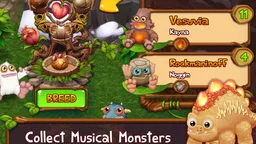

Singing Monsters: Dawn of Fire review
 Analysis by Appsdrops
Singing Monsters: Dawn of Fire is at its best when I treat it less like a traditional music game and more like a tiny, steadily growing sound garden. I enjoy how its playful creatures turn collecting and building into something I can hear, not just look at. The appeal is patient: bring monsters together, let their parts add to the music, and gradually shape a world with its own odd little rhythm. If you want a fast game built around precise timing or a complete song on demand, this is probably not the right fit. If you like gentle progression and musical surprises, it has a distinctive charm.
When the monsters become the music
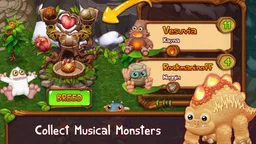
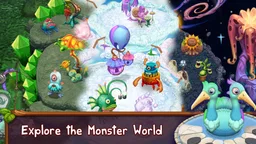
Made by Big Blue Bubble Inc, this free music game takes place in the Monster World and centers on a cast of creatures whose voices contribute to the overall sound. What I find more interesting than the novelty of a monster singing is the way the collection becomes an arrangement. A new addition can change the feel of what is already playing, so choosing what to grow and where to focus gives the game a personal, creative edge.
The experience is not the same as tapping notes in time with a track. It is closer to composing by assembling performers: you build up the cast and listen to how their contributions sit together. That makes the music feel tied to your progress. Instead of simply completing a song and moving on, you have a reason to revisit your world and hear how it sounds as it develops.
That distinction is important when comparing it with the usual music-game alternatives. Rhythm games reward quick reactions and accuracy, while this one leans toward collection, nurturing, and listening. I would choose a conventional rhythm title when I want a focused challenge or a clear score to beat. I would choose Singing Monsters: Dawn of Fire when I want music to emerge gradually from a world I am building.
A collection with an audible payoff
The strongest design choice is that the creatures are not merely decorative prizes. Their musical role gives each addition a reason to matter beyond filling out a collection. I find myself listening for how a new voice changes the mix, rather than checking only whether I have acquired another character. That small shift makes progress feel more expressive and gives the game a personality that a standard creature-collecting loop often lacks.
A useful way to play is to pause after making a change and listen before adding more. When several voices arrive in quick succession, it is easy to miss which one made the arrangement more lively or which combination feels crowded. Taking a moment to hear the result turns routine progress into a simple creative decision: keep building in the same direction, or give the sound more room to breathe.
I also like that the game can work as a short, low-pressure check-in. On an ordinary break, I can open it, attend to what I have been developing, and enjoy the current sound without needing to sit down for a long, demanding session. The musical world gives that visit a clear purpose, while its gradual nature makes it less dependent on the kind of uninterrupted concentration a reflex-heavy game asks for.
What progression feels like in everyday play
A realistic use case is a few minutes after school, work, or a commute: I can check in, make a small bit of progress, then leave the monsters to be part of a longer-running project. The pleasure is cumulative. An early visit may feel modest, but the arrangement has more character as the cast grows. That makes it well suited to players who enjoy returning to a world and noticing how it has changed, rather than expecting a complete payoff in one sitting.
One practical tip is to decide what you want from a session before you start. If I am there to listen, I focus on the musical result instead of trying to do every available task. If I am there to develop the collection, I accept that the visit may feel more like maintenance than a performance. Separating those intentions helps the game feel less repetitive, because I am not expecting every check-in to deliver the same kind of fun.
The game is also a comfortable introduction for someone who likes music but does not want to learn an instrument or master complex controls. Its musical pleasure comes from hearing combinations develop, not from asking the player to perform them with technical precision. That makes it approachable for casual players, including younger ones, though a child who wants constant action may still prefer something faster.
The trade-off: patience over instant payoff
The same slow-burn structure that gives the game its identity can become its biggest limitation. Progress depends on returning and building over time, so it may not satisfy someone who wants each session to have a decisive finish. If I am in the mood for a tight sequence of challenges, a conventional rhythm game is a better choice; this experience can feel too gradual when I want immediate action.
There is also a difference between enjoying the music and enjoying the work of growing the world. Those two pleasures support each other, but they are not identical. A player who only wants to listen to a finished, carefully arranged track may find the collection-focused routine gets in the way. I see the music as the reward for engagement, not as a substitute for a music player or a ready-made album.
In-app purchases range from $0.99 to $99.99 per item, so the free entry point does not mean every optional purchase is equally modest. I would approach spending deliberately: enjoy the basic loop first, then decide whether a particular purchase genuinely improves the way you play. The game is a poor fit for anyone who dislikes optional spending in free-to-play games or feels pressured to accelerate progress. A relaxed approach makes it easier to judge the experience on its own merits.
Another small but meaningful trade-off is that the sound is personal rather than a direct test of musical skill. Players who enjoy arranging, collecting, and listening can get a lot from it; players who want strict timing, a leaderboard-driven contest, or a clear difficulty ladder should look elsewhere. That is not a flaw in the concept, but it does mean the game’s musical label can set the wrong expectation if someone assumes it plays like a rhythm challenge.
Who is likely to enjoy it
I recommend it to players who like gentle management and creature collecting, especially when they want those familiar activities to have an audible payoff. It also suits people who enjoy checking in on a project over time and noticing small changes. The game is rated Everyone, which makes its broad, playful presentation suitable for a wide audience, though individual preferences still matter: not every child or adult will enjoy a patient progression loop.
Its audience is supported by a strong reception: it has a 4.8 average from around 204,000 ratings, and more than 10 million installs. Those figures suggest it has found a broad following, but I would still base the decision on whether its pace suits you. Popularity cannot make a slow, collection-led game feel fast if that is what you are looking for.
At the other end, I would steer away anyone who expects a competitive music game, a story-led adventure with constant new scenes, or a one-session experience. It is also not ideal if you dislike returning to a game to build gradually. A faster rhythm title is the clearer option for challenge, while a straightforward music app is better if you only want songs without progression attached.
A current version and a clear verdict
The game’s current version is 4.3.0, and it runs on iOS 7.1 or later. It originally arrived on September 25, 2015, but what matters more to a new player is the enduring shape of the experience: a musical collection that rewards patience and attention rather than quick mastery. For someone choosing a download, I would first ask whether listening to a world grow sounds enjoyable, even when a visit is brief and progress is incremental.
My verdict is positive, with a specific reservation. Singing Monsters: Dawn of Fire has a memorable premise because its creatures contribute to an evolving musical arrangement, and that gives ordinary collection progress a welcome sense of authorship. Its best moments come when I stop to hear how the pieces fit, not when I rush through the next task. The slower pace and optional purchases will not suit everyone, but for a casual player who likes a small, ongoing creative project, it is an easy one to recommend.
What we like
- Breeding combinations give players goals to work toward.
- Island themes make each area feel distinct.
- Monster animations add charm to the world.
- The game offers plenty of content for long-term play.
- Progress can be made at your own pace.
What could be better
- Breeding timers can slow progress.
- Some monsters require rare combinations to obtain.
- Managing resources becomes more demanding later on.
- Frequent play helps keep production moving.
- The large cast can make collection goals feel lengthy.







