
Prodigy Math: Kids Game review
 Analysis by Appsdrops
I see Prodigy Math as a more inviting way to get a child to practise maths than handing over a page of sums. It wraps questions in a fantasy adventure, giving learners a reason to keep going beyond the first exercise. That combination is its real appeal: the game provides momentum, while the educational work remains the point. It is not a replacement for teaching, but it can make extra practice feel less like a chore.
What the game is like now
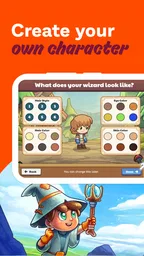
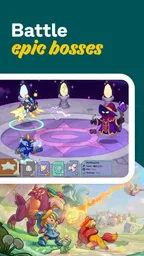
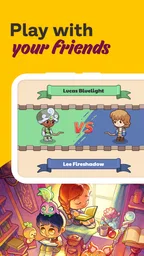
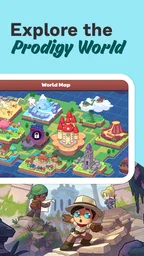
Prodigy Math is a free educational game from Prodigy Education Inc, designed for children and rated Everyone. Its premise is easy to grasp: players explore, take on quests and meet opponents in battles where maths questions are part of the action. The fantasy setting gives children a role to inhabit, rather than presenting practice as a bare sequence of problems.
In my view, that framing matters most for children who resist routine worksheets but enjoy games with goals and a sense of progress. An adventure gives each short practice session a context. A parent can suggest playing for a little while after homework, for example, without turning the activity into another formal lesson. The game is most useful when treated as a supplement to learning, not as proof that a child has mastered a topic.
The current version is 4.9.8, and the game has been available since June 8, 2018. That history gives it a more established presence than a brand-new educational experiment. It has a 4.7 average from around 69,000 ratings, with roughly 25,000 written reviews and more than 5 million installs. Those figures suggest broad interest, though popularity alone cannot tell a family whether its style suits a particular child.
The app is free to download, with in-app purchases listed from $4.95 to $199.95 per item. I would make that distinction clear to a child before handing over a device: access to a free game and the possibility of optional purchases are not the same thing. A parent should review purchase controls and explain the household rules in advance, especially if the child is likely to tap through prompts quickly.
Why the adventure can help with practice
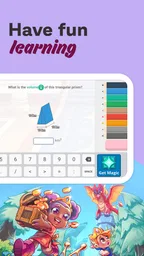
Prodigy’s strongest design choice is connecting maths questions to what the player is doing. Instead of asking a child to complete a worksheet simply because an adult says so, the game gives practice an immediate role in the adventure. That can help sustain attention for children who respond to fictional settings and playful goals. It will be less compelling for a learner who dislikes fantasy or prefers direct, quiet instruction.
A practical use is a short after-school session: a child can play while a caregiver nearby asks them to explain one question they found tricky. That small conversation makes the activity more useful than leaving the game to run unattended. If the child answers by guessing or rushing, pausing to work through the reasoning can turn a game moment into a learning opportunity without requiring a long lesson.
Parents should also distinguish engagement from understanding. A child may enjoy the quests and still need help with a concept, just as a learner can complete practice without being ready to apply the same skill in a different setting. I would use the game as one part of a routine that also includes discussion, schoolwork or another form of practice, rather than relying on it as the sole measure of progress.
How it compares with worksheets and other learning games
Compared with ordinary worksheets, Prodigy offers more narrative motivation and a more playful setting. That makes it a sensible option when the main obstacle is getting a child to begin practising. A worksheet may still be the better choice when an adult wants a quiet, easily supervised task focused on a specific set of problems, or when a teacher needs work that can be reviewed on paper.
Against simpler maths practice apps, Prodigy’s adventure framing is its distinctive trade-off. Children who like quests and game worlds may stay engaged longer than they would with a screen of isolated exercises. But a child who wants quick drills, a clean interface or direct explanations may prefer a more focused learning tool. The game’s story and play elements are a benefit only when they support the learner’s attention rather than distract from the maths.
It also differs from a traditional lesson: the app can provide a reason to practise, but an adult or teacher remains important when a child is confused. If your priority is a structured explanation of a topic, choose a resource that teaches the concept explicitly and use Prodigy for additional practice. If your priority is making practice more approachable, the game’s format is a better fit.
What the version history means for families
The release date and current version show that this is an established product that has continued to receive versions over time. They do not, by themselves, prove which features have changed or how any particular update affects a child’s learning. I would avoid treating a higher version number as evidence of a specific improvement; the useful question for a family is whether the current experience works well on its device and fits the child’s needs.
For someone already using the game, the current version is the relevant reference point when checking compatibility. The listed minimum operating-system requirement is 7.0, so it is worth checking a device’s software before planning to use the app. If a child has played an earlier release, I would let them explore the current build first and then ask whether anything feels different, rather than promising changes that may not be meaningful to them.
That distinction is important for existing users. A version number can indicate an evolving app, but families should judge an update by practical outcomes: whether the game opens reliably, whether the child can find the activities they expect, and whether the learning remains appropriate. If a change interrupts a familiar routine, an adult can help the child settle back in before deciding whether the app still belongs in their study schedule.
Where it may frustrate or fall short
The game’s playful structure will not suit every learner. Some children want direct questions and immediate explanations, while others may become more interested in the adventure than in thinking carefully about each answer. For those children, shorter sessions and an adult’s occasional check-in can help keep maths in focus. If that still feels like a struggle, a less game-centred practice method may be the better choice.
The purchase range is another reason to involve an adult from the start. Although the app is free, the listed in-app items span a substantial range in price. I would not assume a child understands which parts are optional or what a purchase costs. Set expectations before play, check the device’s purchase settings and let the child know to ask before buying anything.
Another limitation is that a game cannot replace personal teaching when a learner repeatedly misunderstands a skill. A child might need a different explanation, hands-on examples or help from a teacher. Prodigy can make practice more appealing, but it should not be expected to diagnose every difficulty or adapt in the same way a person can respond to a child’s questions.
Who I would recommend it to
I would suggest trying it for a primary-school-aged learner who enjoys fantasy adventures and needs a more appealing reason to practise maths. It is especially promising when a caregiver can set a simple routine: play for a short period, then talk through one challenging question. That approach uses the game as a prompt for thinking instead of treating screen time as learning by itself.
I would be more cautious if the child is easily distracted by game worlds, needs step-by-step teaching, or already prefers paper practice. In those cases, a teacher-led resource, workbook or straightforward drill app may deliver what the family wants with less surrounding activity. The Everyone rating makes the game broadly accessible, but suitability still depends on a child’s age, patience and learning style.
Families deciding whether to install it should also think about how they want to handle optional purchases and how much adult involvement is realistic. A child who can follow household device rules and enjoy independent play may use it comfortably. A younger child who taps through menus without reading will need closer supervision, particularly around purchase prompts and the difference between playing and studying.
What I would watch before making it a routine
Rather than judging the game by how long a child stays in it, I would watch for signs of useful engagement: does the child pause to work out an answer, explain a choice, or return to a topic they found difficult? Those are better signals than enthusiasm alone. If play becomes hurried or the child cannot describe what they practised, shorten the session and add a brief conversation afterward.
I would also check the experience after updates instead of assuming every change is automatically an improvement. The most important things to watch are practical: whether the child can use the current version comfortably, whether the maths remains the centre of the activity, and whether the purchase setup matches the family’s rules. Those checks are more meaningful than expectations based only on a release date or version label.
Overall, Prodigy Math is a worthwhile option for families looking to make maths practice feel less like a worksheet, especially when a child already enjoys fantasy games. Its adventure can make starting easier, but it works best alongside adult support and other learning methods. I would try it with clear purchase boundaries, keep sessions purposeful, and move on to a more direct resource if the game’s playful structure gets in the way of understanding.
What we like
- Adaptive questions adjust to a child's math skill level.
- A fantasy adventure gives practice a clear sense of progress.
- Parents can track learning progress through a dedicated dashboard.
- The core game is free to download and play.
- It covers math skills across several elementary grade levels.
What could be better
- Some features require a paid membership.
- The game includes in-app purchases.
- An internet connection is needed for many features.
- Gameplay may distract children from focused math practice.
- The game is primarily designed for elementary-age learners.







