





Piano Pet: Cute Rhythm Game review
 Analysis by Appsdrops
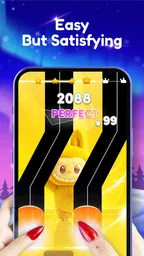
I like rhythm games that make it easy to start playing without turning a spare minute into a complicated commitment. Piano Pet: Cute Rhythm Game is built around that sort of quick interaction: you tap and jump in time with music, with K-pop, EDM, and hip-hop among the styles named for the game. Its appeal is straightforward, but that simplicity also makes timing and song choice matter more than a long list of modes would.
This is a free music game from RhythmMix Studios, rated for Everyone. It has an average rating of 4.6 from around 2,200 ratings, and has passed 500,000 installs. Those figures suggest that it has found an audience, but they do not tell me whether its rhythm feel will suit you; that depends on whether you enjoy reacting to a beat rather than simply listening to one.
What the current version is trying to do
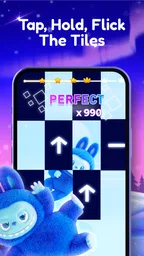
The game’s central idea is easy to grasp: follow the music with taps and jumps, and keep your actions aligned with the rhythm. That makes it approachable for someone who has never played a rhythm game, while still leaving room for the familiar pleasure of trying to stay in sync through a song. The cute framing gives the experience a lighter tone than a score-focused music challenge.
In my view, the important question is not whether the premise sounds original, but whether it fits the way you want to play. Piano Pet makes more sense as a compact, music-led game for short sessions than as a deep rhythm-training tool. If you want a quick diversion during a break, its simple action is an advantage. If you want detailed practice options, extensive music discovery, or a demanding competitive structure, you may find the concept too focused.
The range of musical styles helps broaden its potential audience. K-pop, electronic dance music, and hip-hop have different rhythmic character, so the mix can keep the experience from feeling tied to one listening taste. At the same time, players who strongly prefer a particular artist, genre, or carefully curated soundtrack should treat the listed styles as a general indication, not a promise that every favorite will be represented.
Why offline play is useful in real life
Offline play is one of the most practical details for everyday use. I would consider opening it on a commute, during a wait, or somewhere with unreliable reception, rather than saving it only for a stable home connection. That changes the game’s role: it can be a small ready-to-go activity rather than something that depends on being online at the moment you want a song-based distraction.
For a realistic routine, imagine having a few minutes before an appointment. A short rhythm session gives you a clear activity with an immediate focus: listen, react, and try to keep the beat. The trade-off is that a game built around precise timing asks for attention. It is not ideal when you need to watch your surroundings or keep switching between the screen and another task, even if it is convenient to have available offline.
One useful approach is to treat early sessions as a feel-out period rather than a test of skill. Listen for the pulse before concentrating on every movement, and notice whether the on-screen action feels natural with the music. This can help you distinguish between a track that does not click for you and a timing challenge that becomes more comfortable after a few attempts. I would also play in a setting where you can focus on the beat; trying to squeeze in a session while distracted can make any rhythm game feel less fair.
Where it sits beside other music games
Compared with music games centered on tapping lanes or matching a stream of notes, Piano Pet’s tap-and-jump framing sounds more physical and immediate. It asks you to respond to a beat through a simple action instead of presenting itself as a broad music library or a tool for learning an instrument. That distinction is helpful when choosing: the game is for playing along with music, not for piano lessons or music production.
It also differs from passive playlists and rhythm apps that emphasize listening or practice over play. Here, the song is a cue for interaction. That can make familiar genres more engaging, but it also means the music serves the game’s timing challenge. If your main goal is to hear albums uninterrupted, a music player is a better choice. If you want a structured way to improve musical technique, a dedicated learning app is more suitable.
There is a middle ground for people who enjoy casual challenges but do not want a complex interface. The premise offers a low barrier to entry, while repeated attempts can give a player a reason to sharpen their timing. I would not assume that this automatically makes it a deep or endlessly varied experience; the core loop remains centered on following music with taps and jumps. Whether that loop stays enjoyable will depend on how much you like replaying rhythm challenges.
Version 1.5.0 and what can be judged
The current release is version 1.5.0, and the game was released on March 16, 2026. Those details establish where the product stands now, but they do not by themselves show what changed between versions. I would avoid reading a version number as proof of a particular improvement, new mode, or expanded music selection. The useful current evidence is the game’s present premise and the fact that it is still at a relatively early version number.
For someone already playing, a numbered update is a good reason to check the app store’s current notes before installing or updating, especially if you want to know whether a specific issue or feature has changed. I would keep expectations measured: version 1.5.0 tells you which release you are looking at, not what the update contains. The same caution applies to anyone deciding whether the game is mature enough for their needs. The best test is still whether its current rhythm play feels satisfying.
For a new player, the release date and version are less important than the basic fit. You can decide based on whether the music styles appeal to you, whether an action-based rhythm game sounds fun, and whether offline availability is useful. For an existing player, the practical question is whether the current build remains enjoyable for your routine, not whether a version label suggests a dramatic change.
What may frustrate some players
The largest limitation is also part of the game’s focus: the description gives a clear core action, but that alone does not promise the breadth some rhythm fans expect. Players looking for a large catalog, social competition, detailed song controls, or progression systems may prefer another title that explicitly puts those elements at the center. I would not choose Piano Pet on the assumption that it offers those extras.
Timing games can also be unforgiving when the player’s attention is divided. If you are on a noisy bus, sharing a room, or playing while someone is talking to you, it may be harder to lock onto the beat. Offline access solves a connection problem, not a concentration problem. For a smoother session, I would choose a quiet moment and give the music your attention, particularly when you are still getting used to the game’s rhythm.
Another consideration is taste. The named genres cover several popular styles, but that does not guarantee that every track will suit every player. If you usually play rhythm games for a specific musical niche, the broad genre mix may not be enough to convince you. Likewise, a player who wants a realistic piano experience should look elsewhere: the title’s music-game framing should not be confused with instrument instruction simply because it includes the word “Piano.”
Who I would recommend it to
I would suggest giving it a try if you enjoy casual, beat-led games and want something that can work without an active connection. It is especially easy to imagine recommending it to a friend who likes switching between pop-oriented music styles and wants a simple way to interact with a song rather than just listen. Its Everyone age rating also makes the intended tone broadly accessible, though younger players still benefit from ordinary supervision around screen time.
I would steer a serious rhythm-game fan toward a more feature-rich alternative if they need fine-grained difficulty options, a specific soundtrack, or competitive depth. I would also skip it if you want uninterrupted music playback, a traditional piano simulator, or a game that can be played while your attention is elsewhere. The core idea is best when you actually want to focus on the beat.
Because it is free, trying it does not require an upfront purchase. I still recommend judging it by the first few sessions rather than by its popularity alone: see whether the tap-and-jump rhythm feels satisfying, and whether the available music styles keep you interested. The average rating is encouraging context, not a substitute for your own response to the controls and songs.
What I would watch as it develops
Going forward, I would pay attention to whether later releases make the core experience more dependable and varied without losing its quick-start feel. For existing users, clear update notes would help explain what has actually changed; for new players, the most useful signs would be improvements that make timing feel consistent and the music selection feel worth returning to. Those are sensible things to watch, not claims about features already present.
I would also look for signs that the game continues to work well as an offline option. That is a meaningful part of its appeal for travel and short breaks, so it matters more here than it might in a game that depends on live competition. Still, future updates should be evaluated on what they deliver, rather than on expectations attached to a version number or the game’s early audience.
My overall impression is that Piano Pet is a focused, approachable rhythm game with a useful offline angle and a music mix aimed at players who enjoy K-pop, EDM, or hip-hop. Its limits are clear: it is not a piano-learning tool, and players seeking a deep catalog or advanced competition should compare it with more specialized choices. If you want a free, quick music challenge and are happy to judge it by its central tap-and-jump loop, it is worth trying for a few focused sessions.
What we like
- Simple tap controls are easy for new players to learn.
- Short stages suit quick play sessions.
- Cute pet designs give the game a cheerful style.
- Rhythm challenges can help sharpen timing and focus.
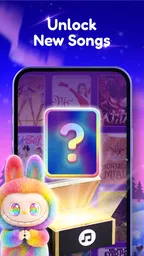
- Unlockable content offers goals beyond completing stages.
What could be better
- Later stages may feel demanding for casual players.
- Frequent retries can become frustrating when timing is strict.
- Gameplay may feel repetitive after many similar stages.
- Small screen controls can be tricky on some phones.
- Progress may take time if rewards require repeated play.







