





Piano Music Heart: Pop Tiles review
 Analysis by Appsdrops
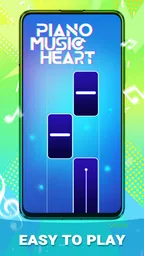
Piano Music Heart: Pop Tiles aims for a simple, inviting pleasure: follow the beat, tap the piano tiles, and settle into a pop-music mood. It is a music game rather than a traditional piano lesson, so the appeal is less about studying technique and more about keeping your attention on the rhythm. I like that clear focus. The idea is easy to understand at a glance, yet it leaves room for the small satisfaction of matching each tap to the music.
A bright first impression
The game’s name sets expectations before play even begins. “Piano” points to the instrument at its center, “Pop” suggests a contemporary musical feel, and “Tiles” gives a useful hint about the action. Together, those ideas make Piano Music Heart: Pop Tiles sound approachable, especially for anyone looking for a casual rhythm game rather than a complicated music simulator.
Its store description invites players to enjoy the rhythm of piano music and play pop songs of 2025. That framing gives the experience a current, upbeat identity. I’d approach it as a light musical break: something to pick up when I want a little interaction with a song, not a demanding practice session with formal goals. The promise is straightforward, and that simplicity is part of the charm.
There is also a pleasing sense of accessibility in the way the concept is presented. You do not need to know musical notation to understand the basic appeal of piano tiles. The visual idea of responding to a sequence of notes is immediately legible, making the game easy to imagine even before you start. For players who enjoy music-themed mobile games, that low barrier can be more inviting than a feature-heavy pitch.
The overall mood is designed to feel cheerful and focused. Piano music can suggest elegance or calm, while pop brings a more familiar, lively edge; the game’s identity sits between those moods. That combination suits short sessions, when I want something more engaging than simply listening but less involved than learning a full song. It feels like an invitation to pay attention for a while and let the rhythm guide the moment.
A musical world with a clear identity
What stands out in the game’s presentation is the close relationship between its theme and its central action. Piano tiles are not just decoration around an unrelated puzzle: they give the music a visible form and make the player’s response part of the performance. That connection helps the experience feel coherent. The visual language tells you what kind of game this is, while the music gives the taps their purpose.
The name also leans into a warm, friendly tone. “Heart” gives the title a softer touch than a purely competitive-sounding rhythm game might have, while “Pop Tiles” keeps the concept brisk and easy to parse. I find that balance useful: it suggests something approachable without pretending the experience is a deep musical instrument. The identity is best understood as playful music interaction, with piano at the center.
That clear identity matters because a music game depends on more than a song playing in the background. The screen, the notes, and the timing all need to feel like parts of the same activity. Here, the premise naturally brings those pieces together. The player is not merely watching a performance; the idea is to participate by responding as the music moves forward. Even a simple interaction can feel satisfying when its visual and musical cues point in the same direction.
For me, the strongest setting is the one the game creates through that relationship. There is no need for an elaborate fictional world when the piano and the rhythm already provide a place to focus. The tiles become the playable surface, and the song supplies the movement. That keeps the experience centered on the music instead of asking the player to split attention between an unrelated story and the notes.
Sound that gives each moment its pace
Music is the main attraction, so rhythm needs to do more than fill silence. It provides the pulse that makes each tap feel connected to the song. When a game is built around piano music and pop, the sound can give a familiar structure to the action: listen, anticipate, respond. That simple loop is what makes rhythm games appealing to me, because it turns listening into something active without demanding that I already be a musician.
The store summary specifically highlights pop songs of 2025, which gives the game a contemporary angle. That makes its musical identity feel aimed at players who want a modern pop atmosphere rather than a purely classical piano collection. The premise is broad enough to suit casual play, but the pop framing adds energy and familiarity. It is an easy combination to understand: piano notes provide the instrumental focus, while pop gives the experience a more current mood.
Pacing is especially important in this kind of game. A song gives play a natural beginning, middle, and finish, while the rhythm creates a reason to stay attentive from one moment to the next. I enjoy that structure because it makes a session feel self-contained. Rather than wandering through a large set of unrelated activities, the player can concentrate on the musical flow and the small decisions required to follow it.
That focus also shapes the atmosphere. A quiet piano passage can invite careful attention, while a more energetic pop feel can make the same tapping idea seem lively. The game’s musical premise leaves room for both sides of that mood, even though its overall identity remains light and accessible. For me, that is a good fit for a mobile rhythm game: it can offer a little concentration without turning every session into an intense test.
Simple mechanics, meaningful timing
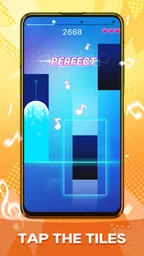
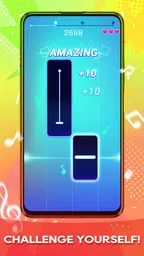
The central idea behind a piano-tile game is easy to grasp: the player interacts with tiles in time with the music. That makes timing the natural measure of engagement. The action may be straightforward, but staying in sync asks you to listen, watch, and react together. I like this kind of mechanic when the game keeps the relationship between the notes and the taps clear, because the player can focus on rhythm instead of wrestling with a complicated control scheme.
That simplicity is also what makes the game approachable for people who have never played a rhythm title before. There is no need to begin with formal music knowledge or an understanding of piano technique. The tiles translate the musical idea into a visible, hands-on activity. As a result, the experience can appeal to casual players who simply want to test their timing, as well as to music fans who enjoy responding to a song rather than only listening to it.
At the same time, a simple control idea still depends on attention. The more closely a player listens, the more the rhythm becomes part of the interaction instead of background noise. That is where I see the game’s mechanical fit: the action and the theme support one another. Tapping is not an arbitrary task placed on top of the music; it is the means by which the player joins in.
I would describe the appeal as immediate rather than elaborate. The game’s identity does not need a lengthy explanation, and that makes it easy to picture as a quick entertainment choice. If you enjoy music games with a clear central action, the piano-tile format offers a direct route into play. If you are searching for a full piano-learning course, the premise points in a different direction: this is about rhythm and musical interaction, not a promise of structured instruction.
Who may enjoy the experience
This is a good match for players who want a music game that feels approachable, rhythmic, and easy to understand. Fans of pop music may appreciate its contemporary framing, while casual players can enjoy the simple idea of responding to piano notes. It may also suit anyone who likes games that provide a focused activity without requiring a long setup or a complicated explanation.
The game is free to play, and its age rating is Everyone, details that help explain its broad, accessible positioning. It has attracted more than 10 million installs and holds an average rating of 4.8 from around 26,000 ratings. Those figures suggest a sizable audience, although personal enjoyment will still come down to whether you like piano-led rhythm games and the particular style of interaction they offer.
Its developer is CodiPlayer, and the game was released on December 26, 2022. The current version is 1.0.32, and it requires Android 6.0 or later. Those practical details are useful if you are checking compatibility before downloading. On the experience side, the pitch remains the more important point: this is a music-focused game built around pop and piano, with tiles serving as the player’s route into the rhythm.
I would recommend going in with the right expectations. Think of it as a casual music game that makes listening interactive, rather than as a substitute for piano lessons or a broad music-production tool. That distinction makes the premise easier to appreciate. The game is at its most appealing when you want to follow a beat, keep your eyes on the notes, and enjoy a small burst of musical concentration.
The atmosphere it leaves behind
Piano Music Heart: Pop Tiles works best as a compact, music-led experience with a friendly sense of purpose. Its piano-and-pop identity gives the action a recognizable mood, and the tile concept makes that mood playable. I appreciate how naturally those pieces fit together: the music supplies the pulse, the tiles provide the visual cue, and the player’s timing completes the loop.
The atmosphere is less about building a sprawling world and more about creating a focused space around a song. That can be a strength for a mobile game. You can understand the premise quickly, settle into the rhythm, and let the music define the pace of the session. The experience feels suited to moments when you want a little energy and concentration without committing to a complicated game.
There is a particular pleasure in games that make a familiar activity feel interactive. Listening to pop music is already enjoyable, but following the notes with timely taps adds a small challenge and gives the player a role in the performance. That does not need to be transformed into a deep simulation to be worthwhile. For the right audience, the straightforward combination of sound and timing is exactly the point.
In the end, I see Piano Music Heart: Pop Tiles as an accessible choice for anyone curious about piano-based rhythm games. Its identity is clear, its musical focus is easy to understand, and its mechanics suit the upbeat pop framing. If you want a friendly way to engage with music through timing and taps, it is worth considering. If you are looking for extensive musical instruction or a complex simulation, its casual game premise may not be what you have in mind.
What we like
- Quick rounds make it easy to play during short breaks.
- Touch controls are simple for newcomers to rhythm games.
- The heart theme gives the game a distinctive visual style.
- Increasing challenge can keep experienced players engaged.
- A lightweight format suits casual play on mobile devices.
What could be better
- Fast note sequences may feel demanding for beginners.
- Repeated tile tapping can become monotonous over time.
- Small screens can make precise taps more difficult.
- The game may require steady focus to keep a high score.
- Its appeal may be limited for players who dislike piano music.







