Numberblocks World review
 Analysis by Appsdrops
Numberblocks World takes a familiar early-learning subject and gives it a bright, character-led setting. The idea is right there in its store promise: “Master maths the fun way!” Rather than presenting maths as a stack of exercises, the game frames numbers as a playful world to explore. I like that approach: for young players, a welcoming mood can make a first encounter with counting and number ideas feel much less like homework.
There is a clear audience in mind. This is an educational game from Blue Zoo, rated for everyone, and the Numberblocks name signals a focus on learning through friendly animated characters. It is free to download, with optional in-app purchases priced from $4.99 to $14.99 per item. The balance between a free starting point and paid extras is worth keeping in mind for families, but the central appeal is straightforward: make maths feel approachable through play.
A playful first impression
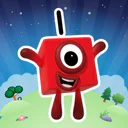
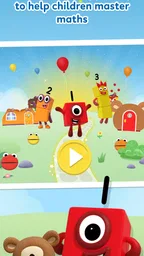
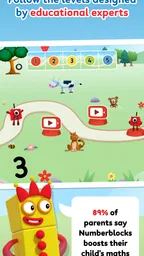
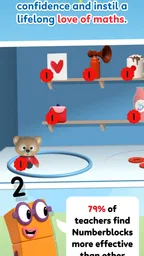
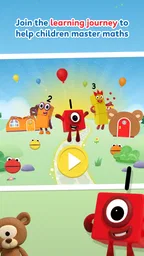
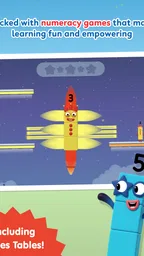
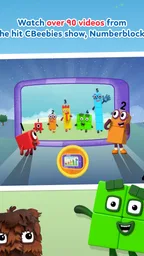
Numberblocks World presents learning in a colourful, character-focused style that feels suited to younger children. The visual identity does useful work before a player has even thought about a lesson: numbers are treated as personalities and parts of an imaginative setting, not just symbols printed on a worksheet. That gives the game an inviting first impression and helps explain why a child might be willing to spend time with early maths ideas.
For me, the strongest part of that concept is how naturally it links its subject to its presentation. A game about numbers could easily feel clinical, especially if it leaned too heavily on correct answers and repetition. Here, the recognizable Numberblocks world gives the learning a warmer frame. The tone feels cheerful without needing to pretend that maths is something other than maths; it simply makes the subject more welcoming.
That distinction matters for parents choosing an educational game. A colourful app is not automatically a useful learning experience, and a lesson does not become enjoyable just because it has a mascot. Numberblocks World has a more coherent idea than that: its characters and setting are closely tied to the numbers children are meant to engage with. The world itself helps establish the game’s identity, so the educational theme and the playful mood feel connected rather than pasted together.
The game has been available since July 8, 2020, and its current version is 2.4.28. It has reached over 5 million installs, while its average rating is 3.6 from around 7,400 ratings, with 328 written reviews. Those figures suggest that plenty of families have encountered it, while the rating leaves room for mixed experiences. I would treat that as a useful nudge to consider whether its character-led learning style suits the child who will actually be playing.
Numbers become part of the setting
The world language is the central creative choice. Instead of separating the maths from the game’s visual identity, Numberblocks World uses its number-focused characters to make the subject feel present throughout. That is a good fit for an educational game, because children can connect the thing they are learning with the world they are exploring. The setting is not just decoration; it reinforces the idea that numbers can be interesting, recognizable, and fun to spend time with.
That kind of consistency can make a big difference for younger players. A child who already knows the Numberblocks characters has an immediate point of familiarity, while a newcomer can still understand the broad invitation: enter a cheerful world built around numbers. The approach feels less intimidating than a bare sequence of maths prompts, and it gives parents an easy way to explain the game’s purpose without turning the introduction into a lesson.
Visually, the appeal comes from clarity and personality rather than from a realistic setting. The playful look is a sensible choice for the audience, and it supports the friendly tone the game is going for. I find that restraint helpful: an educational title does not need a complicated fictional universe to hold a child’s attention. It needs a clear visual language that makes the subject feel approachable and gives the player a reason to keep looking and exploring.
The broader value of that design is that it presents learning as something a child can take part in, rather than something imposed from outside the game. That does not mean every child will respond to the same style, of course. Some may be drawn in by the characters; others may prefer a more direct activity. But the game’s identity is easy to understand, and its cheerful setting gives its educational purpose an accessible face.
Sound and rhythm support the mood
Sound is an important part of how a children’s game communicates its personality. In a number-themed world, audio can help keep the experience lively and reinforce a sense of play, while a steady rhythm can make activities feel less like a test. The overall impression here is one of upbeat, child-friendly presentation: the game aims to make time spent with maths feel light and inviting rather than stern or overly formal.
That mood works best when the audio remains in service of the learning. Children need room to focus on what they are doing, so sound should support attention instead of competing with it. The game’s playful identity gives it a natural reason to feel lively, but the more important measure is whether that liveliness makes the educational theme easier to engage with. In concept, the sound and setting belong to the same welcoming style, which helps the game feel like one coherent experience.
Pacing matters just as much as audio. Young players benefit from an experience that feels approachable and does not make every moment feel high-pressure. A relaxed, playful rhythm can encourage them to return to an idea and spend time with it, while a rigid or overly demanding presentation could make learning feel like a chore. Numberblocks World’s character-led framing points toward a gentler mood, one that treats maths as a subject to explore rather than a score to chase.
That is also why parents may appreciate the game as a change of pace from more conventional learning tools. The characters give the activity a friendly atmosphere, and the familiar educational premise makes it easy to understand what the game is trying to do. For a child, the experience can feel like play; for an adult, its maths focus remains visible. That overlap is the sweet spot for an educational game, and the presentation is built around reaching it.
Playful presentation, learning at its core
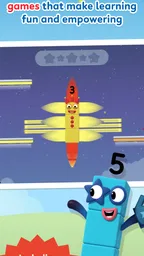
The mechanics matter because an appealing setting can only carry a game so far. Numberblocks World is an educational game first, so its main purpose is to make maths more engaging. The game’s central design fit comes from bringing number-based learning into a character-led world. That gives the player a more inviting context than a plain exercise screen and makes the educational focus feel like part of the game’s identity.
I see the title’s most convincing strength in that relationship between presentation and purpose. The characters give children something familiar to connect with, while the maths theme stays front and centre. This is a straightforward idea, but a useful one: when children recognize the subject and feel comfortable in the world around it, they may be more open to engaging with the learning. It is a sensible way to introduce educational play without making the app feel like a school worksheet in disguise.
At the same time, parents should think about what they want from a maths game. Numberblocks World is designed to make the subject enjoyable, so its appeal is strongest for families looking for a playful introduction rather than a solemn, classroom-style tool. If a child already enjoys the Numberblocks world, the familiar presentation is an obvious plus. If they are less interested in character-based activities, the same style may not be the thing that wins them over.
The purchase model is another practical part of the experience. The game is free to download, and in-app purchases range from $4.99 to $14.99 per item. That gives families the chance to begin without paying for the download, while making it sensible to check the app store details before a child uses it. I would make that decision alongside the child’s interest in the theme and the kind of educational play the family is looking for.
For device compatibility, the game requires Android 8.0 or later. That is useful to know before installing, especially if the app is intended for a child’s device rather than a parent’s newer phone or tablet. The age rating is Everyone, which matches the broad, family-friendly educational presentation. Together, those details make it easier for parents to judge whether the game is a practical fit before introducing it at home.
Who may enjoy Numberblocks World?
Numberblocks World is likely to appeal most to younger children who respond well to colourful characters and playful learning. It can also suit parents who want an educational game that presents maths in a friendlier setting than a conventional drill. The Numberblocks identity gives the game a recognizable hook, while its focus on numbers keeps the purpose clear for adults who want screen time to include a learning angle.
It is not necessary to approach it as a replacement for every other kind of learning. I would think of it as one possible way to make early maths feel more engaging, especially for a child who enjoys the characters or the idea of exploring a number-themed world. Like any educational app, its usefulness depends on the child, their interests, and how the family chooses to fit it into playtime.
The game’s audience is broad enough to be accessible, but its appeal is specific: it relies on a cheerful presentation and a direct link between numbers and characters. That gives it a coherent personality rather than trying to be everything to every player. Parents can use that clarity to decide whether the style is a good match. If the child likes the look and tone, the educational focus has a better chance of feeling inviting instead of compulsory.
A welcoming atmosphere with a clear purpose
The overall atmosphere is the game’s most memorable quality. Its character-led world, bright visual identity, and upbeat educational premise work together to make maths feel less intimidating. That coherence is valuable: the game does not need to hide its learning purpose behind unrelated action or a complicated story. Instead, it makes the numbers themselves the reason to explore, giving the playful mood a clear connection to the subject.
That approach is not a guarantee that every child will be captivated, and the average rating suggests experiences are not universally glowing. Still, the game has found a substantial audience, with over 5 million installs, and it has a concept that is easy for families to grasp. The key question is not whether the app is colourful; it is whether the Numberblocks style makes a child more willing to spend time with maths. For children who connect with that world, the answer may well be yes.
My overall impression is positive for families seeking a friendly, character-based maths game. Numberblocks World’s art direction and tone make its learning goal feel approachable, and its setting is closely tied to the subject rather than functioning as an unrelated backdrop. The free download gives families a way to start, while the optional purchases are a consideration to check before handing the device to a child.
As an educational game, it works best when viewed as playful support for learning, not as a promise that an app alone will teach everything a child needs to know. Its strongest contribution is atmosphere: it invites children into a number-focused world and presents maths with warmth. If that mix of characters, cheerful presentation, and early-learning intent sounds right for your family, Numberblocks World is an appealing option to explore.
What we like
- Interactive activities make number concepts easier for young children to explore.
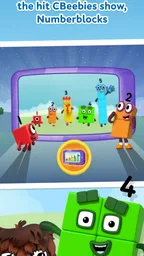
- Characters from the TV series help keep familiar fans engaged.
- Short activities suit brief play sessions.
- The colorful interface is designed with children in mind.
- A safe learning focus makes it suitable for family use.
What could be better
- Many activities require a paid subscription.
- The app may feel too basic for older children.
- A reliable internet connection may be needed for some content.
- Repeated activities can become less engaging over time.
- Parents may need to guide younger children through the app.







