

My Singing Monsters review
 Analysis by Appsdrops
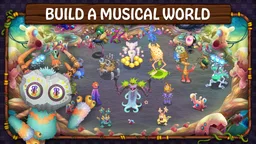
The first thing that won me over in My Singing Monsters is that its music feels like a place you build rather than a track you simply play. Each creature contributes its own sound, and bringing them together turns an island into a growing, often delightfully odd ensemble. I found it easy to dip in for a few minutes, listen to what had changed, and leave with a new tune stuck in my head.
A musical world that grows at your pace
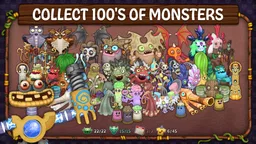
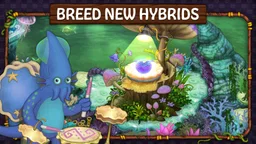
This is a free music game from Big Blue Bubble Inc, released on October 15, 2012. Its central loop is simple to understand: collect and breed monsters, look after them, and hear how their sounds fit into the island’s music. The pleasure comes less from mastering a conventional rhythm challenge and more from shaping a soundscape one character at a time.
That distinction matters if you are choosing between it and a typical music game. There is no need to keep pace with a song or chase a perfect score to enjoy the main appeal. Instead, I listen for how individual voices complement or crowd one another, then decide what kind of musical mood I want the island to have. It makes the game approachable for people who like music but do not necessarily want a demanding performance test.
The current version is 5.7.4, and the game is rated for Everyone. It has a 4.8 average from around 2.6 million ratings, with over 50 million installs. Those figures suggest broad appeal, but they do not guarantee that its slower, collection-focused rhythm will suit every player. I would treat it as a relaxed creative game, not as a replacement for a hands-on instrument or a tightly timed rhythm title.
How the music becomes the main reward
The clever part is that the creatures are not just decorations beside a soundtrack: their sounds are the soundtrack. As your collection changes, the overall performance changes too. That gives ordinary progression a listening purpose. I found myself paying attention to which voice was carrying a melody, which one added a pulse, and whether a new addition made the mix more interesting or simply busier.
A useful habit is to listen before making your next change. If the island already feels crowded, adding another sound may not improve it; if there is a gap in the arrangement, a new creature can make the whole piece feel more complete. Thinking like a casual arranger makes the game more rewarding than treating every addition as an automatic upgrade. The goal can be a pleasing ensemble, not just a larger collection.
This also makes the game unusually easy to share with someone who is not a regular gamer. I can show a friend the island, let them hear the different voices, and talk about which combinations they prefer without explaining complicated controls. The result is playful and personal: two people can react to the same mix differently, which is a nice fit for a game built around sound rather than a single correct performance.
What a short everyday session feels like
For me, the natural use case is a small break between other tasks. I can open the game, check on my musical world, listen to the current arrangement, and decide whether I want to work toward another change. It suits the sort of session where I want something gentler than a competitive match but more engaging than passively putting on background music. The island gives me a reason to return, while the songs make those visits feel distinct.
It also works well as a low-pressure activity to share with a child or a family member, especially because its age rating is Everyone and the musical creatures are easy to understand at a glance. I would still keep expectations realistic: the appeal is in gradually building and hearing the ensemble, not in offering a fully guided music lesson. If someone wants to learn notation, practice an instrument, or compose with detailed controls, this is not the right tool.
Free access, purchases, and what value means here
The game is free to start, which makes it straightforward to try the central idea before deciding whether it deserves a place in your routine. In-app purchases range from $0.99 to $99.99 per item. That is a wide span, so I would approach optional spending deliberately rather than assume every purchase is necessary to enjoy the music-making premise. The free entry point is the clearest value: you can find out whether collecting sound-making characters is fun for you before paying anything.
I would not judge the game’s value by the largest item price or treat spending as a shortcut to enjoyment. The lasting appeal depends on whether you like returning to an evolving island and listening to its composition. If you enjoy that process, free access can already provide a meaningful way to explore the game. If you dislike collection loops or prefer to reach a finished song quickly, paying more is unlikely to solve the underlying mismatch.
One practical tip is to decide what you want from a session before making a purchase: are you trying to change the sound, continue collecting, or simply enjoy the island you have already built? Keeping that question in mind can help separate curiosity about an optional item from pressure to spend. Since the game is free, there is little reason to make an immediate purchase before you have had time to learn whether its pace works for you.
Where the slow pace helps—and where it can frustrate
The relaxed structure is a strength when I want a game that does not demand constant precision. It is also the main tradeoff. Players who want a quick burst of intense rhythm gameplay may find that listening and gradual development are not exciting enough. The same goes for anyone who expects a music app to provide open-ended composition tools: the experience is built around the game’s creatures and their musical world, rather than giving the player unrestricted control over every element of a song.
There is another subtle tradeoff in the way the ensemble grows. More sounds can add character, but they can also make it harder to pick out the parts you liked most. I recommend pausing to listen to the whole island after changes instead of focusing only on the newest creature. That small check keeps the music itself at the center and helps avoid the feeling that progression is just a checklist.
It is also not the strongest choice if you want a game that feels complete after one sitting. Its appeal is cumulative: the world and its music develop over repeated visits. If you prefer a concise, self-contained rhythm campaign, a conventional music game may be a better fit. If you want an ambient, collectible experience with a sound that reflects your choices, this one has a more distinctive identity than a standard playlist-based game.
Who will get the most from it
I would recommend it to patient players who enjoy collecting characters, tinkering with combinations, and hearing a world take shape over time. It is especially appealing if you like music as atmosphere and are happy to explore by ear rather than chase a score. The game can also make a pleasant shared activity: one person can suggest a creature or a sound they like, and the other can see how it changes the island’s overall feel.
I would suggest skipping it if your priority is direct music-making, strict rhythm challenges, or immediate action. It is also a weaker match for someone who does not enjoy returning to a game to gradually build something. That is not a flaw so much as a clear difference in purpose: this is a playful musical collection game, not a professional composition tool and not a test of timing.
Because the game is free and has been available since October 15, 2012, it has had a long time to find an audience. Its 267,000 reviews add another sign of sustained interest, though I would still make my decision based on the core loop rather than popularity. If the idea of hearing an island’s character change as you add to its ensemble sounds charming, trying it costs nothing upfront.
My verdict: try it before spending
My Singing Monsters earns its recommendation by making collection feel musical. I like that the reward is something I can hear, not just a new entry in a collection. The game is easy to approach, suits short casual visits, and gives players room to develop an island’s sound at their own pace. Its free access makes that distinctive idea easy to test, while optional purchases mean I would keep an eye on spending rather than assume every extra is essential.
My honest verdict is to try it if you want a gentle, creative game whose progress becomes an increasingly personal soundtrack. Go in expecting gradual development, not a fast rhythm challenge or full-featured music studio. If that distinction matches what you are looking for, the strange little ensemble is the point—and the best reason to stay.
What we like
- Collecting new monsters gives island building a steady sense of progress.
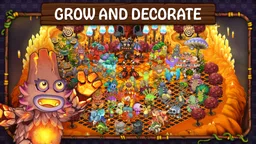
- Distinct monster designs make each island visually memorable.
- Breeding adds a fun layer of experimentation to the collection.
- The soundtrack changes as monsters join the island.
- Daily goals offer useful rewards for regular play.
What could be better
- Breeding timers can make progress feel slow.
- Some monsters are difficult to obtain without repeated attempts.
- Decorations and structures require careful space management.
- Limited-time events may pressure players to check in often.
- Optional purchases can speed up progress and add up over time.







