
Monster Math: Games For Kids review
 Analysis by Appsdrops
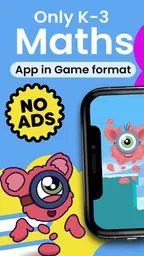
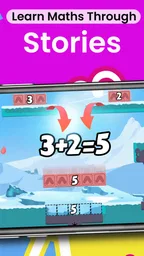
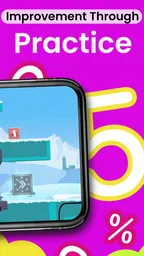
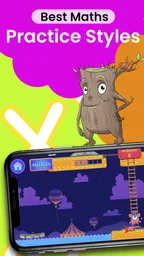
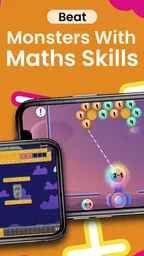
I like the idea behind Monster Math: Games For Kids: give children a reason to practise arithmetic that feels more inviting than another page of sums. It is an educational game aimed at the early primary years, and its focus on building fluency makes it most relevant when a child already recognises basic number ideas but needs more comfortable, regular practice. My overall take is that it can be a useful supplement to lessons, provided an adult treats it as a practice tool rather than a complete maths curriculum.
Who this maths game is best suited to
Monster Math is made by Makkajai: Math Games for 1st, 2nd, 3rd, 4th grade, a developer whose name reflects the school-age audience this game is meant to serve. The game is listed in the educational category and is suitable for everyone. Its store summary points to maths-facts fluency for grades one through three, so I would consider it primarily for children working on early arithmetic rather than older students looking for algebra, geometry, or a broad set of subjects.
That distinction matters. Fluency is not the same as learning every concept from scratch. A child who is still unsure what addition means may need a parent, teacher, or hands-on explanation alongside any game. For someone who understands the basics but hesitates when answering, short digital practice can make repetition feel less like a worksheet. I would use it to reinforce learning, not to diagnose why a child is struggling.
The game is free to download, with in-app purchases listed from $7.99 to $59.99 per item. That makes the initial decision easy, but families should regard the purchase range as a real part of the choice rather than assuming every part of the experience is free. I would let a child try the free version first and decide whether the style and practice fit before considering any spending. The listed range does not tell me which purchase is necessary for a particular family, so I would check the current in-app options carefully before buying.
Its average rating is 4.6 from around 1.8 thousand ratings, with roughly 110 written reviews, and it has passed 100 thousand installs. Those figures suggest that many families have tried it, but they cannot tell me whether it will suit a particular child’s learning style. I put more weight on whether the child can stay engaged without becoming frustrated and whether the practice matches what they are learning in class.
Practice that can fit around a normal day
The most practical use I see is a brief session at a predictable point in the day: perhaps while dinner is being prepared, during a quiet stretch after school, or on a rainy afternoon when a child wants screen time. A parent can frame it as a small maths-practice turn rather than a long assignment. That keeps the game in its proper role and makes it easier to notice whether the child is actually thinking through the questions or simply trying to move on quickly.
For a child who resists paper drills, a game format can lower the emotional barrier to starting. Still, I would not assume that every child finds game-based practice motivating. Some prefer a pencil and a visible page of work; others enjoy a playful setting but become impatient when an answer takes effort. The useful test is not whether the game looks entertaining, but whether the child returns to the maths with more confidence and can explain an answer away from the screen.
A small workflow can make the practice more meaningful. Before opening the game, I would ask the child what kind of calculation they are working on at school. Afterward, I would ask them to show one similar problem using objects, a drawing, or mental arithmetic. This quick before-and-after conversation helps a parent tell the difference between recognising a pattern in the game and understanding the number relationship. It also prevents screen practice from becoming an isolated activity.
Progress without turning practice into pressure
Regular arithmetic practice works best when it feels manageable. I would keep sessions short enough that a child can finish while still willing to continue, rather than using the game as a test of endurance. If a child starts guessing, gets tense, or asks to stop, that is a reasonable cue to pause. More questions are not automatically better if the child is no longer concentrating.
Parents should also be careful about interpreting a good run in a game as proof that a skill is secure. Children can become familiar with a particular format, yet still need time to apply the same idea in a different context. I would occasionally connect a game problem to ordinary life—for example, counting items while setting the table or working out how many pieces are needed for everyone. These low-pressure examples can reveal whether the underlying arithmetic is becoming more natural.
On the other hand, a child who is already confident with basic facts may find repeated early-level practice too easy. In that case, the game may be less useful than a workbook or a different maths activity that asks for explanation, multi-step reasoning, or unfamiliar problem-solving. The grade range gives a sensible starting point, but a child’s actual level is more important than their age or school year.
The current version is 373.0.0, and the minimum operating-system requirement is version 9. Those details are useful when checking whether a family device can run it, especially if the device is older or shared. I would check compatibility before planning to use it on a particular tablet or phone, rather than letting a child count on an app that the device cannot support.
Fairness, purchases, and what a parent can judge
For a child’s educational game, fairness is less about competition between players and more about whether the learning experience feels accessible without pressure to spend. The confirmed purchase information gives a clear reason to review any payment prompt together: the game is free to start, while optional in-app purchases are available within the stated range. I would keep purchase approval with an adult and explain that a free download does not mean every item or option inside is free.
I would not make assumptions about what those purchases unlock or whether they affect a child’s progress. The purchase range alone does not establish the contents, value, or necessity of any individual item. Before paying, I would read the in-app description and ask whether the child has used the free experience enough to know what they want. If the child is already practising happily without a purchase, there is no reason to spend just because an option appears.
Likewise, I would not treat the rating or install count as evidence that the game is equally suitable for every learner. A popular app can still be a poor fit for a child who dislikes timed-feeling tasks, needs more explicit teaching, or is ready for harder material. The most fair comparison is with the child’s needs: does this give them a comfortable route into practice, or does it add another source of pressure?
Where it sits among the usual alternatives
Compared with a worksheet, a game can make it easier to persuade a reluctant child to begin. A worksheet, however, gives parents a direct view of the work and can be easier to adapt to a lesson or a specific skill. Compared with flashcards, a digital game may feel more varied, while cards make it simple to practise together without a device. I would choose between them based on the child’s response and the kind of support an adult can offer at that moment.
Monster Math is also not a replacement for a teacher’s explanation. If a child repeatedly misses the same sort of problem, I would stop and find out whether they are confused about the concept, rushing, or struggling to read the prompt. A parent can then explain it another way or ask the teacher what to practise. Continuing to replay questions without understanding the difficulty risks turning useful practice into frustration.
That is why I see its strongest role as a companion to ordinary learning: a child can practise, while an adult checks understanding and connects the activity to schoolwork. Families seeking a full maths course, detailed teaching guidance, or a tool for older children should compare it with more comprehensive options. Its stated early-grade focus is a strength for the right learner, but also a clear boundary.
A sensible choice when the fit is right
I would recommend giving Monster Math: Games For Kids a try if a young learner understands basic arithmetic and needs a more appealing way to practise it. The free download lowers the barrier to testing that fit, while the in-app purchase range is a reason to keep an adult involved in any spending decision. The age rating is Everyone, but that does not remove the need to choose practice that matches a child’s ability and attention.
My trust verdict is cautiously positive: the app has a clear educational purpose and a defined early-grade audience, but I would judge it by a child’s actual experience, not by its popularity alone. Try a short session, check whether the child is thinking rather than guessing, and follow up with a real-world example. If it builds confidence without making maths feel like a race, it can earn a place in the routine. If the child needs deeper instruction, more advanced challenges, or screen-free practice, a teacher-led explanation, workbook, or flashcards may be the better choice.
What we like
- Adaptive challenges help match practice to a child's skill level.
- Short activities make it easier to fit practice into a busy day.
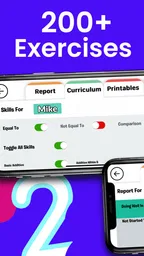
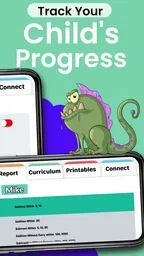
- Progress tracking helps parents see which math skills need work.
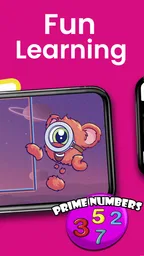
- The playful theme can make arithmetic practice feel less like homework.
- A range of math topics supports practice beyond basic addition.
What could be better
- Some activities may feel repetitive after extended play.
- Younger children may need help navigating menus and settings.
- Certain content or features may require a paid subscription.
- The app's focus on timed tasks may frustrate some learners.
- Screen time limits may be needed for children who play for long sessions.







