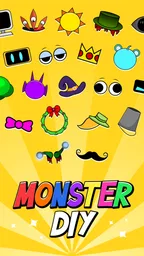
Monster DIY: Mix Beats review
 Analysis by Appsdrops
I went into Monster DIY: Mix Beats expecting a light music game, and its appeal is less about mastering songs than about making a small, silly performance of your own. You put together a funny monster, watch it move, and build a beat around the playful mood. That makes it an easy choice when I want a brief creative distraction rather than a demanding rhythm challenge.
From a quick character idea to a playful performance
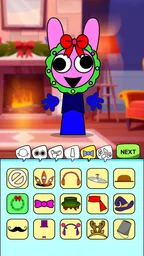
The game’s central pleasure is the connection between visual creation and sound: the monster is not just a decoration beside a music activity, but part of the show. I like that premise because it gives a simple beat-making session a clear personality. Instead of treating music as a score to chase, the game invites you to make something amusing and then enjoy the result.
That distinction matters when choosing among music games. Many familiar options center on tapping in time, improving accuracy, or working through a sequence of tracks. This one leans toward playful expression. If you have a few spare minutes and want to see a character come to life, it sounds more inviting than opening a practice-focused rhythm game or a serious music production tool.
HIGAME GLOBAL made this free music game for Android, and it has drawn an average rating of 4.5 from around 31,000 ratings, alongside over five million installs. Its Teen age rating is worth noting if you are choosing something for a younger player: check the rating in the app store rather than assuming that a cute monster style makes it suitable for every age.
A visual idea with a clear purpose
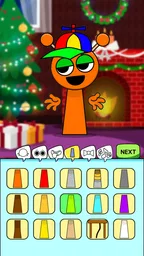
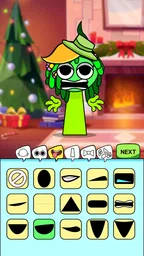
The DIY framing gives the experience a useful starting point. You are not simply asked to listen to a beat; you have a character to shape and a performance to watch. That makes the first session easy to understand, even if you are not especially interested in music games. I would recommend trying it with the question, “What kind of odd little performer can I make?” rather than expecting a deep tool for composing finished songs.
There is also a practical social angle. A silly character-and-beat result is the sort of thing I would show a friend sitting next to me, especially if we were trading ideas for a funny monster. That is a different kind of replay appeal from leaderboard competition: the fun comes from making a variation that gets a reaction. I would treat it as a casual shared activity, not assume it has particular sharing or multiplayer functions.
Art direction that supports the joke
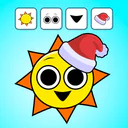
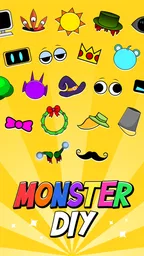
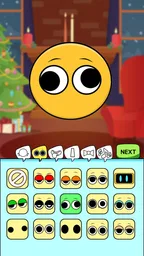
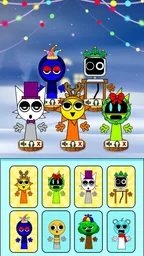
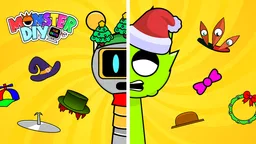
The game’s visual identity is built around a funny monster and its dance, so the character is naturally the focal point. That focus helps the concept read quickly: the creature is there to perform, and the beat gives the performance its energy. The playful tone suits short sessions because there is no need to settle into a complicated setting before getting to the point.
A small but useful way to approach the creative side is to think about the monster and music as one choice rather than two unrelated tasks. If a result feels less entertaining than you hoped, change the idea behind the character or the musical mood before making a string of tiny adjustments. In a game built around a funny performance, a strong overall contrast can be more satisfying than trying to make every element conventionally attractive.
The trade-off is that this kind of art direction may not be for everyone. Players who prefer realistic characters, a story-rich world, or a polished concert atmosphere may find the comic-monster premise too lightweight. I see that as a matter of taste rather than a flaw: the visual joke is the point, but it will not provide the dramatic setting some music games use to make each track feel like an event.
Beats as mood, not a test
The music side is framed around mixing beats and watching the monster dance. That suggests a more relaxed relationship with rhythm than games where missing a note is the main source of tension. For me, that is a good fit for a quick break: I can focus on the feeling of the performance instead of treating every input as a test of timing.
It is also why I would not pick this as a substitute for learning an instrument or arranging a track in a dedicated music app. The appeal here is playful, visual feedback, not a promise of professional control. If you want exact tempo work, a broad sound library, or a workflow for exporting a finished composition, a music-making tool designed for those jobs is a better match. Monster DIY is more about the immediate pleasure of a beat and a character moving together.
For a more satisfying session, I would make one deliberate change at a time and listen to how it affects the whole performance. When several sound choices are altered at once, it can be harder to tell which one made the result feel better. Even in a casual game, that simple habit turns random tapping into a little creative experiment without making the experience feel like homework.
Where the mechanics fit—and where they may feel light
The core loop is appealing because it joins making a monster with hearing and seeing the outcome. That is a neat mechanical fit: creation leads to a performance, and the performance gives the player a reason to care about the beat. I find that more coherent than a collection of disconnected activities would be, because the visual and musical ideas point in the same direction.
Still, players should set expectations accordingly. The store framing promises a playful DIY experience, not a sprawling rhythm campaign. If you want increasingly difficult charts, a large competitive challenge, or a long progression built around perfect timing, a conventional rhythm game will likely keep you engaged longer. This one is easier to recommend to someone who values experimentation and comic payoff over mastery.
One everyday use case is a short pause between tasks: open the game, try a different monster concept, and spend a few minutes seeing how the beat and dance work together. Another is letting a child or friend suggest a deliberately ridiculous character idea, then taking turns deciding what kind of performance would suit it. In both cases, the game works best when the goal is amusement, not producing something that must be saved, shared, or judged.
The version available is 0.1.5, and the minimum operating system is Android 7.1. That is useful to check before installing, particularly if you are using an older phone or tablet. The game is free, which makes it easy to try without paying upfront; as with any free app, I would still check the app store’s current details before downloading, especially if you are setting it up for someone else.
Who will enjoy the mood
I would point this toward casual players who like funny character creation, playful movement, and music that makes a visual idea feel lively. It is also a reasonable pick for someone who finds strict rhythm scoring stressful but still wants a music-themed game. The combination of a custom monster and a beat gives those players something to play with without making technical accuracy the obvious measure of success.
I would steer away anyone looking for a serious composition environment, a realistic music performance, or a rhythm game with a demanding skill curve. Likewise, if you mainly want a story to follow, the central appeal here is the character-and-music interaction rather than a narrative premise. Knowing that difference up front makes it easier to decide whether the game’s light, comic tone is a welcome break or simply too slight.
Because the game has a Teen rating, I would not use its cute art as a shortcut for deciding whether it suits a particular child. Check the age guidance in the store and make the call based on the player. That is a more reliable approach than guessing from the monster designs alone.
A light, coherent little music game
My overall impression is that Monster DIY: Mix Beats understands its own scale. It brings character design, dance, and beat-making into one playful idea, then keeps the mood easy to approach. The art direction gives the music a face, while the music gives the monster a reason to perform. That coherence is the game’s strongest quality.
The limitation is the same one that defines its appeal: it is a casual creative toy, not a substitute for a deep rhythm challenge or full-featured music studio. If you go in hoping to make a funny performer and enjoy a quick beat-driven result, I think it is worth a try. If your idea of a music game is precision, progression, or serious composition, I would choose a different kind of app.
For the right player, the best way to judge it is to spend a short session making one intentionally odd character and listening to the mood that develops around it. That captures the game better than chasing a score would. I find its simple premise charming, and I would recommend it to a friend who wants a cheerful, low-pressure music game with a visual sense of humor.
What we like
- Easy-to-learn controls make creating a beat approachable for beginners.
- Mixing monster sounds encourages playful experimentation.
- Short sessions suit casual play on a phone.
- The creature designs give the game a distinctive visual style.
- Unlockable content can add goals for repeat play.
What could be better
- The mixing options may feel limited for experienced music creators.
- Gameplay can become repetitive after the main combinations are explored.
- Progress may depend on watching ads or making purchases.
- The interface may take up much of the screen on smaller phones.
- Some features may require an internet connection.







