
Melon Sandbox review
 Analysis by Appsdrops
I enjoy simulation games that let me experiment rather than funnel me through a long sequence of objectives, and Melon Sandbox is built around that kind of open-ended play. It gives me a space to set up scenes, try things, and see what happens. That freedom is the main appeal, but it also means the game asks me to supply much of the imagination and structure myself. If you want a clear campaign or a steady stream of goals, this may feel sparse; if you like making your own little experiments, it can be an easy game to dip into.
Play built around experiments, not missions
This is a physics-focused simulation game from playducky.com. Rather than treating progress as a trail of missions to complete, it encourages players to create situations and watch how the pieces interact. I find that distinction useful when deciding whether to try it: the fun is less about “winning” and more about testing an idea, adjusting the setup, and then trying a stranger version.
A typical session can be as simple as opening the game with a small idea in mind and seeing where it leads. For example, if I have a few spare minutes, I might arrange a scene, make one change, and compare the result with my first attempt. The sandbox format makes that kind of short, self-directed play feel natural. It is also easy to imagine longer sessions for someone who enjoys refining a setup or inventing a scenario to share with friends.
The trade-off is that open-endedness can become aimlessness. When a game does not set the next objective for me, I have to decide what counts as an interesting result. That is satisfying for curious players, but less helpful if I am tired and just want the game to tell me what to do. I would choose a mission-led simulator instead when structure and clear completion goals matter more than tinkering.
What the Halloween collaboration adds
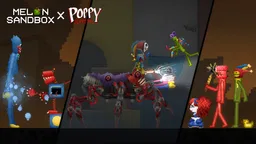
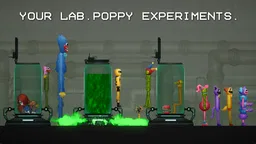
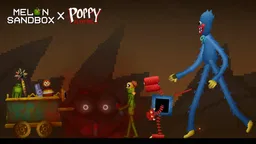
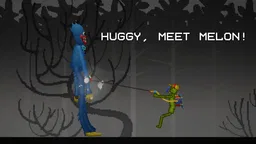
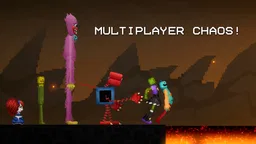
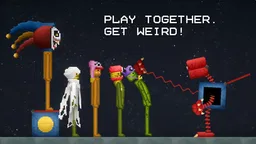
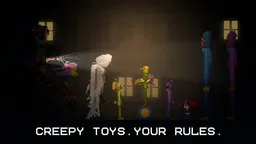
The game’s current store summary highlights a Halloween collaboration with Poppy Playtime and exclusive mods. That gives returning players a recognizable theme to explore and may be a reason to revisit the sandbox, especially if they already enjoy the collaboration’s characters or atmosphere. I would treat it as an extra creative prompt rather than assume it changes the basic appeal of the game: the central draw remains making and testing scenes.
Collaborative content can also shape how I approach a sandbox. Instead of starting with a blank idea, I can use a themed addition as a starting point and build a scene around it. That is a practical way to get past the “what should I do?” moment. At the same time, anyone uninterested in the collaboration can still judge the game by its broader creative format rather than expecting the themed material to turn it into a different genre.
Small workflows that make the freedom useful
One helpful habit in a sandbox is to change only one part of a setup at a time. If I alter several things at once, it becomes difficult to tell what caused an outcome; a single-change approach makes experiments more readable and gives me a reason to repeat them. This is not a formal challenge imposed by the game, but a simple way to turn casual play into a more satisfying test-and-adjust loop.
I also recommend keeping the first idea deliberately small. A compact scene is easier to understand than a sprawling one, and it gives me a clearer baseline before I add more complexity. Once I know what I am trying to learn or create, adding another element has a purpose. This approach suits Melon Sandbox particularly well because its freedom is a strength, but too many possibilities at once can make starting harder.
Another useful approach is to decide whether a session is for experimentation or storytelling. In the first case, I focus on changing one variable and observing the result. In the second, I build a scene with a simple premise and judge it by whether it communicates that idea. Separating those goals helps avoid expecting a physics test to feel like a polished narrative, or expecting a homemade scene to behave like a carefully scripted level.
Spending, progress, and fairness
The game is free to download, with in-app purchases listed from $0.49 to $259.99 per item. That is a wide span, so I would look carefully at the individual purchase details in the app store before spending. The listed range alone does not tell me what each item contains, whether purchases affect progression, or how much a player needs to buy to enjoy the game. I would not treat the presence of purchases as proof that spending is necessary, but I would make a deliberate choice rather than tap through a payment prompt casually.
For a parent or a younger player, the useful practical step is to review purchase settings on the device and discuss them before play. The game is rated Teen, so families should consider that rating alongside their own expectations. A free download can still present paid options, and setting a clear boundary in advance is easier than deciding in the middle of an enthusiastic session.
On progress, I would approach this as a game where personal goals matter more than a conventional ladder of unlocks. The appeal is to create, test, and revise, not to assume that a long sequence of rewards will keep pulling me forward. If you need visible milestones to feel that your time is adding up, this format may not satisfy you consistently. If your reward is seeing a setup work differently after a thoughtful change, the experimentation itself can provide direction.
Fairness is harder to judge from purchase information alone. I cannot responsibly claim that purchases give a competitive advantage or that they do not: the available purchase facts do not describe their effects, and the game’s sandbox emphasis is not enough to settle that question. For players concerned about fair competition, I would avoid assuming that this is a tournament-style experience and check the item descriptions and current in-game context before buying. If strict, transparent competitive balance is your priority, a game designed around clearly defined ranked play may be a better fit.
Who is likely to enjoy it—and who may not
I would recommend it to players who like making their own amusement, testing cause and effect, and revisiting a scene to improve it. It can suit a quick break because I can begin with a small experiment rather than commit to a long story. It can also work for creative players who enjoy inventing a premise and treating the sandbox as a stage for it.
I would be more cautious if you mainly want a guided campaign, a strong narrative, or a reliable competitive structure. The same freedom that makes the game flexible can leave those players without enough direction. It may also be a poor choice if you dislike managing purchase prompts or prefer games whose spending model is immediately clear in every practical detail; the broad purchase range is a reason to inspect options carefully, not to guess what they do.
Compared with more conventional simulation games, which often revolve around managing a system toward a stated target, Melon Sandbox puts more weight on player-made experiments. That makes it less of a substitute for a detailed management simulator and more of a creative playground. I would pick the usual structured alternative when I want planning, defined consequences, and a sense of completing a task. I would pick this one when I want to invent the task myself.
What the audience and version say in context
Its scale is notable: the game has a 4.7 average from around 1.4 million ratings and has passed 100 million installs. Those figures suggest that the free-form premise has found a broad audience, though popularity alone cannot tell me whether its style will suit a particular player. It is better read as evidence that many people have tried it than as a guarantee that every session will click.
The game was released on December 23, 2022, and the current version is 38.666. It supports devices running Android 7.1 or later. That gives Android users a concrete compatibility check before downloading, but I would still consider how the game feels on the specific device and whether its controls and presentation suit the player. The version number is also a reminder to check the app store for the current build rather than relying on old impressions or screenshots.
For everyday use, I can see it fitting into the gap between other activities: open it, try one small idea, and stop when the experiment is done. That works better than expecting every session to produce a finished creation. If I want to get more from it, I would keep a mental note of what I changed and what happened, then revisit the setup with one new question. That simple routine makes the game feel less random without imposing a rigid checklist.
My trust verdict
My overall view is positive, with a clear caveat: this is a game for people who enjoy supplying their own direction. The broad creative format and the themed collaboration give me reasons to experiment, while the free download lowers the barrier to trying it. The Teen rating, purchase range, and lack of purchase-effect detail in the available context make a little caution sensible, especially for younger players and anyone making a spending decision.
I would try Melon Sandbox if I wanted a flexible simulation playground and felt comfortable setting my own goals. I would not choose it expecting a guided adventure or proven competitive fairness, and I would check each purchase before paying. For me, the best way to approach it is modestly: start with a small scene, change one thing at a time, and see whether the freedom sparks ideas. If that process sounds fun, the game has a good chance of earning a place in your rotation; if you need a strong plan laid out for you, another kind of simulator will likely be a better match.
What we like
- Open-ended physics sandbox encourages creative experiments.
- A wide selection of objects and tools supports varied builds.
- Ragdoll interactions make scenarios entertaining to stage.
- Simple controls make it easy to start experimenting.
- Regular additions can provide fresh items and possibilities.
What could be better
- The lack of set goals may not suit every player.
- Physics experiments can become repetitive over time.
- Large creations may affect performance on some devices.
- Ads may interrupt play depending on the version.
- Some content or features may require in-app purchases.







