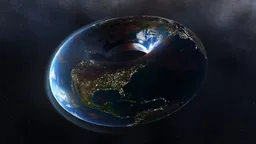
Solar Smash review
 Analysis by Appsdrops
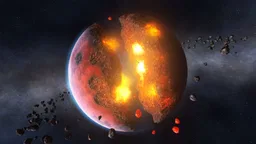
I find that Solar Smash makes its appeal clear from the start: it is a free simulation game built around a space sandbox and the spectacle of planetary destruction. Instead of asking me to follow a conventional story, it invites me to explore dramatic cosmic scenarios at my own pace. That simple premise gives the game an immediate hook, especially if you enjoy unusual simulations and big, visually striking ideas.
A space sandbox built for curiosity
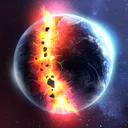
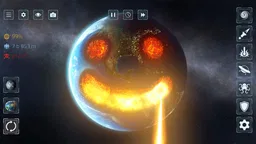
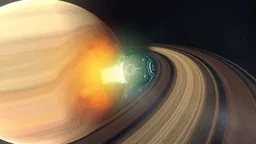
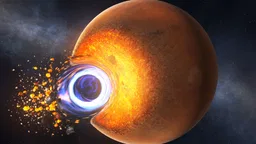
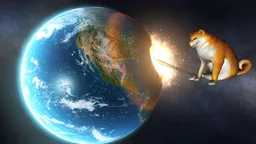
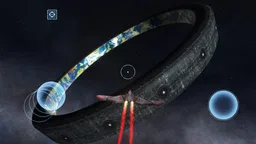
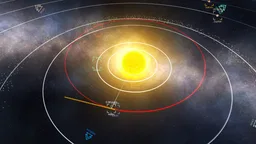
The core attraction is the freedom to play around with a planetary playground. The store describes the experience as a chance to unleash epic planet destruction and explore a space sandbox, and that captures the broad appeal well. I can approach it less like a structured campaign and more like an interactive simulation: experiment, see what happens, and enjoy the spectacle of the result.
That open-ended setup is a good fit for brief play sessions. There is no need to set aside time for a long narrative or learn a complicated premise before getting started. I can drop in, try an idea, and leave when I feel done. For a mobile game, that easy, self-directed rhythm is a meaningful part of the value.
The best reason to try it is the freedom to explore a dramatic space sandbox without paying an upfront price. The concept is unusual enough to stand apart from everyday mobile simulations, while the broad premise is easy to understand. If planetary destruction sounds entertaining rather than grim, the game offers a playful way to indulge that curiosity.
What the free entry point means
Solar Smash is free to download, so there is no purchase required just to begin. That makes trying it a low-commitment decision: you can see whether the central idea clicks with you before deciding whether it deserves more of your time. For players who are cautious about paying for mobile games before they know what they are getting, that matters.
Free access does not mean every possible purchase is included. The game offers in-app purchases priced from $1.99 to $14.99 per item. I would treat those as optional spending rather than assume they are necessary for everyone. The key distinction is straightforward: the initial download costs nothing, while particular items inside the game may cost extra.
That setup can offer good value to someone who simply wants to sample the premise and play without spending. It also gives interested players a choice to consider paid items later. I would make that decision based on how much enjoyment the game already provides, not on the assumption that paying is required to make the basic idea worthwhile.
How the experience earns its appeal
The game’s strongest quality is its focused fantasy. A space sandbox devoted to planetary destruction is easy to describe, easy to recognize, and naturally suited to experimentation. Rather than positioning itself as a deep life simulator or a long-form strategy game, it leans into one memorable theme. That clarity helps set expectations and makes it easier for the right audience to decide whether it sounds fun.
I also like that the concept encourages personal goals. One player may want to see what happens in a particular scenario; another may simply enjoy the scale and drama of the setting. A sandbox can be satisfying precisely because it does not insist that everyone play in one correct way. The appeal comes from exploring, testing possibilities, and choosing what counts as a good session for you.
There is a pleasing contrast between the grand scale of space and the casual accessibility of a mobile game. The premise sounds enormous, but the decision to try it is small: install a free game and see if the simulation holds your attention. That makes it easy to recommend as a curiosity-driven download, particularly for players who like unconventional themes.
Tradeoffs to keep in mind
The same focused premise that makes the game distinctive can also limit its appeal. If you are looking for a character-led adventure, a conventional campaign, or a realistic space-management simulation, planetary destruction may not be the sort of experience you want. This is a game for people drawn to its particular sandbox fantasy, not a universal substitute for every kind of simulation.
Open-ended play can also be a matter of taste. Some players love making their own objectives; others prefer clear missions and a steady sequence of goals. If you need the game to tell you exactly what to do next, a sandbox concept may feel less engaging than a more structured alternative. I would approach it with the expectation of self-directed experimentation rather than a tightly guided journey.
The in-app purchase range is another reason to be deliberate. A free download is appealing, but it is still worth keeping optional purchases separate from the value of the basic entry point. If you prefer games with one fixed purchase and no additional spending decisions, the purchase model may not be your ideal fit. If you are comfortable trying a free game first and deciding later, it is easier to evaluate on your own terms.
Who is most likely to enjoy it?
I would point the game toward players who enjoy simulation games, space settings, and sandbox experiences where curiosity is part of the fun. It may also suit someone looking for a casual mobile game that does not require a long commitment just to understand its main idea. The central theme is distinctive, so people who already find planetary destruction entertaining have a clear reason to give it a try.
It is less likely to satisfy players who want a detailed narrative, a conventional progression structure, or a realistic depiction of space activity. That is not a flaw so much as a matter of matching expectations. The game’s identity is built around a dramatic, playful premise, and it makes sense to judge it by how much enjoyment you get from that premise rather than by features associated with unrelated genres.
The audience size suggests that the idea has found a broad following. The game has more than 100 million installs, alongside an average rating of 4.6 from 1.7 million ratings and about 40,000 written reviews. Those figures point to substantial player interest, though personal taste still matters: popularity can help you discover a game, but it cannot guarantee that its sandbox style is right for you.
Practical details before downloading
Paradyme Games developed the title, which was released on January 19, 2020. The current version is 2.7.5, and it requires Android 7.0 or later. Its content rating is Everyone 10+, a detail worth checking when choosing games for younger players or shared family devices.
These basics make the decision fairly simple for Android users who meet the operating-system requirement: the initial download is free, and the main question is whether the space sandbox sounds appealing. If it does, trying the game costs no upfront money. If it does not, there is little reason to download it just because it is popular; its appeal depends on enjoying the specific simulation fantasy.
My value verdict
For me, the strongest value case is the combination of a distinctive concept and free entry. You can try a planetary-destruction sandbox without first paying for access, then decide whether its open-ended style is worth returning to. That is a sensible proposition for casual players and anyone curious about the theme, especially when they are comfortable keeping optional in-app purchases as a separate choice.
Whether to buy anything inside the game is a different question from whether to download it. I would start free, spend time deciding whether the simulation is genuinely entertaining, and consider paid items only if they seem worthwhile to you. The listed purchase range runs from $1.99 to $14.99 per item, so setting your own limit before spending is a practical way to keep the experience aligned with your budget.
My overall recommendation is to try it if you like space-themed simulations and enjoy making your own fun in a sandbox. Its free starting point makes it easy to test, and its premise is memorable enough to stand out among mobile games. If you prefer structured storytelling or are not interested in planetary destruction, you can skip it without missing a game designed around your tastes. For curious players, though, Solar Smash offers a clear, low-commitment invitation to explore a cosmic playground.
What we like
- Planet customization lets you adjust worlds before launching attacks.
- The sandbox format makes it easy to experiment without mission pressure.
- Distinct weapons create varied visual effects during destruction.
- Alien and secret content gives curious players extra discoveries.
- Simple controls make launching attacks straightforward on a touchscreen.
What could be better
- Frequent destruction can feel repetitive after a few sessions.
- The lack of structured goals may not suit players seeking progression.
- Detailed effects can cause performance issues on older devices.
- Ads may interrupt play depending on the version.
- Some weapons and features may require unlocking or in-app purchases.







