
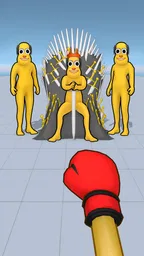
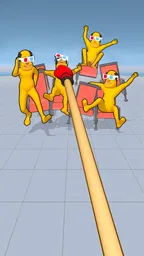
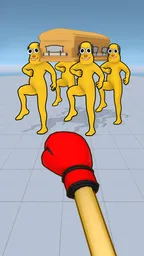
Annoying Uncle Punch Game® review
 Analysis by Appsdrops
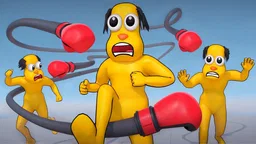
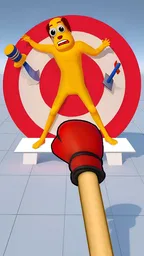
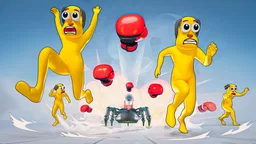
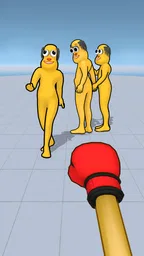
I can see the appeal of a game built around an exaggeratedly irritating relative: it turns a familiar annoyance into a deliberately silly punching premise, rather than asking me to take a serious story or competition seriously. Annoying Uncle Punch Game® is a free simulation game from Game District LLC, aimed at players who want a quick, comic distraction. Its central idea is easy to understand, but that also sets expectations: this is best approached as lightweight stress-release entertainment, not as a deep boxing game or a detailed life simulator.
A simple premise with a very specific mood
The joke is the main attraction. Instead of building a realistic sports career, the game makes the “annoying uncle” the target of an intentionally over-the-top gag. That gives it a different tone from conventional fighting games, where players usually expect opponents, tournaments, and a sense of skill progression. Here, the premise itself supplies the comedy, and the appeal depends on whether you enjoy that kind of cartoonish frustration turned into play.
I would pick it up when I have a few spare minutes and want something undemanding. It does not sound like a game that needs a long warm-up or a careful understanding of a complex world. That makes it a plausible fit for a short break, a commute with a reliable connection if the game requires one, or a quick change of pace between more involved games. I would not choose it when I want a substantial narrative, realistic combat, or a challenge that rewards careful long-term practice.
The simulation label can be misleading if you read it as a promise of building, management, or everyday-life systems. The pitch is much narrower: a comic scenario centered on punching an irritating uncle. I find that distinction useful because it helps set the right bar. The game is not competing with detailed management simulators; it is closer to a novelty-driven casual diversion whose success rests on whether its central bit stays amusing.
What the current release tells me
The game is currently at version 0.6.9, and it first appeared on August 14, 2024. Those facts place it in a relatively early version sequence rather than suggesting a mature, long-established series. I would treat the current build as the version to judge today, while resisting the temptation to assume that a version number alone reveals what has changed or what is planned. It offers a useful snapshot of the product’s present state, not a promise about future content.
Its reception is substantial: the average sits at 4.5 from around 146,000 ratings, alongside roughly 1,300 written reviews and more than 100 million installs. Those figures suggest that the concept has reached a broad audience and that many players have found enough to rate it. They do not tell me whether every player enjoyed the same aspects, or whether the game will suit someone who dislikes slapstick humor. I would use the popularity as reassurance that it is not an obscure experiment, not as a substitute for deciding whether its tone is for me.
The game is free to install, with optional purchases priced from about fifty cents to twelve dollars per item. That makes trying it a low-commitment decision, but I would still pay attention to purchase prompts if I were handing the phone to a child or letting someone else play. The existence of in-app purchases does not mean they are necessary to enjoy the core idea, and I would avoid spending until I had decided that I actually wanted to keep playing.
It is rated Teen, so I would not assume that its cartoon premise makes it appropriate for every young child. The rating is a practical signal for parents to check the game themselves and consider the intended player’s age and comfort with the humor. It runs on Android 6.0 or newer, which gives it a broad minimum operating-system range, though a device’s general performance and available storage can still affect the experience.
How the version context affects existing players
For someone who already has the game, the most useful point is that the current build is 0.6.9. If the game is already installed, checking that the app is up to date is a sensible first step before deciding that a problem or a difference in behavior is part of the design. I cannot infer a particular feature change from the version number, so I would not tell returning players to expect a specific new mode or overhaul. The grounded conclusion is simply that the live product has reached this version and remains the one to evaluate.
For a new player, the same version detail is a reason to keep expectations measured. A version sequence below 1.0 can signal that the game is still developing, but it does not prove that updates are frequent, that a major change is imminent, or that the experience is unstable. I would install it for the premise it has now, rather than treating future improvements as part of the purchase decision. Since the game is free, that is a particularly reasonable way to approach it: test whether the central gag works for you before investing money or expecting a long-term roadmap.
There is also a practical distinction between “popular” and “deep.” A large audience can confirm that the concept is easy to approach, but it does not guarantee enough variety to hold every player for weeks. If you enjoy a game because you want increasingly demanding mechanics, a growing collection of systems, or a carefully tuned skill ceiling, I would look for a different simulation or fighting title. If you mostly want an uncomplicated bit of comic release, its narrow focus may be exactly the point.
Getting a better first session
My advice is to treat the first session as a test of tone, not a commitment. Give the game a short, uninterrupted try and ask two questions: does the uncle premise make you smile, and does the basic interaction feel satisfying enough to repeat? Those are more useful questions here than searching immediately for hidden depth. A game built around one strong comic hook either earns its repetition through timing and presentation or begins to feel thin; noticing that early can save you from forcing yourself to like it.
A small but useful habit is to separate the free experience from the purchase decision. Play first, then consider whether an optional item would genuinely improve your enjoyment rather than buying because a prompt appears during a moment of novelty. The available purchase range stretches from under a dollar to around twelve dollars, so the upper end is not trivial for a game you have barely tested. I would set a personal spending limit before opening the game if impulse purchases are a concern.
Another good use case is sharing the premise verbally rather than handing over the phone immediately. “It is a silly game about punching an annoying uncle” is a clear enough description for a friend to decide whether the humor is their thing. That avoids the awkward mismatch of expecting a realistic boxing simulator and receiving a comedy scenario instead. It also matters for younger players: the Teen rating deserves a moment of consideration before the game becomes a casual hand-me-down on a family device.
For an everyday example, imagine waiting for a takeaway order or sitting through a short gap before an appointment. If you want something that can be sampled briefly without remembering a complicated plot, this is the sort of premise that could fit. If you have only a minute and dislike being interrupted by purchase prompts, you may prefer a simpler offline puzzle or a game whose appeal is not tied to repeated comic violence. The right choice depends on your mood, not just on the fact that the app is free.
Where it stands beside familiar alternatives
Compared with a standard boxing game, this title appears to prioritize a comic target and an easy-to-grasp scenario over the sport’s usual appeal: learning defensive timing, managing rounds, or following a fighter’s progression. If your fun comes from mastering a demanding combat system, I would choose a more conventional fighting game. If you want something deliberately ridiculous and less serious, the uncle premise gives this one a clearer identity than a generic punch-up.
Compared with other casual simulation games, it is also unusually focused. Many simulation titles invite players to build routines, manage resources, or shape a persistent world. This one’s stated hook is much more immediate, which can be an advantage when you do not want homework before playing. The trade-off is that a narrow premise has to keep earning attention through the moment-to-moment experience. If the central joke stops landing for you, the broader simulation category offers alternatives with more systems to explore.
I would also distinguish it from stress-relief apps that promise calm through breathing exercises, puzzles, or quiet routines. Punching an irritating character is a playful outlet, not a replacement for those tools and not a guarantee that someone will feel calmer afterward. I would recommend it as comic entertainment for a willing player, not as a mental-health solution. That boundary matters because the title’s stress-release framing is best read as a lighthearted mood, rather than a clinical claim.
What may still feel limited
The biggest limitation is built into the hook: the game’s appeal relies heavily on one relationship and one kind of joke. Players who find the uncle gag funny may enjoy the directness; players who do not may have little else to hold onto. I would be cautious about recommending it to someone who wants a nuanced character story or humor that changes direction over time. A concise premise is a strength for quick play, but it also leaves less room for the experience to surprise people who are already familiar with the joke.
The label “simulation” may also set up the wrong expectation. A player browsing that category for strategic planning or a believable sandbox could open this game and feel that the description points toward a much narrower kind of entertainment. I would treat the category as a broad shelf, not a promise of realistic simulation mechanics. This distinction is especially helpful for anyone choosing between it and a game they expect to play for long sessions.
There is a further trade-off in its subject matter. Cartoon punching can be harmlessly absurd for many players, but it will not be everyone’s preferred form of comedy. If physical slapstick feels unpleasant rather than funny, there is little reason to push through just because the app has a high average rating. A light puzzle, creative toy, or non-violent casual game would be a better fit for that taste.
Who I would recommend it to
I would suggest giving it a try if you like exaggerated, slightly mischievous humor and want a low-cost way to test a very direct game idea. Its free entry point and broad Android compatibility make that experiment straightforward for many phone owners. The audience size and 4.5 average indicate that plenty of players have engaged with it, but the best predictor of your enjoyment is still whether you like the premise and whether the first session feels fun rather than repetitive.
I would skip it if you are looking for a serious sports simulation, an elaborate management game, a story-led adventure, or a reliable way to unwind through quiet concentration. I would also avoid choosing it for a child without first considering the Teen rating and the nature of the slapstick. If you do install it, my practical recommendation is simple: try the free experience, keep purchases optional, and decide based on the humor and interaction you encounter now—not on imagined future additions.
Overall, Annoying Uncle Punch Game® makes the most sense as a compact, comic diversion with a sharply defined premise. Game District LLC has put a broadly accessible free game in front of a large audience, and the current version, 0.6.9, is the version new players can assess today. I like the clarity of its central joke, while recognizing that the same narrowness will be a deal-breaker for some. If you want a silly break and the premise makes you grin, it is worth trying; if you want depth, realism, or a calmer kind of stress relief, I would choose something else.
What we like
- Quick rounds make it easy to play during short breaks.
- Simple controls are approachable for casual players.
- Cartoon-style visuals give the game a playful look.
- Punch animations add a clear sense of impact.
- The humorous premise offers lighthearted entertainment.
What could be better
- Repeated actions may make gameplay feel monotonous.
- The humor may not appeal to every player.
- Frequent visual effects could feel tiring over time.
- The game offers limited depth for players seeking strategy.
- Some players may find the premise overly aggressive.