


Jurassic World™: The Game review
 Analysis by Appsdrops
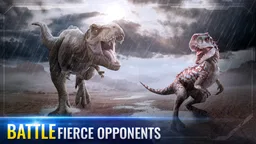
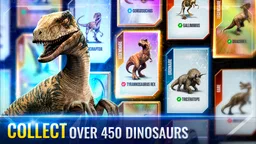
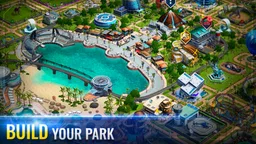
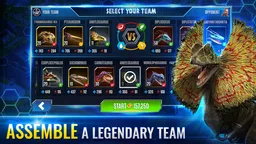
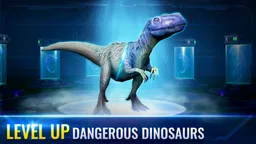
I can see why Jurassic World™: The Game grabs attention quickly: it turns the familiar dinosaur-park fantasy into a hands-on routine of collecting creatures, building up a park, and sending dinosaurs into battles. After spending time with it, I found the appeal is not just the chance to gather impressive animals. The more lasting question is whether managing the park and returning to its battles still feels rewarding once the first rush of discovery wears off.
This is a free simulation game from Ludia Games Inc., released on May 11, 2015. It has a 4.3 average from around 1.9 million ratings, and has been installed over 100 million times. Those figures suggest a long-running audience, but they do not tell you whether its particular mix of park building and combat suits your habits. My view: it works best for players who enjoy gradual collection and can accept that progress is a continuing project rather than a quick, neatly finished campaign.
Why the first few sessions feel lively
The opening appeal comes from having several goals that feed into one another. I am not only looking at dinosaurs as collectibles; I am also thinking about what to add to the park and which creatures to take into a fight. That combination gives the early sessions a pleasing sense of direction. A new addition feels like more than a picture in a collection, because it can become part of the park’s identity and the battle roster.
The game’s Jurassic setting does much of the emotional work. Dinosaurs are the reason to keep checking what comes next, and the park gives that interest a place to live. If you already enjoy creature-collection games, the appeal is easy to understand; if you usually prefer simulation games, the battles add a more active goal than simply arranging a landscape. I liked that there is a clear fantasy behind the routine instead of a purely abstract management screen.
That mix also makes it easy to dip in without needing a long, uninterrupted session every time. I can imagine opening the game during a quiet break, deciding what to work toward, then leaving it until I have time to play again. It is a better fit for that stop-and-return rhythm than for someone seeking a tightly paced story that demands attention from start to finish.
The game is rated Teen, so I would not treat its dinosaur theme as an automatic sign that it is designed for very young children. The tone is accessible, but the battles and ongoing collection goals are part of the experience, and parents should consider the age guidance as well as the game’s in-app purchases. I would also set expectations early if a child is playing: it is free to start, while optional purchases can range from $0.99 to $499.99 per item.
Collection and combat work best as a pair
The strongest design choice, in my experience, is that building a collection and using it in combat give each other a reason to matter. A park-only game can become a decorating exercise, while a battle-only game can make collecting feel like a ladder of statistics. Here, the two activities support the same dinosaur fantasy. I found that more satisfying than treating each new creature as a trophy to admire once and forget.
A practical tip is to think about a new dinosaur in two ways before making it the focus of your next goal: does it make the park more appealing to you, and does it help create a roster you actually want to use? That small change in mindset makes collection feel less like ticking off names. It also helps avoid chasing every possible addition just because it is available. In a game built around accumulating creatures, choosing a personal target is a useful way to keep the experience from turning into an endless checklist.
Still, the two halves will not suit every player equally. If you love careful park layouts and want construction to be the main activity, the battle side may feel like a distraction. If you want a competitive fighting game where skillful moment-to-moment play is the entire point, the simulation and collection framework may feel like a detour. The game’s identity sits between those preferences, rather than fully replacing either kind of game.
What keeps the game useful after the novelty
Once the initial excitement of seeing new dinosaurs settles, the question becomes whether the routine gives you a reason to return. For me, the answer depends on how much pleasure I get from incremental progress. This is not a game I would recommend for a player who wants to finish a short story and feel done. Its value is in having another park improvement or collection aim to work toward, with battles providing a way to make the roster feel active.
One useful way to keep that routine fresh is to set a small, specific objective for a session instead of trying to advance every part of the game at once. I might focus on a creature I want to add, or spend a visit thinking about how my park should develop. Then I can treat a battle as a separate reason to play rather than a compulsory stop between every other action. That approach keeps the game from feeling like a pile of chores and makes short visits feel more intentional.
Another trade-off is that a broad collection can be exciting precisely because it is never truly complete, but that can also weaken the satisfaction of reaching a milestone. Players who enjoy a long horizon may see that as the point. Players who need a clear ending or a sense of closure may find the constant prospect of more to collect tiring. I would go in expecting an ongoing hobby, not a compact game with a final chapter that neatly wraps up the park.
The game’s age is part of its character. It has been around since May 11, 2015, and its current version is 1.94.18. That long-running presence is reassuring if you want an established title with a substantial audience, but it also means I would judge it by its particular style rather than assume it will feel like the newest simulation release. Its broad appeal is built around dinosaurs, collecting, park management, and combat—not around being a fresh take on every part of the genre.
The habit is manageable, but it still asks for attention
For everyday use, I would treat it as a game to check when I genuinely want to make progress, not as something that must occupy every spare moment. That distinction matters with a collection-focused simulation: frequent goals can make it easy to feel that leaving the game alone means falling behind. I found it healthier to decide what I wanted from a session and stop when that was enough. The game is more enjoyable as a choice than as an obligation.
There is also a real difference between “free” and “without spending pressure.” You can download and play without paying upfront, but the in-app purchase range is broad. I would be cautious about treating purchases as a shortcut to keep pace, especially if the fun comes from earning and building a collection over time. For parents, agreeing on spending limits before play is more useful than relying on a child to make that decision in the moment.
Another practical consideration is device compatibility. The minimum operating system is 7.0, which makes the stated baseline accessible to older systems, though a compatible operating system alone cannot promise a particular experience on every device. If you are considering installing it, I would check that your phone or tablet has enough room and runs smoothly with games you already use, then see how it feels before deciding whether it deserves a regular place on your home screen.
Compared with a standard park-building simulation, this game gives more weight to collecting creatures and putting them into battles. Compared with a focused monster battler, it asks you to care about the park and the longer-term collection as well. That makes it a sensible middle ground for someone who wants both, but a less direct choice if either side is the only thing they enjoy. For a pure building experience, I would choose a simulation centered on layout and management; for tactical fights first, I would look for a battle game that does not make park upkeep part of the appeal.
Where fatigue can set in
The main source of fatigue is not one dramatic flaw; it is the possibility that the loop starts to feel familiar. Collect, improve the park, battle, and look toward the next target can be satisfying for a long time if you enjoy incremental goals. But if you need each session to introduce a fundamentally different activity, the recurring structure may wear thin. I would not expect the dinosaur theme alone to keep the game exciting once the basic rhythm is no longer novel.
There is a second kind of fatigue that comes from wanting every part of the game to progress at once. Trying to chase a large collection, keep the park moving, and stay engaged with battles can turn a pleasant hobby into a list of unfinished tasks. My advice is to let one interest lead at a time. If collecting is the draw this week, follow that; if you are more interested in battles, use the roster you already enjoy. You do not need to treat every available objective as equally urgent.
Finally, players who dislike optional purchases appearing in free-to-play games should make a deliberate choice before installing. The title costs nothing to download, but that does not mean the purchase options are invisible or irrelevant to everyone. If you would rather avoid games with a continuing monetization layer altogether, a paid simulation with a fixed purchase may be a better match. That is not a criticism unique to this game so much as an important fit question for anyone deciding whether it belongs in their routine.
Who should make room for it?
I would recommend it to dinosaur fans who like collecting, players who enjoy simulation games with a battle component, and anyone happy to make modest progress over many visits. It is especially appealing if you find satisfaction in deciding which creatures matter to your personal park rather than racing toward a single finish line. The combination is distinctive enough to give the game its own character, and the large installed audience reflects how widely that fantasy has resonated.
I would skip it if you want a short, self-contained experience, if repeated collection goals quickly frustrate you, or if you are looking for a pure city builder or a battle game with no management layer. It is also a poor fit if optional purchases are a deal-breaker in any free game. In those cases, choosing a more focused alternative is likely to leave you happier than trying to force yourself to enjoy both sides of this one.
My lasting verdict is that Jurassic World™: The Game earns a place on a device when the dinosaur collection and the park routine are genuinely enjoyable in their own right. I would not keep it installed simply because it is familiar or because there is always another goal waiting. Its lasting value comes from returning on your terms, choosing one thing to work toward, and enjoying the creatures and battles along the way. As a free simulation from Ludia Games Inc., it is an easy title to try, but its long-term appeal depends on whether an open-ended routine feels relaxing to you—or like one more thing demanding maintenance.
What we like
- Build a wide roster of dinosaurs from the Jurassic World films.
- Battle mechanics are easy to learn and quick to play.
- Dinosaur habitats add variety to the park layout.
- Regular events offer fresh goals and rewards.
- Park upgrades provide a steady sense of progression.
What could be better
- Progress can slow considerably without premium currency.
- Some dinosaurs require lengthy waits to hatch or upgrade.
- Online events may favor players with stronger rosters.
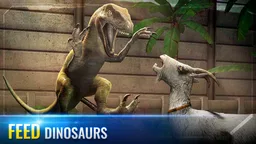
- Managing food and coins can become repetitive.
- The game requires an internet connection for many features.







