
My Supermarket Simulator 3D® review
 Analysis by Appsdrops
I enjoy simulation games most when they give me a clear task to settle into without demanding a long session, and My Supermarket Simulator 3D® has that kind of everyday appeal. It puts me in charge of a small retail operation: I keep products available, serve customers at checkout, and bring in staff as the shop grows. The idea is easy to understand, but the appeal comes from juggling those responsibilities and watching a basic store become busier.
What running this supermarket feels like
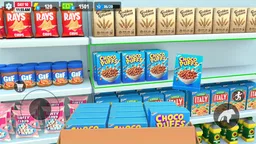
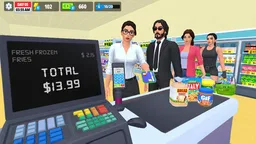
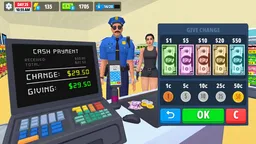
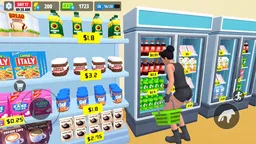
This is a simulation game from Game District LLC, built around the practical rhythm of keeping a shop moving. Rather than focusing on a story or elaborate character interactions, it asks me to think about what the store needs next. Ordering goods, dealing with customers, and hiring help are connected tasks: neglect one, and the others can feel harder to manage.
The most useful way to approach a session is to treat it as a short operating cycle. I can start by checking what needs attention, make a decision about products or staffing, then spend time serving customers. That order matters more than it might seem. If I focus only on the immediate checkout queue, I may leave the broader store operation behind; if I handle everything else first, customers can become the pressing issue. The game’s central pleasure is that small balancing act.
It is a good fit for someone who likes visible, incremental progress. The premise gives me a reason to make practical choices, while the individual jobs are straightforward enough to pick up without learning a complicated management system. I would recommend it to a friend who enjoys the satisfying routine of keeping a virtual business in order, especially if they prefer hands-on tasks to spreadsheets or deep economic planning.
How quickly it gets going
The basic loop is easy to grasp, so I would not approach it expecting a lengthy tutorial or a steep learning curve. The opening idea is familiar: keep useful goods in the shop, help the people who arrive, and expand your ability to handle the work. That simplicity is a strength when I have a few spare minutes and want to get into a game quickly.
There is also a trade-off. Players who want intricate supply chains, detailed financial forecasting, or a story that unfolds over many hours may find this retail setup too direct. Its appeal is less about mastering a complex economy and more about the steady satisfaction of identifying the next bottleneck. When the shop feels busy, I have to decide whether product availability, checkout, or staffing deserves my attention first.
For a practical play tip, I would avoid treating every problem as equally urgent. A queue is visible and tempting to deal with immediately, but keeping the shelves supplied and arranging help can make the whole routine feel more manageable over time. That is a general strategy for the game’s linked responsibilities, not a promise that one choice always produces the same result. The right priority depends on what is currently slowing the store down.
When the store gets busy
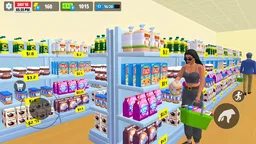
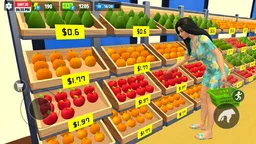
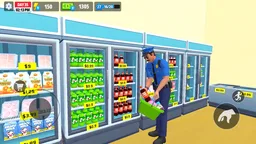
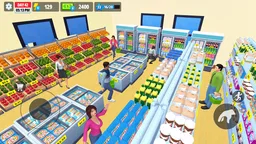
The busiest moments are where the game’s simple premise has room to feel engaging. Customers need service while the shop still needs attention, and switching between those concerns is the main test of focus. I like that the work is concrete: rather than being told to improve an abstract score, I am responding to things that make sense in a supermarket, such as a checkout need or products that must be replenished.
At the same time, repetitive jobs can become noticeable if I want every session to introduce a new challenge. This is not the best choice for someone who dislikes repeating a core routine or who expects every management game to offer a deep strategic layer. The loop works best when I enjoy making small operational decisions and seeing how each one helps the store function.
A useful everyday scenario is playing during a short break: I can focus on one clear priority, such as serving customers or getting the shop’s stock in better shape, rather than needing to commit to an extended campaign. If I have more time, I can think about how staffing changes the workload and whether my attention is better spent on checkout or preparation. This makes the game flexible in feel, even though its main activities remain focused on running the supermarket.
Staffing, stock, and the small decisions
Hiring staff matters because it changes how I think about my own time. When I am handling every task mentally, it is easy to get pulled toward whatever is most visible. Bringing in help is a way to address that pressure, but it does not remove the need to decide what the shop should prioritize. I see staffing as a tool for keeping the operation under control, not as a substitute for paying attention.
Likewise, ordering products is more than a background chore in the concept. It gives me a reason to look ahead instead of only reacting to whoever is waiting at the counter. A sensible workflow is to check the state of the shop before settling into customer service, then reassess when the immediate rush has eased. That small habit helps the different parts of the game feel connected rather than like unrelated errands.
One trade-off is that players who want to optimize every decision may wish for more detailed management options than this approachable setup emphasizes. I would choose a more complex tycoon-style game if my main goal were to compare extensive inventories, plan intricate logistics, or analyze business performance in depth. Here, I get a more accessible, hands-on interpretation of supermarket management.
Stability and what to expect from a session
I would keep performance expectations sensible: the game’s central experience is built around ordinary shop tasks rather than a sprawling simulation with many systems to track. That makes its premise easy to understand, but it is not enough on its own to guarantee how smoothly it will run on every device. In practical terms, I would judge it by how comfortably my phone handles a typical session, rather than assuming the same experience across all hardware.
When a session feels busy, the sensible response is to simplify what I am trying to do at once. I can concentrate on the immediate shop need, then return to ordering or staffing decisions afterward. This is useful as a play approach whether the pressure comes from the game’s activity or from wanting a calmer session. It also keeps the routine from feeling like I have to solve every part of the store in one uninterrupted burst.
Reliability matters most for a game built around short, repeatable visits. I would want it to be easy to return to the store and pick up the routine, rather than needing to reconstruct a complicated plan every time. The premise supports that kind of casual return: stock, customers, and staff are understandable priorities. Still, anyone who is especially sensitive to interruptions or inconsistent performance should try it on their own device before investing heavily in longer sessions.
Choosing it for your phone
The listed minimum operating system is Android 7.1, which gives Android users a useful baseline to check before downloading. That does not mean every compatible device will feel identical. Available memory, background activity, and the age of a phone can all affect how comfortable a game feels in use, so I would close unnecessary apps if I notice sluggishness and keep expectations realistic on older hardware.
The game is free to download and is rated Everyone, making it easy to try for a broad audience. It does include optional in-app purchases, with items ranging from $0.99 to $59.99. I would treat those as a reason to keep an eye on spending rather than assuming a purchase is necessary to enjoy the basic idea. If I am considering paying for anything, I would first spend enough time with the core routine to decide whether I actually want more from it.
Its current version is 2.1.0, and the game was released on July 19, 2024. It has an average rating of 4.1 from around 630,000 ratings, with roughly 5,700 written reviews and over 100 million installs. Those figures suggest that the supermarket concept has found a large audience, but they cannot tell me whether its pace or style will suit a particular player. I would use them as context, then make the decision based on whether managing stock, checkout, and staff sounds enjoyable.
Who will enjoy it—and who may not
I would point casual management fans toward this game if they like a clear loop, recognizable responsibilities, and the satisfaction of gradually getting a shop under control. It is particularly suitable for players who want something more purposeful than tapping through a passive idle game but less demanding than a detailed business simulator. The everyday supermarket setting makes the goals intuitive: I can usually tell what kind of work the store needs without decoding a complicated system.
I would steer away from it if I wanted a realistic retail-management tool, elaborate economic modeling, or a constant stream of radically different objectives. Someone who dislikes repetition may also tire of the recurring cycle of arranging products, serving customers, and managing help. For that player, a deeper tycoon simulation or a story-driven game may offer more variety and strategic depth.
Compared with the usual alternatives in the simulation category, this one sits on the approachable side. It focuses on the physical rhythm of running a store rather than making me manage a broad city, a complex company, or a large roster of characters. That narrower scope is a benefit when I want an understandable task to return to, but a limitation if I am looking for a world that constantly opens up new systems.
My verdict on the supermarket shift
My Supermarket Simulator 3D® is an easy game to recommend to the right person: someone who finds a little order in a busy shop satisfying and does not mind revisiting familiar tasks. I like the way its core responsibilities naturally compete for attention, and I appreciate that I can think in practical terms instead of learning an elaborate rulebook. Its strongest use case is a relaxed, focused session where I choose one or two priorities and enjoy making the store run more smoothly.
Its limitations are just as clear. The routine may feel repetitive, the management layer is not aimed at players who want deep economic strategy, and performance can vary with the device. I would not promise a flawless experience on every phone or expect the game to become a complex tycoon simulator. But if a friendly supermarket-management loop sounds appealing, the free entry point makes it straightforward to try, while the optional purchases are worth approaching thoughtfully.
Overall, I would install it for a casual simulation session, especially on a phone that meets the operating-system requirement and handles games comfortably. I would skip it in favor of a more intricate alternative if I wanted extensive planning or constant novelty. For players who enjoy balancing products, customers, and staff in a simple retail setting, it offers a clear reason to come back for another shift.
What we like
- Easy controls make stocking shelves simple to learn.
- Store upgrades provide a clear sense of progression.
- Product variety adds useful choices for store planning.
- Short tasks suit casual play sessions.
- The 3D presentation gives the shop a lively feel.
What could be better
- Frequent restocking can become repetitive.
- Progress may feel slow without upgrades.
- Managing several store tasks can feel hectic.
- Limited space can make arranging products frustrating.
- Some players may find the simulation loop too simple.







