

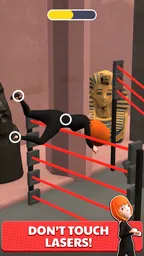

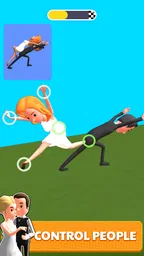
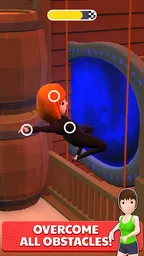

Move People review
 Analysis by Appsdrops
I find Move People easiest to understand as a small, hands-on simulation game: its appeal is in nudging people through situations rather than managing a sprawling world or mastering a complicated control scheme. That makes it approachable when I want a quick distraction, but it also means the fun depends on whether I enjoy experimenting with simple actions and watching how a scene responds. It is not the sort of game I would choose for deep strategy or a long, story-led session.
Made by Supersonic Studios LTD, this free game sits in the simulation category and is aimed at Teen players. Its average rating is 4.2 from around 317,000 ratings, and it has passed 100 million installs. Those figures suggest broad appeal, though they do not guarantee that its playful, interaction-focused style will suit everyone. The current version is 9.0, and it runs on Android 7.1 or later.
Getting unstuck when a scene does not go as expected
The central pleasure is trying an action and seeing what happens, so a moment that seems unresponsive can interrupt the game more than it would in a menu-heavy simulator. I would first check whether I am making a deliberate gesture on the intended person or object, rather than tapping quickly across several parts of the scene. In games built around direct interaction, a little precision often helps more than repeating the same hurried input.
It is also worth pausing to read the scene before acting. A person’s position, nearby objects, and the order in which I try things can affect whether an attempt feels clear or confusing. I treat each situation as a small experiment: make one change, observe the result, then decide what to try next. That approach is more useful than making several gestures at once, because I can tell which action actually moved things forward.
When a result looks wrong, I avoid assuming that the game has frozen. A scene may simply not have responded in the way I expected, or I may have missed the interaction area. I try a careful gesture again, give the animation time to finish, and then reassess what is visible. This is a good habit for a game whose basic promise is movement and reaction, especially when a quick tap does not make the outcome obvious.
Small setup checks before blaming the game
Before starting, I make sure the phone is responding normally to touch and that the game has finished loading. If the screen is busy with other apps, closing a few in the background can be a sensible general check, particularly on an older device. These steps are not special tricks for this title; they are simple ways to rule out a sluggish phone before deciding that an in-game action is at fault.
On Android, the minimum system requirement is version 7.1. If the device is below that, the game is not a suitable install choice. If it meets the requirement but play feels inconsistent, I would check that the game is updated through the app store and restart it before trying again. The current release is version 9.0, so keeping the installed copy current is a straightforward first step when troubleshooting.
I also find it helpful to begin with a clean, uncomplicated session. Open the game when the device is not already struggling, let the opening screen settle, and test a single interaction before moving quickly through a scene. This gives me a baseline: if ordinary touch input works elsewhere but not in the game, restarting the app is a reasonable next move; if touch is unreliable across the phone, the issue is probably broader than this one game.
A calmer workflow for recovering a run
My most useful habit is to change only one thing at a time. If I try several gestures together, I lose track of what caused the outcome and can end up repeating a mistake. Instead, I inspect the scene, choose one likely interaction, wait for its response, and then adjust. The method is simple, but it turns trial and error into a more readable process and makes the game feel less arbitrary.
If an attempt seems to stall, I give the current action a moment to complete before tapping again. Rapid repeated input can make it harder to judge whether the first gesture registered. If nothing changes, I try a slightly more deliberate touch in the area that appears relevant. Should the whole session feel unresponsive, I close and reopen the game rather than repeatedly pressing around the screen.
There is a useful distinction between an unsuccessful attempt and a technical problem. An unsuccessful attempt still leaves the game responsive: I can interact again, and the scene continues to react. A technical problem is more likely when touch stops working throughout the screen or the app fails to recover after waiting. Treating those situations differently keeps me from restarting unnecessarily whenever a solution simply takes another try.
Where this simulation fits in a normal day
I see this as a good in-between activity: something to open while waiting for a ride, taking a short break, or filling a few spare minutes between tasks. Its appeal is not that it asks me to plan a lengthy session, but that I can focus on a small situation and test an action. If you enjoy seeing how people and scenes respond to what you do, that compact, experimental rhythm can be satisfying.
For example, if I have a few minutes before an appointment, I can play with one situation rather than commit to a long campaign. I can pay attention to what I tried, make another attempt if it did not work, and stop when I need to leave. That makes it easier to fit into a fragmented day than a simulation that expects ongoing management or careful tracking of a large number of systems.
It is less convincing as a game to keep open for a long stretch if I need layered goals, extensive customisation, or a strong narrative to pull me through. The simple interaction is both its strength and its boundary. I would choose a deeper life or management simulator if I wanted to build a world over time; I would choose a puzzle game if I wanted carefully defined logic problems. This one is better for lighter, immediate experimentation.
When the phone, connection, or expectations are the real issue
Not every frustrating moment points to a fault in the game. If other apps are also slow or the touchscreen misses input elsewhere, I would look at the phone first. If the game itself becomes unresponsive, restarting it and checking for an update are sensible general steps. A fresh launch can clear a temporary hiccup, while an update can ensure I am not continuing with an older installed build.
Expectations matter, too. The short description is “Move People,” and that captures the kind of direct, playful interaction to expect without promising the depth of a full-scale simulation. I would not install it expecting a realistic social model, a detailed city to run, or a long-form narrative. If what I want is a low-pressure game where I can try actions and see a scene change, it makes more sense.
It is free to download, with in-app purchases ranging from $2.99 to $4.99 per item. I would decide whether I enjoy the core experience before spending anything. The game is rated Teen, so parents choosing it for a younger player should check that age guidance and make their own decision. Those practical points are worth considering before a download, especially if you prefer games with no optional purchases or want an experience aimed at a younger audience.
Who will enjoy it, and who should pass
I would recommend it to players who like touch-driven experiments, quick feedback, and a playful simulation that does not require a major time commitment. It may also work for someone looking for a casual break from games that demand precise timing or long-term planning. The key question is whether trying a simple action and observing the result feels entertaining to you; if it does, the straightforward format is easy to approach.
I would skip it if I wanted substantial strategic depth, long-term progression, or a clearly structured story. It is also not the best fit if repeated experimentation feels like guesswork rather than fun. In that case, a puzzle game with explicit rules may feel fairer, while a conventional management simulator may offer more control over goals and systems. Choosing the right alternative depends on whether you want defined challenges or open-ended interaction.
The game’s 4.2 average and large install base indicate that many players have tried it, but personal fit matters more than popularity. I would treat those numbers as context, not a promise of enjoyment. A quick test is to notice how you react when a first attempt does not work: if you are curious enough to try a different gesture, the game’s loop may click; if you find that irritating, its central style may not be for you.
My practical verdict
Move People is most rewarding when I approach it patiently, one interaction at a time. It offers an easy-to-grasp simulation experience for short sessions, and its free entry makes it simple to see whether that style suits me. The trade-off is that the appeal rests heavily on experimenting with scenes, so players seeking a deep campaign or a more structured challenge should look elsewhere.
For a smoother first session, I would check that the device meets the Android requirement, make sure touch input is behaving normally, let the game load, and try one deliberate action before tapping rapidly. If something goes wrong, wait for the response, adjust one gesture, and restart only if the app itself seems stuck. That small routine makes it easier to separate a missed interaction from a phone problem—and to judge the game on what it actually does well: giving me a light, hands-on diversion when I have a little time to spare.
What we like
- Simple drag controls make the puzzles easy to pick up.
- Each level offers a distinct scene to solve.
- Short stages suit quick play sessions.
- The humorous situations add personality to the puzzles.
- No advanced gaming skills are needed to get started.
What could be better
- Some puzzles rely on trial and error.
- Ads may interrupt play between levels.
- Later stages can feel repetitive.
- The physics can behave unpredictably at times.
- The game offers limited depth for long sessions.







