

Meet the Numberblocks review
 Analysis by Appsdrops
I’d consider Meet the Numberblocks for a young child who is already curious about counting, especially if familiar Numberblocks characters make learning feel more inviting. It is a free educational game from Blue Zoo, rated for Everyone, and its appeal is easy to grasp: number learning is wrapped in a playful world rather than presented like a worksheet. My main reservation is that a character-led game is not automatically a complete learning tool. I’d treat it as a light, focused activity to share or dip into, not as a substitute for varied counting practice.
What free access means in practice
The game is free to download, so there is no purchase price to weigh against its usefulness. That makes trying it a low-commitment option for families who want to see whether Numberblocks hold a child’s attention. I would still make the decision based on how the child responds, rather than assuming that free access means it will suit every learner or replace other resources.
Meet the Numberblocks has an average rating of 3.7 from around ten thousand ratings, alongside hundreds of written reviews. It has passed five million installs, suggesting that many families have given it a try. Those figures are useful context, but they cannot tell me whether a particular child will enjoy its style or benefit from its activities.
The game was released in 2019, and its current version is 01.07.00. It requires Android 8.0 or later. Those details matter when deciding whether an older device can run it, but they do not change the core question: will a child want to spend time counting with these characters?
How the Numberblocks setting supports learning
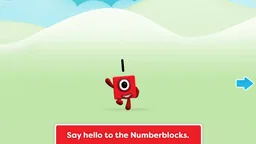
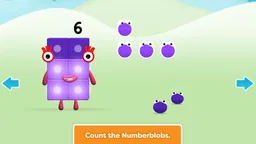
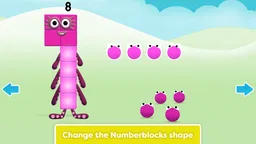
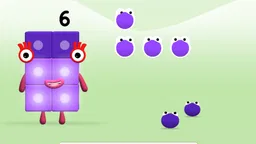
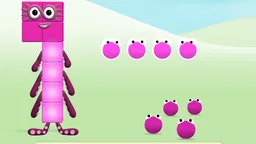
The premise connects the Numberblocks with counting Numberblobs, giving number practice a recognizable cast and a playful framing. For a child who knows the characters, that connection can make a basic learning activity feel more like time spent with familiar companions. In my view, that is the clearest reason to choose this game over a plain counting exercise: the theme may provide an easier invitation to begin.
That distinction is worth keeping in mind. A child can enjoy a character without necessarily concentrating on the number idea behind the activity. I’d use the game as a prompt for conversation: ask what number they noticed, invite them to count along, or connect a number on screen to objects nearby. A short exchange like that can turn passive screen time into a more deliberate learning moment without requiring a complicated routine.
For example, if a child wants a quick activity while a meal is being prepared, I’d offer the game for a brief turn and then carry the counting into the room: count pieces of fruit, toys, or steps together. The app supplies the familiar theme; everyday objects supply a different context. That small change matters because recognizing a number in a game and using counting in ordinary life are related but not identical skills.
I would also pay attention to whether the child is following the numbers or simply tapping through because the characters are appealing. If they can explain what they counted, or continue counting away from the screen, that is a more useful sign of engagement than time spent playing alone. If the character theme keeps them interested but the number concepts seem to pass by unnoticed, I’d join in rather than assume the game is teaching by itself.
A useful companion, not a whole lesson plan
As an educational game, it makes most sense as one small part of a broader mix. A book, blocks, household objects, and conversation give children different ways to see and handle quantities. Compared with a conventional counting app that emphasizes direct exercises, the Numberblocks approach has a stronger character identity. That may be an advantage for a child drawn to the show’s world, while a child who wants clear, repeatable drills may prefer a more explicitly structured learning tool.
I would not judge it by whether it can cover every early-number skill. Its stated focus is a playful encounter with Numberblocks and Numberblobs, so the reasonable expectation is an accessible introduction or reinforcement, not a comprehensive curriculum. Parents looking for a carefully sequenced program should compare it with tools that clearly explain how lessons progress and what a child will practise.
One practical tip is to let the child lead for the first few minutes, then notice which numbers or characters attract their attention. That gives you a natural starting point for a question or an offline counting activity. It also helps distinguish genuine interest from a quick novelty response. If attention fades fast, there is little value in turning the session into a battle; another activity may be a better fit that day.
Where the tradeoffs show up
The biggest tradeoff is that the recognizable theme can be both the draw and the limitation. Children who already like Numberblocks may be more willing to try counting, but those unfamiliar with the characters may not find the setting especially compelling. In that case, physical objects or a simple number game together could be more engaging and easier to adapt to the child’s interests.
There is also a difference between entertainment and measurable learning. A child enjoying the game is a positive sign, but enjoyment alone does not show whether they understand quantities or can count without prompts. I’d avoid using a single play session as a test of ability. Instead, watch for whether the child carries the counting idea into a conversation or an everyday task afterward.
Because it is free, the financial barrier to trying it is low. That does not make it cost-free in every practical sense: a parent still needs to decide whether screen time is appropriate and whether the activity holds attention. I’d keep the first try short and observe how the child reacts. If they remain engaged and talk about numbers, it may earn a place in a routine; if not, there is no reason to persist simply because it was easy to install.
Families should also think about the device itself. The minimum Android requirement is 8.0, so an older phone or tablet may not be suitable. If the game does not fit the available device, a counting activity with blocks or household items offers a simple alternative and does not depend on compatibility.
Who is most likely to get value
I’d recommend giving it a try for a preschool or early-primary child who enjoys Numberblocks and is beginning to notice numbers. The Everyone age rating makes it broadly suitable in content terms, while adult participation can help connect the game’s theme to real counting. A caregiver who wants a brief, character-based activity to spark number talk is more likely to appreciate it than someone expecting a detailed teaching program.
It may also suit a parent looking for a low-cost way to test whether a child responds to learning through familiar characters. Since there is no purchase price, the family can make that judgment through actual use rather than committing money first. My advice is to decide on a simple goal before opening it: perhaps practising counting aloud, or noticing numbers and then finding matching quantities nearby.
I’d skip it, or at least avoid relying on it, if the child is uninterested in the Numberblocks world, if they need a highly structured sequence of lessons, or if the household is trying to reduce screen-based activities. A physical counting game may be better for a child who learns by moving objects, while a more systematic educational app may be better for a parent seeking visible progression through specific skills.
The developer is Blue Zoo, and the game sits squarely in the educational category. That context matches its central purpose, but it is still a game rather than a promise of classroom-style instruction. I’d approach it with modest expectations and judge its value by whether it creates useful moments of counting, not by its category label or its popularity alone.
My verdict for families deciding whether to try it
For a child who already likes Numberblocks, I think Meet the Numberblocks is a sensible free experiment: it offers a familiar, playful route into counting without asking a family to pay upfront. Its strongest value is as a conversation starter and a short activity that can lead into counting real objects. I would use it alongside offline practice, rather than expecting the game to do all the teaching.
For a child who needs a clear curriculum, dislikes the characters, or benefits more from hands-on materials, I’d choose another approach. The free price makes trying the game easy, but does not by itself make it the right choice. My buy-or-skip verdict is simple: try it if the Numberblocks theme is likely to engage your child, keep an eye on whether they actually think about the numbers, and move on if the play does not translate into interest or useful practice.
On Android, the stated minimum is version 8.0, and the current release is 01.07.00. For families whose device meets that requirement and whose child is drawn to the characters, it is worth a short, supervised trial. For everyone else, ordinary counting games, books, or objects around the home may deliver a better fit without needing the same screen-based approach.
What we like
- Numberblocks characters make early math feel playful and approachable.
- Short activities suit young children with limited attention spans.
- The familiar TV characters can encourage reluctant learners to participate.
- Visual number models help children connect numerals with quantities.
- Simple controls are accessible to preschool-age players.
What could be better
- The activities may feel repetitive after extended play.
- Older children may outgrow the early learning content quickly.
- Some features may require an internet connection.
- The app offers limited value for children unfamiliar with Numberblocks.
- Parents may need to supervise to keep play focused on learning.







