



Marvel HQ: Kids Super Hero Fun review
 Analysis by Appsdrops
Some children want a game with a clear goal; others would rather dip into superhero stories, watch a clip, and try an activity without committing to one long task. That mix is the most useful way to think about Marvel HQ: Kids Super Hero Fun. It is an educational game from StoryToys, but its appeal is less about formal lessons and more about giving young Marvel fans several ways to engage with familiar characters. I’d recommend it to families looking for a short, themed screen-time option, with one important caveat: it is better treated as entertainment with educational activities than as a structured learning course.
One hub for different kinds of superhero play
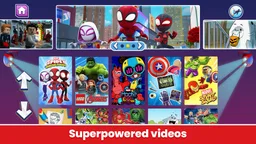
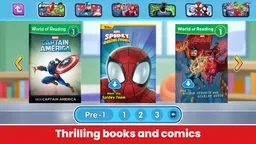
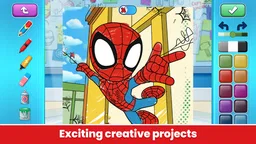
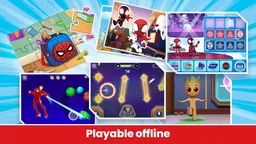
The defining idea is variety within a single Marvel-themed space: activities sit alongside comics and videos. In practice, that can make the experience feel more like a compact destination than a traditional game built around one repeating mechanic. A child can move between different forms of content depending on their mood, rather than being expected to follow one extended level or story.
That variety is also the app’s strongest practical feature. Reading, watching, and interacting ask for different kinds of attention. A child who is not in the mood to read may prefer a video; someone who wants to do something rather than watch can choose an activity. The value is in having those modes together, not in assuming that every item will suit every child equally well.
As an educational game, it sits in a different lane from a spelling or arithmetic app. I would not open it expecting a sequence of lessons, visible academic progress, or a curriculum-style path. Instead, its educational appeal is likely to come from playful engagement with stories and activities. That distinction matters for parents deciding whether they need a learning tool or simply want a more purposeful-feeling alternative to passive video viewing.
The Marvel setting gives the content an obvious point of entry for children who already recognize its heroes. Familiar characters can help a child feel comfortable exploring, and the comics and videos provide story-based options alongside interactive play. At the same time, the brand is not a substitute for checking whether the material and tone suit your particular child; a superhero theme may be an immediate draw for one child and a non-factor for another.
Switching modes without turning screen time into a project
My preferred way to use a mixed-content app like this would be to let the child choose one activity or story at a time, then check in before they move on. That keeps the experience manageable and gives the child some independence without leaving the screen session completely unbounded. It also makes it easier to notice what they actually enjoy: hands-on activities, comics, or video.
For example, on a rainy afternoon when a child has a short stretch to fill before dinner, I would offer Marvel HQ as a choice rather than hand over a general video feed. They might start with an activity, then settle into a comic or video. That makes the app useful as a flexible, brief diversion. I would not rely on it to occupy a child for a specific length of time, though; the experience depends on which content catches their attention and how readily they move between options.
A small but useful tip is to make the choice specific: “Would you like to read or do an activity?” is more helpful than “What do you want to play?” The app’s range can otherwise make browsing the main event, particularly for a younger child who is still deciding. A simple prompt gives them a starting point while still letting them choose.
Another practical trade-off is that variety can blur the boundary between active play and watching. If your aim is to get a child thinking, reading, or interacting, steer them toward the activity or comic rather than assuming that opening an educational game automatically means the session will be hands-on. If the child chooses a video, that may still be an enjoyable use of the app, but it is a different kind of screen time.
Where it fits beside other children’s apps
Compared with a focused learning app, Marvel HQ is the broader, less lesson-driven option. A dedicated reading or maths product is a better choice when you want repeated practice in a specific skill, a clear progression, or activities that stay on one subject. This app makes more sense when the goal is to combine superhero-themed entertainment with a few interactive and reading options, without turning the moment into a formal study session.
It also differs from handing a child a general video app. A collection organized around Marvel characters can offer a more bounded starting point than an unrestricted video service, while the activities and comics add alternatives to watching. Still, parents should not assume that a themed hub automatically provides every kind of parental control or content filter they may want. I’d preview the experience and supervise according to the child’s age and family rules.
For a child who already enjoys Marvel, the familiar theme may make it easier to get them to try a comic or activity they would otherwise ignore. For a child who has no interest in superheroes, that same theme can make the whole app feel narrow. In that case, a general creative app or a subject-focused educational game may offer a better reason to return.
Cost, audience, and the questions worth considering
The game is free to download and is rated for Everyone, which makes trying it a relatively low-commitment decision. It has an average rating of 4.2 from around 11,000 ratings, and has passed 10 million installs. Those figures suggest that it has reached a broad audience, but they do not tell me whether a particular child will prefer comics, videos, or activities; a quick supervised session is a more useful test.
There are in-app purchases, with items priced from $6.99 to $39.99. That is the main point I would check before letting a child explore independently. A free download does not mean every part of the experience is free, so it is sensible to review purchase settings on the device and explain that buying anything requires an adult. The range also means the potential spend can be meaningful, rather than limited to a small incidental purchase.
StoryToys released the game on May 16, 2023. For families, the more relevant question is not the release date but whether the content mix suits the child’s current interests and the household’s approach to purchases and screen time. If you want a predictable sequence of offline lessons, this is not the choice I would make. If you want a Marvel-themed place to browse among activities, comics, and videos, it is more aligned with that need.
Parents may also wonder whether it works well as a shared activity. I think it can, especially when an adult reads along with a child or asks them to describe what they chose. That turns a short visit into a chance to talk about the story or activity instead of treating the device as a babysitter. It may be less satisfying for a child who wants a competitive game, a deep role-playing adventure, or a clear end goal; the app’s appeal is its assortment, not a single sustained challenge.
The children most likely to get something from it
I’d put Marvel HQ on the shortlist for young fans who like changing between short activities and story content, and for parents who want a themed alternative to simply opening a video feed. It can also work as a shared discovery app: let the child pick a comic or activity, then talk about what they noticed. That small amount of adult involvement helps the experience feel more intentional without requiring a full lesson plan.
I would skip it if your priority is measurable academic practice, a carefully staged learning path, or a game that holds attention through one substantial objective. I would also hesitate if the child tends to make purchases impulsively or is difficult to redirect after watching videos; set expectations and device purchase controls first. For a Marvel fan who enjoys browsing and trying different kinds of content, though, the mix is a sensible fit.
My overall view is that Marvel HQ: Kids Super Hero Fun is best understood as a flexible superhero-themed activity hub rather than a conventional educational course. Its strongest quality is the ability to move between interactive and story-based formats, which can suit a child whose attention or mood changes from one visit to the next. The trade-offs are equally clear: it is not a substitute for focused skill practice, the video option can make a session more passive, and in-app purchases deserve an adult’s attention. If those limits match what you need, I’d give it a supervised try and see which part your child returns to first.
What we like
- Kid-friendly access to Marvel comics and animated content
- A broad roster of familiar Marvel heroes can keep young fans engaged
- Designed to make superhero content easy for children to explore
- A dedicated kids experience helps separate content from general browsing
- Useful for families looking for Marvel entertainment in one app
What could be better
- Much of the content may require a paid subscription
- The available catalog can vary by region
- Some features may need a reliable internet connection
- Younger children may need help navigating the app
- Screen time can add up when comics and videos are watched back to back







