

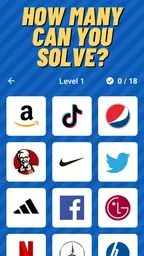
Logo Quiz: Guess the Brand! review
 Analysis by Appsdrops
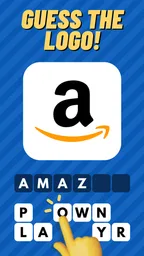
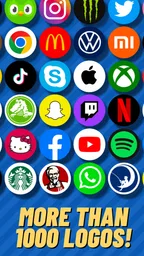
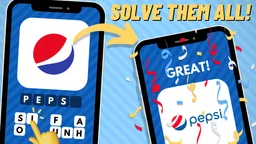
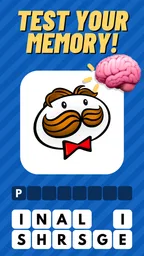
I like trivia that turns a spare minute into a small puzzle, and logo quizzes have a satisfying, familiar hook: recognize a symbol, retrieve its name, and see whether memory beats a guess. Logo Quiz: Guess the Brand! is built around that simple challenge. It is a free trivia game from Kolmo Games, rated for Everyone, and it has attracted more than a million installs. My main question when judging a game like this is not only how many brands I can identify, but whether the experience stays comfortable and understandable when I play casually, share it with someone else, or have different visual and motor needs.
Recognizing logos without fighting the interface
The appeal of logo trivia is that the subject is visible before the answer is known. That makes each turn easy to understand: look at a brand mark, connect it with something you have seen in everyday life, then try to name it. The concept needs little explanation, which is useful for new players and for people who prefer to learn by doing rather than reading instructions first.
There is also a particular reading challenge built into the format. A logo is not always a clear picture of a product; it may rely on a stylized letter, a partial shape, a familiar color arrangement, or a detail that is easy to overlook. When I hesitate, I find it helps to stop treating the image as a whole and inspect its parts: the outline, lettering, and distinctive symbol. That approach makes the quiz feel more like a recognition exercise than a test of how quickly I can type.
The game’s store profile shows a 4.7 average from around 6,400 ratings, alongside 116 written reviews. Those figures suggest that many players enjoy the basic premise, but they do not tell me whether every screen is equally comfortable to use. For a player deciding whether to try it, the more important point is that the central task is visually led and immediately understandable; anyone who finds small or highly stylized marks difficult may have a different experience.
What makes a logo question readable
Recognition depends on more than eyesight. Familiarity with a brand, region, language, age group, and personal interests all shape what seems obvious. A mark that jumps out to one player may be unfamiliar to another, even when both can see it clearly. I would not treat a missed answer as proof that someone is poor at trivia; sometimes the knowledge simply is not part of that person’s everyday world.
A useful way to play with another person is to say what each of you notices before settling on an answer. One person might recognize a shape while the other remembers where they have seen it. This turns the visual prompt into a shared reasoning task and gives players with different kinds of brand knowledge a way to contribute. It also makes the game more welcoming than a speed-only contest, provided the group is comfortable taking turns at its own pace.
For solo play, I recommend giving yourself a moment to inspect the image rather than entering the first brand that comes to mind. Logo families can look alike, and a confident early guess can be less useful than noticing one unusual curve or letter. This is a small, practical habit, but it makes the puzzle feel fairer when the answer is not immediately recognizable.
Touch, attention, and sensory comfort
Logo quizzes are usually less demanding on the hands than games built around continuous movement, because the core activity is looking and making a selection. That makes the format a natural fit for short, deliberate turns. Still, it is important not to assume that every player can comfortably use a touchscreen: precision, fatigue, tremor, reach, and the amount of time spent focusing on an image can all affect play.
I would approach it as a low-pressure game rather than a reflex test. If a player has limited fine-motor control, a companion can help with the physical tapping while leaving the recognition and decision-making to the player. In a group, taking turns also avoids asking everyone to reach for the same device or compete to answer first. These are play choices, not special features, but they can make the activity easier to share.
Visual attention is another consideration. A logo’s detail may be the entire puzzle, so people who are sensitive to visual complexity or who tire quickly from close inspection may want to play in short sessions. A bright screen or a busy setting can make subtle shapes harder to distinguish. I would choose a comfortable viewing position and pause when concentration drops; rushing through a brand quiz is rarely worth the strain.
Sound is not what makes this particular format interesting to me. The challenge is in the image and the memory it triggers, so it can work as a quiet activity in a waiting room or during a calm break. That does not guarantee a particular audio setup or control option, but the basic puzzle concept itself does not depend on following spoken clues to understand what is being asked.
Where it fits into an ordinary day
I can see myself opening it while waiting for food or taking a short break between tasks. A single recognizable logo can provide a quick mental reset, while a harder one gives me a reason to pause and think. It suits moments when I want a small, self-contained distraction rather than a long narrative or a match that demands uninterrupted attention.
It can also work as a casual shared activity during a visit with family or friends. Instead of handing the device around quickly, I would put it somewhere everyone can see and let people call out possibilities. That changes the game from individual recall into a conversation about where a brand appears and why its mark looks familiar. It is especially useful when players have different experiences, though it may be less engaging if one person already knows most of the answers and dominates the discussion.
For a younger player, the Everyone content rating makes the game broadly suitable from an age-classification perspective, but it does not mean every logo will be familiar or equally relevant. I would treat it as a chance to talk about symbols encountered in shops, packaging, and daily life rather than assume a child should know every answer. Adults can enjoy the same prompts for different reasons: habit, nostalgia, or simply the pleasure of remembering a name.
Compared with word riddles, this game gives the player a visual clue instead of a definition. Compared with general-knowledge trivia, it narrows the subject to brand recognition, so it is easier to dip into but also more dependent on personal exposure. If I want broad questions about history, science, or current events, a standard trivia game is a better fit. If I want a quick test of visual memory and everyday familiarity, this focused format has the clearer appeal.
Practical expectations and trade-offs
The game is free to install, with optional in-app purchases priced from about $2.39 to $59.99 per item. That range is worth noticing before playing, especially if the device is shared with a child or if you prefer to avoid accidental purchases. I would check the purchase controls on the device before handing it over. The presence of in-app purchases does not by itself tell me how often a player will encounter them, so I would not assume that paying is necessary to enjoy the central idea.
The current version is 1.30.0, and the listed minimum operating system is 7.0. In practical terms, that gives a straightforward compatibility point to check before installation, but a compatible system alone does not guarantee that a particular screen will suit someone’s eyesight, dexterity, or preferred way of interacting. If comfort is a deciding factor, I would try a short session first and see whether the logo images and touch targets feel manageable on the device in hand.
Kolmo Games has developed the title, and the game’s strong rating gives it a reasonable case as a popular take on a familiar trivia idea. I still would not choose it for a player who dislikes brand-focused content, wants questions that do not depend on commercial exposure, or needs a game whose clues are provided in a nonvisual format. The main limitation is inherent to the subject: a person can be perfectly capable of solving puzzles yet have little knowledge of the brands represented.
Another trade-off is that recognition can be uneven. Some answers may feel instant, while others may depend on a tiny design detail or a memory from a particular context. That variation is part of the fun for some players and a source of frustration for others. If I were playing with someone who gets discouraged by unfamiliar references, I would frame guesses as exploration rather than a score of general intelligence, and keep the session short enough that a difficult run does not become a chore.
Who should choose another kind of game
I would skip this one if I wanted a deeply strategic game, a story to follow, or a trivia experience where success comes mainly from learning new facts. Its draw is recognition, not explanation. It may also be the wrong choice for a player who finds brand imagery tiring, or for someone who wants all questions to be equally accessible regardless of visual detail and cultural familiarity.
For those players, a text-led quiz can be a better alternative because it can put the clue directly into words instead of relying on a logo. A general quiz is also preferable when the group wants a broader range of topics. Those options trade the immediate visual “I know that mark” moment for more varied clues, but they avoid making brand exposure the central measure of success.
On the other hand, if the goal is a light activity that can be understood at a glance, Logo Quiz has a very clear niche. It asks for little commitment, and players can bring different levels of knowledge without needing a tutorial in trivia strategy. I find that simplicity a genuine strength, as long as it is not mistaken for universal accessibility: clarity of purpose and ease for every ability are not the same thing.
A welcoming game, with a visual boundary
Logo Quiz: Guess the Brand! is an easy recommendation for people who enjoy visual recognition, casual challenges, and quick rounds of discussion. Its 1M-plus installs show that the premise has reached a wide audience, and its free entry makes it easy to try without committing to a purchase. I would start with a relaxed session, check whether the image-based clues are comfortable to view, and decide from there whether the style suits the player.
My inclusive verdict is positive but measured. The straightforward premise can make it approachable across ages and experience levels, and the game can be adapted socially by letting players collaborate or take their time. Yet the same reliance on logos creates a real boundary for anyone with visual access needs, limited familiarity with brands, or discomfort with image-heavy puzzles. I recommend it to curious players who want a compact brand-recognition challenge; I would steer others toward text-based or broader trivia instead. That distinction is more useful than calling the game universally accessible, because the best fit depends on how each person sees, remembers, and enjoys a puzzle.
What we like
- A quick round makes it easy to play during a short break.
- Familiar logos provide an approachable challenge for casual players.
- Hints can help when a brand name is difficult to recall.
- Progress gives players a reason to return and solve more puzzles.
- The game can sharpen visual recognition and brand recall.
What could be better
- Some logos may feel obscure without regional context.
- Repeated guessing can become frustrating on harder puzzles.
- Hints may be limited or tied to in-game rewards.
- Ads can interrupt the flow between puzzles.
- Brand knowledge can make the challenge uneven between players.







