Logo Quiz - Guess Brand Trivia review
 Analysis by Appsdrops
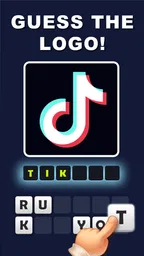
I like brand quizzes best when they turn a spare minute into a small puzzle rather than asking me to settle in for a long session. Logo Quiz - Guess Brand Trivia is built around that simple appeal: identify a brand from its logo and enjoy the little “I know that one” moment when the answer clicks. It is a straightforward premise, but it works particularly well for casual play, friendly challenges, and anyone who enjoys testing how much visual branding they recognize.
What you get without paying
The game is free to download, so you can try its logo-guessing format without paying upfront. That is the clearest part of its value proposition: if you want a light trivia game to sample, there is no purchase price standing between you and a first look. Hopes studio develops it, and the game sits in the trivia category, where its focus is narrower and more visual than a general knowledge quiz.
There are in-app purchases, priced from $0.99 to $32.99 per item. Those figures describe the available purchase range, not a requirement to spend or a guarantee about what any individual purchase includes. I would treat the free download as the sensible starting point and decide whether to spend only after seeing how much you enjoy the actual guessing. The difference matters: a free game can be worth trying even when its paid options are not automatically worth buying.
The game has an average rating of 4.8 from around 1,600 ratings, with about 174 written reviews, and has passed 100,000 installs. Those figures suggest that plenty of players have given it a try and that the overall response is favorable, but they cannot tell you whether its style suits your taste. I would use them as a reason to consider it, not as a substitute for checking whether logo puzzles are the kind of trivia you enjoy.
A focused kind of trivia
Unlike broad quiz games that jump between history, science, sport, and entertainment, Logo Quiz keeps the challenge centered on brand recognition. That makes the mental task distinctive: you are not only recalling a name, but connecting it with a visual identity. It may be easier to pick up than a question-heavy quiz if you prefer visual prompts, though it can also feel less varied if you want different subjects in the same session.
Logo puzzles can expose how uneven brand familiarity is. I might recognize a symbol immediately but hesitate over its exact name, or know a company well while failing to identify a simplified mark. That gap is part of the fun: the game tests recognition and recall together, rather than rewarding only encyclopedic knowledge. It also makes the experience a natural fit for quick rounds with a friend, where one person’s confident answer can prompt another person to remember a logo they had overlooked.
The store’s age classification is Everyone, which makes the subject matter broadly approachable for families and mixed-age groups. I would still choose it based on the people playing: younger players may recognize brands from their daily lives, while adults may have an advantage with companies they have encountered for years. That difference can make a casual shared session more entertaining than a formal contest, because the players are drawing on different kinds of familiarity.
How to make the most of a short session
A useful way to play is to treat each logo as a conversation starter, not just a test with one right answer. If someone recognizes the symbol but cannot name the brand, give them a moment to describe where they have seen it or what the company makes. That small pause often turns a solitary guessing game into a more social activity, especially during a relaxed break or while waiting for food. It also avoids making the session feel like a race for the fastest answer.
For a quick everyday scenario, I could see opening the game while waiting for a bus or sitting through a short lull between tasks. A visual puzzle is easy to dip into because it does not require setting aside a long block of time or remembering a complicated story. I would keep expectations modest, though: the appeal is the recognition challenge itself, not a deep strategy layer or a substitute for a varied trivia night.
Another practical tip is to play in company without turning every answer into a scorekeeping exercise. Ask each person to say what clue they noticed first: the color, shape, lettering, or overall silhouette. This makes the game more engaging for players who recognize brands differently and gives people a way to participate even when they are unsure of the name. It is a small change in how you use the game, but it can make repeated guesses feel less repetitive.
If you are playing alone, it helps to notice whether you enjoy the recall process even when a logo does not come to mind quickly. A logo quiz can be satisfying precisely because the answer feels familiar once you see it, but that same quality can frustrate someone who wants every question to have a clear trail of clues. I would recommend approaching it as a casual test of recognition rather than expecting a structured lesson about companies or design.
What the tradeoffs mean in practice
The narrow subject is both the game’s strongest selling point and its main limitation. If you enjoy brand names, packaging, and visual identity, the format gives you a clear reason to keep guessing. If you prefer quizzes that rotate topics or let you build knowledge across many fields, a general trivia game will probably hold your attention longer. This is not a flaw so much as a question of fit: Logo Quiz asks you to enjoy one particular kind of knowledge.
There is also a difference between recognizing a logo and finding a quiz satisfying over time. Familiar brands may make early guesses feel effortless, while less familiar ones can interrupt the flow. That contrast is common to logo-based trivia, and it means your experience depends partly on the brands you already encounter. I would not choose this game expecting every prompt to feel equally accessible or equally challenging.
For anyone wondering whether it works offline, whether it has multiplayer, or exactly what the purchases unlock, I would avoid making a decision based on assumptions. Those details can affect the best way to use a game, but they are not established here. The practical choice is to try the free version and check the in-game purchase details before spending, rather than treating a particular feature or benefit as guaranteed.
The current version is 1.3.7, and the game was released on January 9, 2025. It requires Android 7.0 or later. Those details are useful if you are checking compatibility on an Android device, while the game’s core appeal remains the same simple idea: look at a logo and try to name the brand. The broad Everyone age rating makes it easy to consider for casual family play, but individual preferences still matter more than the label.
Who is most likely to enjoy it
I would recommend giving it a try if you like quick visual puzzles, recognize lots of consumer brands, or want a low-commitment game to share with someone nearby. It is also a reasonable choice for people who find image-based questions more inviting than long written trivia prompts. Because it is free to download, the barrier to testing that fit is low, though the presence of optional purchases is worth keeping in mind if you prefer games with no spending choices at all.
I would skip it if you want a wide rotation of subjects, a substantial single-player progression system, or a game whose enjoyment depends on strategy rather than recall. I would also look elsewhere if brand recognition is not your thing; a high rating cannot make a narrow theme feel broad. A general knowledge quiz is the better alternative for varied questions, while a word or logic puzzle is a better match if you want to solve something without relying on familiarity with companies.
For families or friends, the most enjoyable use may be informal rather than competitive. Let people guess aloud, compare which brands they know, and move on when a prompt does not land. That approach makes the game work as a small shared activity instead of demanding that every round deliver a major challenge. It is especially handy when nobody wants to commit to a long game but everyone is willing to try a few guesses.
My verdict on trying it
Logo Quiz - Guess Brand Trivia makes sense as a free, focused way to test brand recognition in short bursts. I like that its premise is immediately clear and that it can bring people into a quick conversation without requiring much setup. The tradeoff is equally clear: the same tight focus that makes it easy to understand may become limiting if you want broad subject variety or a more layered game.
My advice is to download it if visual brand puzzles sound fun, play long enough to see whether the guessing itself holds your attention, and only then consider any in-app purchase. The listed purchase range runs from $0.99 to $32.99 per item, so I would check the specific item and its value in the app before paying rather than assuming every option is equally useful. If the free experience already gives you the kind of quick challenge you wanted, there is no reason to spend simply because purchases are available.
Overall, I see it as a good fit for casual players who enjoy the moment a familiar logo finally turns into a name. It is not the trivia game I would choose for variety, deep progression, or a guaranteed group mode, but it can be an easy little distraction when the theme suits you. Since the download is free and the age rating is Everyone, trying it is a reasonable low-cost decision; whether it earns a place on your phone comes down to how much you enjoy spotting brands.
What we like
- Quick rounds make it easy to play during short breaks.
- Hints help keep challenging puzzles moving.
- A wide range of brands offers varied logo recognition challenges.
- Simple controls are easy for new players to understand.
- Correct answers can help sharpen visual memory.
What could be better
- Some logos may be unfamiliar outside certain regions.
- Hints can make puzzles less challenging when used often.
- Repeated brand categories may feel predictable over time.
- Small logo details can be difficult to recognize on phones.
- Progress may feel slow when answers are hard to guess.







