


LingoLooper: AI Language Game review
 Analysis by Appsdrops
What I like about LingoLooper: AI Language Game is the way it makes speaking practice feel like a small scene to step into, rather than another vocabulary list to finish. Its 3D characters give language practice a more social frame, and the educational-game format makes sense for anyone who learns better by trying out phrases than by studying them in isolation. I’d consider it a useful complement to lessons, not a replacement for a teacher or a structured course.
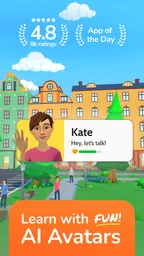
The game is free to download, made by Lumi Labs AB, and has a 4.9 average from around 9,100 ratings. It has passed 500,000 installs, and its Everyone age rating makes it broadly accessible. In-app purchases range from $14.99 to $99.99 per item, so I’d check the purchase options in the app store before settling into a routine. The current version is 0.23.0, and it requires Android 8.0 or later.
Practice feels more like joining a conversation
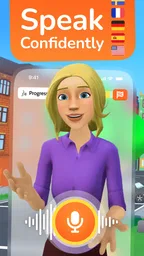
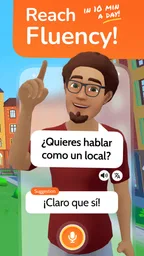
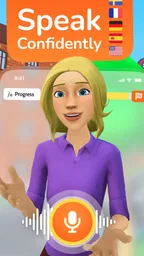
The central idea is appealingly direct: speak languages such as French, Spanish, and Italian with AI characters presented in 3D. That changes the emotional texture of practice. Instead of answering a blank prompt or repeating after a recording, you have a character to address. For learners who freeze up when they imagine speaking to a real person, that can make the first attempt feel less intimidating.
I also think the format suits short, low-pressure sessions. A few minutes of speaking while waiting for a meal or winding down at home can be easier to start than opening a textbook and deciding what lesson to tackle. The game framing gives the practice a destination, while the conversational setup encourages you to produce language rather than only recognize it.
That distinction matters. Many familiar language apps are strongest at vocabulary recognition, translation drills, or carefully structured lessons. Those approaches can build a foundation, but they don’t always prepare you to form a thought aloud. LingoLooper’s clearest reason to choose it is the chance to practice that act of speaking in a setting designed to feel conversational.
Still, an AI character is not a human conversation partner. It can give you a place to rehearse, but it cannot fully reproduce the unpredictability, social cues, or personal stakes of speaking with someone face to face. I’d use it to lower the barrier to practice, then look for real conversation when I wanted to test how well those skills transfer.
A visual setting that supports the speaking task
The 3D presentation gives the practice a sense of presence without requiring the learner to imagine an entire scene from a text prompt. That is a useful design choice for people who find plain chat interfaces dull or who want a more character-led experience. The setting can make it easier to stay engaged long enough to attempt a response, which is often the hardest part of speaking practice.
At the same time, visual polish is not the same as instructional depth. A lively character can make an exchange feel inviting, but the real test is whether you come away more willing and able to express yourself. I’d judge the experience by how often it gets me to speak and whether I can reuse what I practiced later, not by how convincing the scene looks on its own.
One practical tip is to treat each session as a rehearsal for a real situation. Before starting, choose a simple goal—asking for something, introducing yourself, or keeping a basic exchange going—and pay attention to the phrases you actually manage to say. That makes a playful session more useful than tapping through without a purpose, and it gives you a concrete way to notice progress without needing to turn every practice into a test.
Sound and rhythm matter more than spectacle
Speaking practice depends on listening as much as talking. A conversational game has to hold attention through the rhythm of an exchange: listen, understand enough to respond, and take a turn. That back-and-forth is a more natural frame for building confidence than studying isolated words, especially for learners who already know some vocabulary but hesitate when they need to use it aloud.
I would approach the audio side with a learner’s patience. If a phrase is unfamiliar, it is worth slowing down mentally and focusing on the sound before rushing to reply. Repeating a short expression in your own words can be more valuable than trying to produce a long, ambitious answer. The goal at first is not eloquence; it is getting comfortable making a response.
The trade-off is that speaking aloud is not always convenient. It may be awkward in a shared room, on public transport, or in any place where you want to keep your phone quiet. This is a less flexible choice than silent flashcards for those moments. I’d reserve it for a private break or a calm stretch at home, where I could concentrate on listening and speaking without feeling self-conscious.
Where it fits among language-learning tools
As an educational game, LingoLooper sits in a helpful middle ground between conventional study and live conversation. Flashcards are efficient when the task is memorizing a word. A grammar course is better when you want a clear sequence of explanations and exercises. A tutor or language exchange is stronger for nuanced feedback and genuine human interaction. This game makes the most sense when the missing piece is simply getting yourself to speak more often.
I wouldn’t make it my only learning resource if I were starting a language from scratch. A beginner may need explicit explanations and a dependable progression through basic grammar, while a more advanced learner may want detailed corrections or discussion on a wider range of topics. The AI-character approach sounds most compelling as a practice space alongside those tools, not as a promise that one game can cover every part of learning.
There is also a useful choice to make about expectations. If you want a relaxed way to try out spoken language, the game format may help you return to practice. If you want a strict curriculum, carefully documented lesson sequence, or the accountability of a scheduled class, a dedicated course or teacher is likely a better fit. Knowing which job you want the app to do will help you decide whether its conversational focus is a strength or a limitation.
Making a short session count
A realistic routine might be to open the game during a quiet break, choose the language you are currently learning, and focus on one kind of exchange rather than trying to cover everything. Afterward, note a phrase that felt difficult and revisit it in a textbook, dictionary, or lesson. This turns the game into a bridge between guided study and spontaneous speech: the session reveals where you hesitate, and another resource can help explain why.
For a traveler, that could mean practicing how to ask for directions before a trip. For someone learning Spanish after work, it might be a quick speaking warm-up before a class or a call with a language partner. The point is not to simulate every real-world detail; it is to make it less daunting to start forming sentences. That is a modest goal, but a useful one.
Because in-app purchases are available, I’d also keep the free starting point and any paid options distinct in my mind. The app itself costs nothing to download, but that does not mean every feature or amount of access will necessarily be included without a purchase. Checking what an item offers before buying is sensible, especially if you are still deciding whether this style of practice suits you.
Who will enjoy it, and who may prefer another route
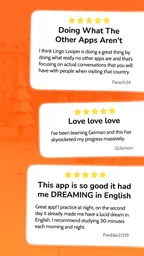
I’d recommend giving it a try if you already have some interest in a language and want a more engaging way to practice speaking. It may particularly suit learners who find drills repetitive, feel nervous about live conversation, or enjoy having a character and scene to focus on. The high average rating suggests many players respond well to the experience, though individual preferences about AI conversation and game-style learning will naturally differ.
I’d be more cautious if you need a thorough beginner syllabus, detailed instruction in grammar, or human feedback on pronunciation and meaning. I’d also choose a quieter, text-based option when speaking aloud is impractical. Those are not failures of the game; they are signs that it serves a particular part of language learning rather than every need at once.
With its broad language selection, 3D character-led approach, and educational-game framing, LingoLooper has a clear niche: making spoken practice feel approachable enough to repeat. My verdict is positive for learners who want a low-pressure rehearsal space and understand its limits. Use it to get words out of your mouth, pair it with resources that explain the language, and take the confidence it builds into conversations with real people.
What we like
- AI conversations offer practice with varied real-world scenarios.
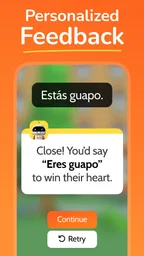
- Instant feedback can help users notice mistakes while speaking.
- Game-like challenges may make daily language practice more engaging.
- Users can practice speaking without scheduling a conversation partner.
- Personalized interactions can adapt to the learner's responses.
What could be better
- AI feedback may occasionally miss context or give incorrect corrections.
- Speech recognition can struggle with accents or background noise.
- A stable internet connection may be needed for AI features.
- The free experience may limit access to lessons or practice time.
- AI conversation practice cannot fully replace speaking with people.







