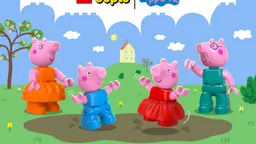
LEGO® DUPLO® Peppa Pig review
 Analysis by Appsdrops
LEGO® DUPLO® Peppa Pig has an appealingly clear idea: turn familiar Peppa Pig play into a gentle learning game for young children. I’d recommend it to families looking for a playful activity to share with a preschooler, especially one who already enjoys Peppa and building with DUPLO. My main reservation is that the combination of recognizable characters and educational play may sound broader than the experience will feel to children who want lots of variety or to adults looking for a structured learning program.
Familiar play is the strongest part
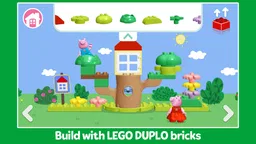
StoryToys brings together two child-friendly worlds in a game aimed at learning through play. That pairing gives it an advantage over an unfamiliar educational app: a young player can approach the activities with characters and a toy style they already know. In my view, that familiarity matters most at the beginning. It can make a child more willing to explore, while a parent can use the shared theme to turn screen time into a conversation rather than simply handing over a device.
The game is listed as an educational title, but I would think of it as playful practice, not a replacement for teaching or a formal lesson. Its appeal is that learning can sit inside a Peppa-themed activity instead of feeling like a worksheet. That makes it a reasonable choice for a brief, low-pressure play session at home, during a quiet stretch in the day, or while an adult is nearby and available to join in.
Its audience is broad enough to have reached more than ten million installs, with an average rating of 4.3 from around eighteen thousand ratings. Those figures suggest that many families have tried it, but they don’t settle whether it suits a particular child. Interest in Peppa, comfort with touch-screen play, and patience for repeating an activity will matter more to your household than popularity alone.
What the Peppa and DUPLO mix offers
The strongest practical benefit is the theme’s ability to make a digital activity feel connected to play a child may already enjoy away from the screen. I’d use that connection as a starting point: let the child explore, then invite them to describe what caught their attention or continue the pretend play with toys. That small change gives an adult a way to participate without turning the session into a quiz.
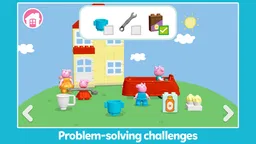
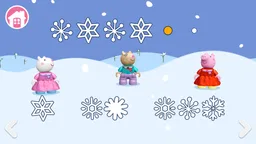
There is also a useful distinction between this and a typical collection of abstract learning games. A preschooler who loses interest in counting or matching tasks presented without a story may be more willing to try when familiar characters and a recognizable play world provide context. That doesn’t guarantee every child will engage, but it gives parents a sensible reason to test this title before moving straight to a more worksheet-like option.
One tip I’d use is to keep the first session short and watch what the child chooses to do, rather than steering every action toward an answer. If the game sparks curiosity, follow that lead and talk about the activity together. If the child starts tapping without paying attention, that is a good cue to pause; more screen time is unlikely to make an unfocused session more educational.
Where it fits in an ordinary day
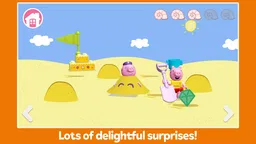
Imagine a parent preparing dinner while a young child asks for something to do nearby. This could work as a short, familiar activity, especially if the adult can remain in the room and check in. I would not treat it as a dependable way to occupy a child for a long stretch or as an automatic substitute for shared play. Its best use is more modest: a few minutes of themed exploration that can lead into a conversation or an off-screen game.
It can also be useful when a child wants a game but a parent would prefer something with a learning-oriented theme. The educational category gives the activity a more purposeful frame than a purely casual game, while Peppa keeps it approachable. Still, parents should judge the actual session by the child’s attention and mood, not by the category label. A game can be educational in intent and still be the wrong choice when a child needs movement, conversation, or a break from screens.
For a first try, I’d sit with the child instead of relying on assumptions about what they will understand. A young player may enjoy the characters but need help getting comfortable with a game, while another may want to take the lead. Watching before intervening helps you see whether the title is encouraging active attention or just inviting repeated taps. That is a more useful test than deciding from the theme alone.
The trade-off: a focused theme can narrow the appeal
The same familiar branding that makes the game inviting also limits its reach. Children who aren’t interested in Peppa Pig or DUPLO may have little reason to choose it over an educational game with a different theme. And if your child already plays several Peppa-themed activities, this one may feel less compelling than a new kind of hands-on play. I would not buy into the idea that a well-known character automatically makes an app engaging for every child.
There is another trade-off for adults: a themed game can be easier to introduce, but it may not offer the breadth that a parent expects from a general learning app. If you want a clearly sequenced program, targeted practice in a particular skill, or activities chosen to match a specific learning goal, a dedicated educational app or an offline activity may be a better fit. This is most appealing when the priority is gentle, character-led play rather than a tightly planned curriculum.
The game is free to start, with in-app purchases priced from $2.99 to $39.99 per item. That range is worth considering before a child begins playing: a free download does not mean every part of the experience is necessarily included at no cost. I’d review the purchase options in the app store and set clear expectations with the child, so a request to unlock something doesn’t become a surprise in the middle of play.
That purchase structure is not automatically a reason to skip the game, but it does affect how I’d introduce it. I’d first see whether the included experience holds the child’s interest, then decide whether any paid content is worth considering for your family. A child who enjoys only a brief taste may not need anything more; a parent should not feel that paying is required simply because the game is built around a familiar franchise.
Who I think will enjoy it most
I’d put it on the shortlist for a preschool-age child who already likes Peppa Pig, enjoys toy-like play, and responds better to a friendly theme than to bare learning exercises. It is also a plausible choice for a parent or caregiver who wants to be involved, even in a small way, by watching, asking what the child notices, or extending the play after the device is put away.
On the other hand, I would skip it for a child who has no interest in Peppa, needs a highly structured learning plan, or tends to become frustrated when an app’s activities do not match their expectations. It may also be the wrong pick for families trying to reduce screen use rather than make screen time more purposeful. In that case, DUPLO bricks, a picture book, or a shared pretend-play session offers a more direct route to hands-on interaction.
Compared with broad educational apps, the appeal here is not maximum variety; it is the specific Peppa-and-DUPLO identity. Compared with a passive video, a game invites the child to take part rather than just watch, but that alone does not make every session active or social. I’d choose it when the theme is a genuine hook for the child, and choose a more open-ended toy or a broader learning app when that narrow focus is a drawback.
Practical details before you install
LEGO® DUPLO® Peppa Pig is free, rated Everyone, and developed by StoryToys. It was released on May 28, 2024, and its current version is 14.1.0; it requires Android 8.0 or later. Those details make it straightforward to check whether the game is suitable for your device and household before downloading it.
For a child’s first session, I’d keep the device in a shared space and stay close enough to see how the game is being used. That is useful not because every child needs the same level of help, but because an adult can quickly tell whether the child is enjoying the activity, needs guidance, or would rather do something else. It also makes it easier to keep the session brief and to talk through any purchase prompts together.
The age rating of Everyone is reassuring as a basic guide, but it is not a substitute for a parent’s judgment about an individual child’s readiness for screen play. I’d consider the child’s age, attention span, and familiarity with touch screens, then decide whether to play alongside them. The most successful use is likely to be the one that fits naturally into family routines rather than becoming a default answer whenever a child is bored.
My verdict
I see this as a focused, approachable option rather than an all-purpose learning solution. Its best quality is the way the Peppa Pig and DUPLO identity can give a young child a friendly reason to try educational play. Its main limitation is the same specificity: children outside that audience may not find enough here to hold their interest, and parents seeking a structured learning path should look elsewhere.
With 104 written reviews alongside its larger base of ratings, there is some feedback beyond a simple popularity signal, but I would still make the decision based on your child’s response to the theme and the available play. Check the in-app purchase choices, try a short shared session, and see whether the activity leads to attentive play rather than distracted tapping. If your child lights up at Peppa and enjoys toy-inspired games, I think it is worth trying; if not, a broader educational app or a real set of DUPLO bricks may be the better choice.
What we like
- Familiar Peppa Pig characters make the game appealing to young fans.
- Simple touch controls suit preschoolers who are new to games.
- LEGO DUPLO building adds a hands-on creative element.
- Short activities work well for brief play sessions.
- The gentle pace avoids pressure from timers or competition.
What could be better
- The activities may feel repetitive after several sessions.
- Older children may find the gameplay too simple.
- Some content may require an in-app purchase.
- A compatible device with enough storage is required.
- The game offers limited challenge for experienced players.







