
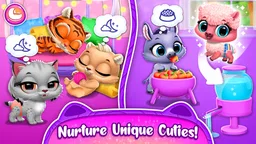
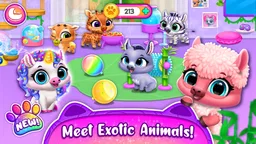
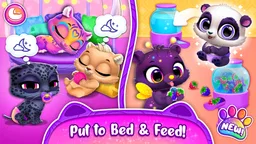
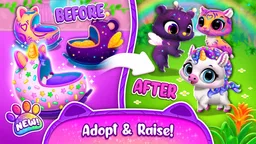
Jungle Floof - Island Pet Care review
 Analysis by Appsdrops
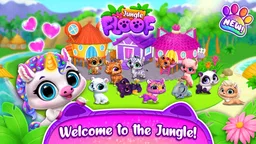
Some children want a game that gives them a small, cheerful task rather than a complicated world to master. Jungle Floof - Island Pet Care is aimed at that mood: it centers on virtual jungle animals and the simple pleasure of looking after them. I’d consider it for a young player who enjoys caring for animals and dipping into short play sessions, rather than for someone seeking a deep adventure or a demanding educational curriculum.
What the game feels like now
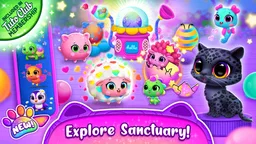
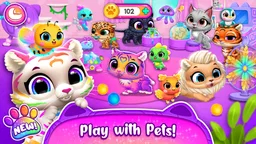
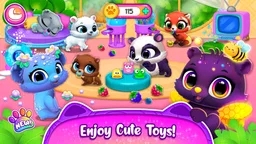
This is a free educational game from TutoTOONS, with an Everyone age rating. Its animal-care premise makes it easy to understand at a glance, and the appeal is less about winning than spending time with playful virtual companions. That focus can be a real advantage for children who prefer gentle, approachable activities to rules-heavy games.
The scale of its audience suggests it has found plenty of players: it has passed ten million installs, and its average rating is four out of five from around ten thousand ratings. Those numbers are useful context, not a guarantee that every child will enjoy it. A child who likes nurturing animals may settle in quickly; one who wants a clear challenge, a story to follow, or a more structured learning experience may lose interest.
In ordinary use, I’d treat it as a light activity to share or offer during a quiet moment, not as a substitute for an educational lesson. The animal-care theme can invite conversation about what pets need, how to be gentle, and why care involves attention. That value comes from how an adult and child use the game together, rather than from assuming that play alone teaches a particular skill.
A good fit for short, supervised sessions
For a parent or caregiver, one useful approach is to let a child choose an animal-related activity, then ask them to explain what they are doing and why. This turns a few minutes of screen time into a chance to practice describing choices and thinking about care. It also helps an adult notice whether the child is engaged or simply tapping through without much interest.
Because the game is designed for a broad age range, younger children may benefit from an adult nearby, especially when navigating menus or deciding whether to spend money. Older children who already enjoy pet games may find the central idea familiar, so it will work best if they like the characters and the caring routine itself rather than expecting lots of new mechanics.
How it compares with other animal games
Compared with pet simulators that emphasize collecting, competition, or a long progression path, Jungle Floof’s clearest draw is its relaxed animal-care framing. That makes it a plausible choice for a child who wants a friendly virtual companion without needing to learn a complicated system. On the other hand, children who enjoy planning, building, or completing a series of increasingly difficult goals may prefer a game that makes those systems more central.
It also differs from educational apps built around quizzes or formal lessons. This is first a game about interacting with virtual animals, not a course with a defined subject sequence. I would choose it for imaginative, low-pressure play and conversation, not to teach specific facts or measure a child’s progress.
What the version information tells us—and what it doesn’t
The game was released on November 16, 2022, and its current version is 6.0.296. That confirms it has moved beyond its original release, but a version number by itself does not explain which features changed or how the experience has evolved. I wouldn’t infer a particular new activity, redesign, or improvement from the number alone.
For someone who already has it installed, the practical question is whether the current experience still suits the child using it. If the child returns to the animals willingly and enjoys the care-focused play, the game may still have a place in their routine. If interest has faded, an update number alone is no reason to expect a dramatically different game; it is better to judge by what the child can actually do in the current build.
For a new player, the same distinction matters. The version identifies the software currently offered, while the release date gives a sense of its history. Neither should be mistaken for evidence of a specific feature set or a promise about future additions. I’d install it because its core idea fits the child, not because I expect an update to transform it.
Where the experience may fall short
The most important limitation is inherent in the premise: caring for virtual animals can be appealing, but it may not provide enough variety for a child who wants a strong narrative or a sense of mastery. A child might enjoy the first encounters and then ask for more to do. That does not mean the game is poorly suited to its audience; it means its simple, gentle appeal is also a reason some players may move on.
There is also a practical cost consideration. The game is free to download, but it offers in-app purchases priced from $1.49 to $159.99 per item. That range makes it sensible for adults to check purchase controls and talk with children before handing over a device. A free starting point should not be confused with an entirely purchase-free experience, and the listed range includes items at very different price levels.
I would be especially cautious about leaving a young child to explore purchase prompts alone. An adult can decide whether purchases are appropriate, and device-level controls can help prevent accidental spending. If your household avoids games with optional purchases altogether, this may not be the right choice even if the initial download costs nothing.
Small choices that make it work better
One useful way to introduce the game is to set a clear stopping point before play begins: for example, a short session after school or while waiting for a meal. This keeps a casual animal-care game from becoming an open-ended request for more screen time. The approach is particularly helpful when the child enjoys returning to familiar characters but has trouble stopping once absorbed.
Another practical tip is to make play conversational rather than handing over the device and walking away. Ask the child which animal they want to spend time with, what they think it needs, and what they would do next. This gives the game a little more purpose without pretending it provides a formal lesson. It can also reveal whether the child is drawn to nurturing play or simply to bright, quick interactions.
For siblings, it may help to agree on turns before starting. A game centered on choosing and caring for animals can invite disputes over who gets to decide, especially when one child is younger or more confident with a touchscreen. Taking turns narrating choices gives both children a role, even when only one is holding the device.
Who should choose it, and who should look elsewhere
I’d recommend giving it a try if a child enjoys animals, likes gentle pretend play, and does well with short activities that do not demand a complicated goal. It is also a reasonable option for an adult who wants an easy prompt for talking about care and responsibility. The game is free to start, and its Everyone rating makes its intended audience clear, though adults should still supervise purchases and consider their own family’s screen-time rules.
I’d skip it for a child who quickly tires of repetition, wants a detailed story, or is looking for a robust learning program with explicit lessons. In those cases, a narrative adventure, a creative-building game, or a structured educational app may be a better match. Choosing based on the child’s preferred kind of play is more useful than choosing only because the title is labeled educational.
What I’d keep an eye on
As the game continues to be maintained, the most useful things for families to notice are whether the animal-care experience remains engaging for their child and whether the current version feels comfortable to navigate. I would also keep purchase settings in view, particularly on a shared device. Those are practical checks, not predictions about future updates or changes.
Overall, Jungle Floof is best understood as a friendly, low-pressure animal game with an educational angle, not as a comprehensive learning tool. Its appeal depends on whether a child enjoys spending time with virtual jungle animals; that is both its strength and its boundary. If the child likes caring play and an adult sets sensible limits around sessions and spending, it can be a pleasant option. If they need deeper goals or lessons, I’d choose something more structured instead.
What we like
- Caring for pets offers a gentle and relaxing pace.
- The island setting gives the game a cheerful look.
- Simple touch controls are easy for younger players.
- Pet needs provide clear goals during play.
- Decorating lets players personalize their island.
What could be better
- Progress may feel slow without frequent play.
- Some items may require in-game currency to unlock.
- Repetitive care tasks can lose appeal over time.
- The game may include ads or optional purchases.
- A stable internet connection may be needed for some features.







