
Hi Beatz: Music & Rhythm Game review
 Analysis by Appsdrops
I like rhythm games that give me a clear reason to return for another round, and Hi Beatz: Music & Rhythm Game has a simple hook: tap along to songs and work toward improving tracks to Diamond. That gives each session a small target beyond merely keeping time. It is a free music game from Fun Tap X, and its focus is easy to understand even before you decide how seriously you want to play.
Getting into a dependable rhythm
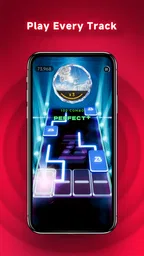
The most useful way to approach Hi Beatz is to treat each song as a short practice loop. Start by listening for the beat rather than trying to tap as quickly as possible. Once the pulse feels familiar, follow the on-screen cues and aim for steady timing. That sounds basic, but it is a better starting habit than chasing a perfect run immediately: rushed taps tend to make a song feel harder than it is.
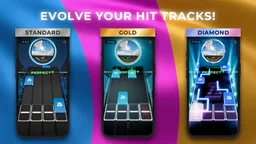
The game’s central appeal is the connection between playing a song and upgrading its track toward Diamond. That goal gives repeated attempts a purpose. Instead of asking only whether I finished a round, I can think about whether I kept a more consistent rhythm and made progress toward the next improvement. If you enjoy incremental goals, this structure can make a few spare minutes feel satisfying.
For an everyday session, I would use it during a short break: choose a track, settle into its rhythm, and play a few focused attempts rather than letting the game become background tapping. A quiet moment helps, especially if you are still learning how a song’s timing feels. When I am distracted or trying to play while doing something else, rhythm games generally become less enjoyable, and Hi Beatz’s tap-and-beat premise is no exception.
There is also a practical difference between playing casually and practicing. A casual player can simply enjoy the music and the immediate tapping challenge. Someone aiming for Diamond should pay attention to repeatability: use the same comfortable grip, keep the phone stable, and avoid changing how you tap from one attempt to the next. That makes it easier to tell whether you are actually getting more consistent.
Small habits that make repeat attempts more useful
When a run feels off, I would not immediately assume that faster tapping is the answer. First, listen for the song’s pulse and notice whether you are anticipating the beat or reacting late. Then make one adjustment on the next attempt. Changing one thing at a time—such as relaxing your hand or focusing more on the music—keeps practice from turning into random repetition.
It also helps to separate learning a song from pushing its upgrade progress. Early attempts are for getting comfortable with the rhythm; later ones can be more deliberate. This is a useful trade-off for a game built around improving tracks: if every session is treated as a high-stakes score chase, a missed beat can become frustrating. A calmer practice run can make the next focused attempt feel more manageable.
What to check before settling in
Before spending time on repeated runs, check the controls and any available settings on your device. I would look for options that affect how the game feels to play, such as sound or visual preferences, and choose what is comfortable rather than assuming the default is ideal. I cannot recommend a particular control adjustment without knowing what is available in your installed version, so the useful advice is to inspect the options once and then keep your setup consistent.
Sound matters more than it might in a puzzle or idle game. If you can hear the music clearly, it is easier to use the beat as a timing reference. If you need to play quietly, consider whether the visual rhythm cues alone are enough for you to stay oriented. That is a personal comfort test, not a reason to force a session in an unsuitable setting. A rhythm game is more enjoyable when you can focus on its central cue.
It is also worth checking that your device is comfortable to hold and that taps register naturally where you expect them to. A cramped grip or a screen covered by your hand can distract from timing. I would set the phone down or adjust my hold before blaming a song for a poor run. These small checks are especially helpful when moving from a quick first try to repeated attempts at the same track.
The game is rated Teen, so it is sensible to check that age guidance before handing it to a younger player. It is free to install, but it includes optional in-app purchases priced from twenty-nine cents to just under one hundred dollars per item. I would treat those purchases as something to review deliberately, not as a necessary part of learning the rhythm. If you are setting the game up for a child, use your device’s purchase controls and discuss spending before play.
How to make a short session count
A repeatable routine is more valuable than a long, unfocused session. I would pick one track, play it a few times with attention on timing, and then take a break or switch activities. If progress toward Diamond is the motivation, that routine lets you notice whether your taps are becoming steadier without turning the game into a chore. It also makes the experience easier to fit into a commute wait or a small gap between tasks, provided you have enough attention to follow the beat.
For players who like to compare attempts, keep the comparison simple: remember whether the rhythm felt rushed, late, or comfortable. You do not need a complicated practice log to benefit from the habit. The point is to identify a pattern and make one adjustment. If the next attempt still feels awkward, take that as a cue to pause or choose a different track rather than tapping harder and hoping the problem disappears.
Where the game fits among rhythm options
Hi Beatz is a music game, but its appeal is narrower than that of a broad music library or a full instrument-learning app. It is for someone who wants direct, game-like interaction with songs and a clear upgrade goal. If your main aim is to discover lots of music, build playlists, or learn an instrument in depth, a streaming service or dedicated learning tool will suit that purpose better. This game is about playing along, not replacing those activities.
Compared with rhythm games that emphasize elaborate modes, competitive rankings, or extensive customization, the appeal here is the approachable loop of tapping and improving tracks. That simplicity can be a strength when you want to start playing quickly. It can also be a limitation if you need a large range of challenges or a deep practice system to stay engaged. I would choose it for short, song-centered sessions rather than expecting it to serve as a comprehensive music platform.
The game has an average rating of 4.5 from around ten thousand ratings, with more than five hundred thousand installs. Those figures suggest that plenty of players have tried it, but they cannot tell you whether its particular rhythm style suits you. The most reliable test is whether you enjoy repeating a song to improve your timing and move its track toward Diamond. If that loop sounds satisfying, the concept is a good match; if you need constant novelty, it may feel limited.
Version, compatibility, and room for growth
The current version is 0.2.7, and the minimum operating system requirement is Android 8.0. I would check that your device meets the requirement before downloading, then make sure the game runs comfortably on your screen. A rhythm game depends on responsive-feeling interaction, so a device that is awkward to hold or visibly struggling can undermine the experience even when the song itself is enjoyable.
Because this is an early-looking version number, I would approach it as a game that may continue to evolve rather than assuming every detail is already settled. That is not a prediction about future features; it is simply a reason to check the version and available options after updates. For now, build your routine around what is actually present: play, listen, tap, and work through the track-upgrade goal without relying on imagined shortcuts or hidden mechanics.
One useful boundary is knowing when not to keep grinding. If a song stops feeling fun, or if your attention is too scattered to follow its beat, a break is a better choice than forcing another attempt. The game’s progress loop is most rewarding when the player remains focused enough to notice improvement. For a quick music break, that is a sensible balance; for an intense, long-form challenge, you may prefer a rhythm game with a broader set of modes.
Who I would recommend it to
I would recommend Hi Beatz to players who enjoy tapping in time, like having a visible improvement target, and are happy to revisit songs. Its free entry makes it easy to try, while optional purchases mean it is worth keeping an eye on spending choices. Fun Tap X has made the premise straightforward: the enjoyment comes from following the beat and seeing a track improve, not from needing a complicated setup.
I would skip it if you want a music app for passive listening, a structured instrument course, or a rhythm game that must offer deep competitive systems to hold your attention. I would also avoid starting a session when you cannot hear or focus on the rhythm comfortably. Those are not flaws unique to this game; they are situations where its core interaction is simply a poor fit.
For me, the best way to enjoy it is to keep the routine modest: check the settings once, choose a comfortable way to hold the device, focus on one song, and make one small timing adjustment between attempts. That gives the Diamond goal room to motivate without letting it dominate the session. If repeated, song-based practice sounds like a pleasant way to spend a few minutes, this is an easy game to give a try; if you need more variety than its central loop offers, look for a broader rhythm experience instead.
What we like
- Short rhythm challenges make it easy to play in brief sessions.
- The music-driven gameplay offers a lively alternative to standard casual games.
- Timing-based controls are simple to understand for new players.
- A range of songs can help keep repeated play feeling fresh.
- The game can appeal to players who enjoy improving their scores.
What could be better
- Accurate play may be harder on smaller screens.
- Song selection may not suit every musical taste.
- Some tracks or features may require in-app purchases.
- Frequent play can make the rhythm patterns feel repetitive.
- A stable connection may be needed for some online features.







