






Girls Nail Salon - Kids Games review
 Analysis by Appsdrops
At first, Girls Nail Salon - Kids Games is easy to understand: it turns choosing colors and decorating nails into a child-friendly salon activity. I can see the appeal quickly. There is no complicated premise to learn, and the creative focus makes it a natural choice for a short play break. The harder question is whether it stays interesting once the first burst of novelty wears off. My view is that it can earn a place in a child’s rotation, especially for someone who enjoys visual make-believe, but it is better treated as a casual creative game than as a deep educational tool.
Why the first sessions work
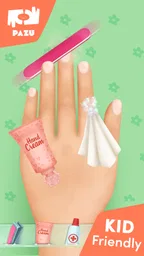
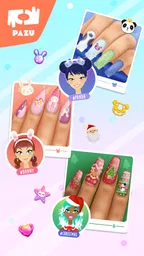
The game’s central idea is familiar in a useful way: children can play at running a nail salon, experimenting with manicure styles, polish, and nail art. That makes it approachable even for a young player who does not want instructions or a long introduction. Rather than asking for strategic thinking, it invites a child to make choices and see a look come together.
That open-ended feeling is the main early draw. A child can try combinations that would be impractical in real life, change direction, and treat the screen as a little design space. I like this kind of play best when an adult lets the child lead instead of turning each session into a lesson. Asking, “Which color would you pair with that?” can encourage creative thinking without making the game feel like homework.
It is an educational game from Pazu Games, though I would set expectations sensibly. Its value is in imaginative choices and visual experimentation, not in teaching a formal subject or a professional manicure technique. For a family looking for a gentle activity built around self-expression, that distinction matters: the game can support pretend play, but it should not be mistaken for a structured learning course.
The simple salon theme also makes it a reasonable option when a child wants to play independently for a little while. It is easier to dip into than a story-heavy game that expects the player to remember a plot or progress through a long sequence. In my experience, that low barrier is particularly handy during a brief wait or a quiet moment at home, when there is time for a small creative activity but not for a larger game.
Small choices that make play more rewarding
One way to get more out of a nail-design game is to give a session a light theme. A child might aim for a party look, a favorite color palette, or a design that feels calm rather than bold. This gives the activity a purpose without imposing rules. It also makes the result easier to talk about afterward: what was the starting idea, and what changed along the way?
I would also encourage children to finish one design before chasing another. The useful part is not simply tapping through visual options; it is noticing how a set of choices works together. Comparing a restrained look with a more playful one can help a child explain preferences and practice making decisions. Those are modest benefits, but they are more realistic than expecting the game to teach advanced artistic skills on its own.
That said, the appeal depends on liking the subject. A child who enjoys fashion, beauty play, or decorating may find the theme immediately inviting. Someone who prefers building, racing, animals, puzzles, or action may not connect with it, even if the game is easy to pick up. The title’s focus is also quite specific, so it is not the best choice if you want one app to satisfy a wide range of interests.
What may keep it in the rotation
After the first few sessions, the question becomes whether a child still enjoys making new choices rather than merely repeating the same routine. This is where the game’s creative premise helps, but it also sets a limit. Design activities can invite experimentation, yet they do not automatically provide the changing goals or progression that keep every player engaged over many weeks.
For a child who likes revisiting familiar activities, that may be perfectly fine. A short return to the salon can work much like drawing with a preferred set of colors: the pleasure comes from making something, not necessarily from unlocking a new system. If the child likes showing a finished look to a parent or sibling, that simple social moment can give each session a little more purpose.
For a child who expects a steady stream of new challenges, however, the experience may feel less compelling over time. I would not choose it as the main game for a long trip or a daily activity that needs to hold attention for extended stretches. It is better suited to brief visits, with other kinds of play available when the child is ready for a different challenge.
The comparison with other children’s creative games is useful here. A drawing app gives more freedom to make a picture from scratch, while a dress-up game may offer a broader character-and-outfit theme. This salon game has a narrower focus, which can be a strength for a child who specifically enjoys nail styling, but a disadvantage for a child who wants varied tools or a larger creative canvas. I would pick it for that focused theme, not because it replaces every other creative option.
Its popularity suggests that many families have found the concept appealing: it has a 4.5 average from around 58,000 ratings and over 10 million installs. I would take that as useful context rather than a promise that every child will enjoy it. A rating cannot tell you whether your child will be drawn to nail design, and personal interest is likely to matter more than the game’s broad reach.
Cost, access, and the practical side
The game is free to start, with in-app purchases ranging from $6.49 to $59.99 per item. That is worth considering before handing a device to a child. I recommend checking the purchase settings on the device and agreeing on clear rules in advance. A child focused on decorating may be tempted by anything presented as an additional option, so a parent should decide whether purchases are allowed rather than leave that decision to the moment.
It is rated Everyone, which makes its intended audience clear, but that does not remove the need for family judgement about screen time or spending. I would introduce it as one option among several, not as a reward that automatically means unlimited play. If a child gets frustrated when a preferred choice appears to require a purchase, it may be better to set expectations before the first session or choose a different activity.
The listed minimum operating system is Android 7.0, and the current version is 1.70. Those details are useful when deciding whether an older device is suitable, though I would still check the app store on the specific device before installing. The game was released on February 11, 2020, so it is not a brand-new concept; its staying power is more about whether the salon activity suits a child than about being the latest trend.
For a parent, the easiest maintenance approach is to keep sessions intentional. A quick check-in after play—asking what the child designed or which choices they liked—can make the activity feel more meaningful without requiring close supervision throughout. If the child only wants to tap rapidly through options and loses interest as soon as the session ends, that is a sign the game may be a temporary novelty rather than a lasting favorite.
Where repetition can set in
The main fatigue risk is built into the premise: a nail salon remains a nail salon. Once a child has explored the kinds of looks they enjoy, repeated sessions may begin to feel similar. That is not necessarily a flaw for a casual game, but it does mean I would avoid promising that it will keep a child occupied indefinitely or deliver a new experience every time.
Another limitation is that the theme is more about visual play than broad learning. Children can make choices and explore combinations, but parents looking for reading practice, number skills, problem-solving puzzles, or a curriculum-style activity should choose something designed for those goals. Calling it educational is fair in the loose, creative-play sense; it would be misleading to rely on it as a substitute for a more focused learning app.
There is also a difference between a child enjoying the idea of nail art and enjoying a screen-based version of it. Some children would rather draw on paper, use craft materials, or play with physical dress-up items. If your child tends to stay engaged longer when they can touch and rearrange objects, a real-world craft activity may offer a more satisfying alternative. The app is most useful when the convenience of a device is part of the appeal.
To reduce repetition, I would suggest alternating it with a different type of play instead of trying to make every session more elaborate. One short design session followed by drawing or a story can keep the game from becoming a default time-filler. That rhythm also makes it easier to tell whether the child genuinely returns to the salon because they enjoy it, rather than because it is simply the familiar icon on the screen.
Who should keep it—and who should move on
I would recommend Girls Nail Salon - Kids Games to a child who already enjoys nail design, color matching, or pretend beauty-salon play, and to families seeking a simple creative option for short sessions. The game’s narrow focus is precisely why it can work: children who love the theme do not need a sprawling collection of activities to understand what they are there to do.
I would skip it for a child who wants substantial progression, varied challenges, or a broader creative toolkit. It is also a poor fit if your family is uncomfortable managing in-app purchases or if the child tends to become upset when an optional paid item is part of a game. In those situations, an offline art activity or a children’s app with a different structure may be a better match.
Overall, I see it as a pleasant, focused creative diversion rather than a game that every child will keep returning to for months. Its strongest long-term case is a child who enjoys repeating a familiar salon routine and finding new combinations within that theme. For everyone else, the novelty may fade once the basic idea has been explored. I would try it as a free starting point, set purchase expectations early, and let the child’s interest—not the game’s popularity—decide whether it deserves lasting space on the device.
What we like
- Colorful visuals make the salon activities appealing to young players.
- Simple touch controls are easy for children to learn.
- Creative nail designs encourage imaginative play.
- Multiple polish colors and decorations offer variety.
- Short play sessions suit casual use.
What could be better
- The salon gameplay may feel repetitive over time.
- Some content may require watching ads to access.
- Frequent ads can interrupt play.
- The app may include in-app purchases.
- Young children may need guidance around ads and purchases.







