

GeoGuessr review
 Analysis by Appsdrops
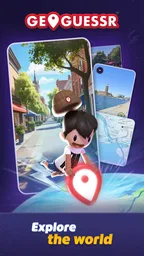
I like geography games that make me think rather than simply test whether I remember a capital, and GeoGuessr is built around that kind of curiosity. It drops you into a view of a real place and asks you to work out where you might be. The appeal is not just getting the answer right; it is learning to notice clues in landscapes, roads, signs, buildings, and vegetation. In my experience, that makes each round feel like a small investigation rather than a standard quiz.
What the free entry point means
The game is free to install, which makes it easy to try without committing money first. GeoGuessr is a trivia game from GeoGuessr, aimed at Everyone, and its broad appeal is reflected in its reach: it has passed 10 million installs. That popularity does not tell you whether its particular style will suit you, though. The key question is whether you enjoy reasoning from visual details when the answer is not immediately obvious.
There are in-app purchases, with listed items ranging from $4.99 to $71.88. I would treat those figures as a reason to check the purchase screen carefully before spending, not as a promise that any particular item is necessary or worthwhile. The game’s free availability gives you a way to judge the core appeal first; paid value depends on what is offered in the app and how often you expect to play. I would not buy anything just because a round went well or because a prompt makes an upgrade sound urgent.
That distinction matters for a game whose pleasure comes from observation and deduction. If you mainly want an occasional geography challenge, free access may be enough to find out whether you like the format. If you become a regular player, you can assess the purchase options against your actual habits rather than guessing in advance. I recommend deciding only after you have spent time with the game and know what, if anything, you want more of.
Why the guessing feels different from a quiz
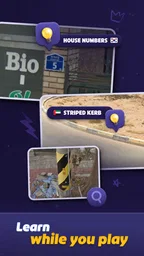
Most trivia games ask for a fact you either know or do not. Here, I find myself building a case from several imperfect clues. A road sign might suggest a language, while the road markings or surrounding plants point in another direction. A single clue can mislead, so it helps to look for a pattern rather than latch onto the first familiar detail. That makes a wrong guess useful: it shows which clue I overvalued.
One practical habit is to pause before choosing a location and name the evidence mentally: “the script looks like this,” “the road feels rural,” “the terrain is dry.” Then I compare the clues instead of making a snap decision based on one landmark. This small routine makes rounds more satisfying, especially when I cannot identify a place outright. It also turns play into low-pressure practice at noticing how geography and everyday infrastructure vary around the world.
The game’s version is 13.1, and it supports a minimum operating system version of 8.1. Those details are useful if you are checking compatibility, but I would still confirm that your device can install the current release before planning to play. The game was released on April 14, 2021, and has developed a substantial audience since then. Its average rating is 3.8 from around 88,000 ratings, with about 1,500 written reviews. I see that as a mixed but meaningful signal: plenty of people have tried it, while the score suggests the experience is not a universal fit.
Small decisions that improve a session
My most useful tip is to separate “country” confidence from “exact place” confidence. I may recognize a region’s language or road style without knowing the town, and that is still progress. Making a rough regional judgment first can prevent an overconfident, very specific guess based on a weak clue. It also gives me a clearer way to learn from the result: was my broad reading wrong, or did I simply misjudge the distance?
Another good approach is to treat each round as a short observation exercise, not a speed test. When I rush, I tend to seize on a familiar word or a landscape that reminds me of somewhere I have visited. Taking a moment to compare the built environment with the natural one gives a more balanced read. This is especially helpful when a scene is visually plain; ordinary details such as road surfaces, signs, and building styles can matter more than a dramatic mountain or coastline.
I also find it useful to play when I have a few spare minutes and a reasonably clear head. The central task asks for attention, so it is less suited to half-watching a video or playing while distracted than a simple tap-through quiz. A short session can still feel complete because the challenge is self-contained: inspect, infer, choose, and see how the judgment held up. If I am tired, I am more likely to guess from stereotypes, which is exactly when the game is least educational.
Where the value comes from
GeoGuessr’s strongest value is the way it joins entertainment with visual learning. It can make me curious about why one place looks different from another, and it rewards a kind of knowledge that is rarely tested by ordinary multiple-choice trivia. You do not need to be a geography expert to begin; the process of noticing and revising an impression is part of the fun. For a curious player, that can make a free trial session feel richer than a string of isolated fact questions.
It also works well as a shared challenge. If I am playing with a friend, we can each explain what we noticed before settling on a guess. The discussion is often more interesting than simply revealing an answer, because two people may interpret the same road or landscape differently. This is a natural way to involve someone who is not usually drawn to trivia, provided they enjoy puzzles and looking closely at images.
Compared with a conventional quiz app, it places less emphasis on recalling named facts and more on interpreting evidence. Compared with map-based exploration games, its central pleasure is not planning a route or managing a world; it is identifying a location from what is visible. That makes it a particularly good choice if you like deduction, but a weaker match if you want a structured course, a story, or a relaxing game with little decision-making. The value is in the distinctive question it asks, not in being an all-purpose geography reference.
The tradeoffs I would keep in mind
The same uncertainty that makes a round compelling can also frustrate me. If I cannot find a clear clue, a guess may feel more like chance than deduction. Some scenes invite careful comparison, while others may not give a newcomer an obvious starting point. I would not expect every round to teach a neat lesson or deliver the satisfaction of a confident solve; part of the experience is living with incomplete evidence.
There is also a learning curve to interpreting visual clues. Recognizing a language or a style of road marking can help, but those signals are not always decisive on their own. A player who expects instant certainty may find the game unfair, particularly if they are unfamiliar with regional differences. I think it works better when you enjoy forming a tentative hypothesis and changing your mind than when you want a simple right-or-wrong question with a clear path to the answer.
Purchases deserve the same measured approach. The listed range reaches from $4.99 to $71.88 per item, so I would check exactly what an offer includes and whether it addresses something I personally want before paying. Free installation does not mean every possible option is free, and a high price is not automatically evidence of better value. For occasional play, I would start without spending; for frequent play, I would still compare the purchase against how much enjoyment I am genuinely getting.
Who is likely to get the most out of it?
I would recommend trying it if you enjoy travel, maps, geography, or the satisfying moment when several small clues point in the same direction. It is also a good fit for people who like talking through a puzzle rather than competing only on speed. A useful everyday scenario is a quiet break between tasks: play a round, inspect the surroundings, and see whether your first impression survives a closer look. It gives that short pause a focus without requiring a long session or a deep commitment.
It may also appeal to teachers, parents, or curious families looking for a conversation starter, with the important caveat that the game is still a guessing challenge rather than a complete lesson. The Everyone age rating makes it broadly suitable by content classification, but a younger player may enjoy it more with someone who can help explain clues and keep a wrong answer from feeling like failure. I would frame guesses as experiments: notice, predict, and revise.
I would skip it if you dislike uncertain answers, have little patience for visual investigation, or want a trivia game that tests facts directly. Someone seeking a calm, passive experience may also prefer a different kind of game. And if your main goal is systematic study of countries, flags, or capitals, a dedicated learning app or reference resource is likely more direct. GeoGuessr can encourage curiosity, but it is not a substitute for a structured curriculum.
My verdict on trying it
My recommendation is to try GeoGuessr for free if the idea of identifying places from visual evidence sounds enjoyable. Its best moments come when I resist the easy guess, compare several clues, and accept that a reasonable inference can still be wrong. That makes it more distinctive than a standard trivia quiz, and the broad audience suggests there is plenty of interest in the format, even if the average rating of 3.8 shows that not everyone clicks with it.
I would hold off on purchases until you know how often you return to the game and have checked what each option actually provides. There is a clear reason to play without spending first: the central appeal is the act of looking closely and reasoning about a place. If that process leaves you curious for another round, you have found a worthwhile fit. If you mainly feel annoyed by ambiguity, spending more is unlikely to change what makes the game itself appealing.
Overall, I see it as a focused choice for curious players, not a universal replacement for every geography or trivia game. It rewards patience, careful observation, and a willingness to learn from uncertain guesses. For me, the real value is turning an unfamiliar scene into a puzzle I can reason through—and that is worth trying before deciding whether any paid option belongs in your routine.
What we like
- Street View rounds make geography practice feel like a game.
- Multiple modes offer variety beyond the standard guessing format.
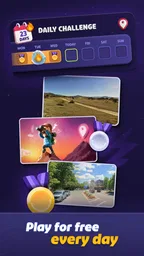
- Daily challenges provide a quick reason to play again.
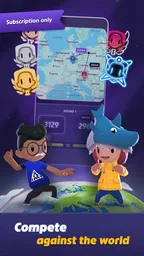
- Competitive matches can be enjoyed with friends.
- The game rewards observation rather than memorizing trivia.
What could be better
- A stable internet connection is needed for most gameplay.
- Free play may be limited depending on the current plan.
- Some locations are difficult to identify from sparse clues.
- Street View imagery can be old or incomplete.
- Precise guesses can be frustrating when maps obscure exact locations.







